

20.3 C
Byron Shire
October 20, 2026

Backswamps and development blues

Latest News

Cinema: NAZA

A must-see, award-winning documentary investigating AI warfare in Gaza. Fresh from winning the Special Jury Prize at the 2026 Venice International Film Festival, NAZA, the latest documentary from Academy Award-winning filmmakers Yuval Abraham and Rachel Szor (No Other Land), examines artificial intelligence and surveillance in Israel’s military operations in Gaza.

Other News

A timeless story of self-discovery

A husband with a promotion, two adorable children and a lovely new house. Nora thought she had it all. But did she? What was the discontent that was whispering to her in the shadows?

No short-term solutions

Here we are, put into the very precarious situation of funding Byron Shire Council’s (BSC) infrastructure shortfalls. By no...

Northern Rivers Bushwalkers Club celebrates their 50th

Little did a small group of bushwalkers know, when they went on their first club walk to Salty Lagoon back in 1976, that their club would still be thriving 50 years later.

Mayor Sharon Cadwallader announces bid for state seat of Ballina 

Ballina Mayor Sharon Cadwallader will contest the state seat of Ballina as an independent, arguing that local ratepayers are carrying costs that should be met by the NSW government.

Interview with Genevieve Clay-Smith, director of Boss Cat showing at the Byron Bay Film Festival

When Sonja (Olivia Hargroder) loses her mother without warning, the only steady presence left in her life is her grandmother, Doris. But Doris’s idea of stability means dismantling everything Sonja has built. For Sonja, who lives with Trisomy 21 (Down syndrome) and has spent her life fighting to be underestimated by no one, Doris’ plan feels less like protection and more like erasure. Directed by Genevieve Clay-Smith, Boss Cat is a vibrant, big-hearted Australian dramedy about independence, family and self-determination, anchored by a fearless lead performance.

BSC insolvency

After numerous warnings, some more than a decade ago, why haven’t our two longest standing public servants Ndiaye and...

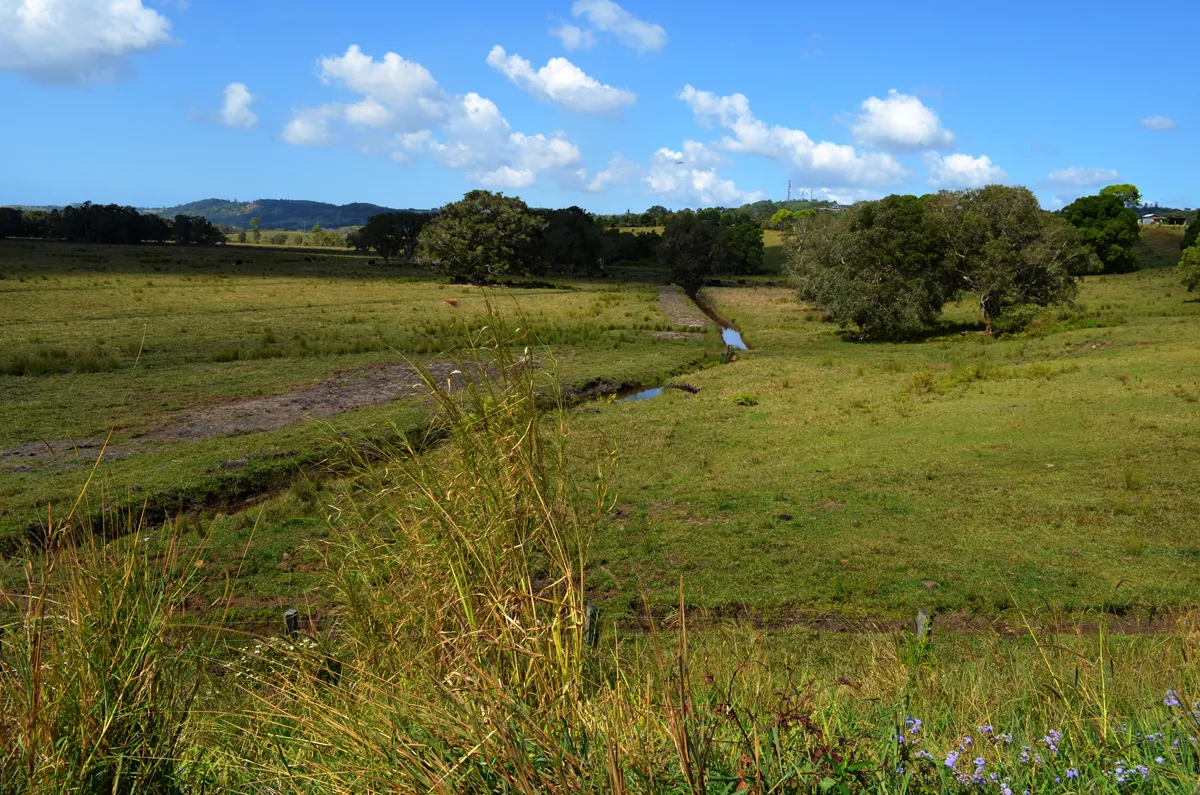
The backswamps of Byron as viewed from Ewingsdale Road. Photo Mary Gardner

…trouble’s takin’ place in the lowlands at night..
Backwater blues done call me to pack my things and go –
Bessie Smith

Mary Gardner

From the 1950s, drained backswamps became the yards for new housing in New Orleans, only to flood during storms right through to the 21st century. Canal estates in the Gold Coast seemed a flash way to develop similar wetlands, though this woke up a swamp creature we now call acid sulfate soils. But centuries ago, in the Netherlands, the coastal people called these ‘cat clay soils’: nasty when disturbed. In the late 1800s, one of their chemists, van Bemmelen, identified the dormant iron particles and demonstrated they created sulfuric acid.

This sulfuric acid oozes in soggy ground and flows out in waterways to the sea. It corrodes progress such as roads, concrete and steel pipes, buildings, bridges and culverts. In 2012, the CSIRO says this costs Tweed Council $4 million in replacement works. They add that it kills oysters and fish, costing NSW more than $2 million. In Queensland, helping damaged farm and residential areas costs $180 million a year. It can be up to 25 per cent of the cost for any coastal development.

Back in 1841, Clement Hodgkinson described the coast of the northern rivers as ‘extensive swamps of many thousand acres in extent, whose verdant sea, of high waving reeds and sedge, stretches away to the base of the distant forest ranges. There are several lagoons in these swamps, and the stagnant water is very generally diffused over their surface.’

R King, who was born in Ballina in 1869 and at eleven years of age ‘came across to Tyagarah’, says near this backswamp were ‘big camps’ of Aboriginal people. They ‘always camped where pipi and oyster could be obtained’ as well as ‘fish, possum, native bear’ and the ‘eggs of bush turkeys’.

‘Wild horses and cattle were plentiful then.’ They roamed the wetlands up ‘to Cudgen’.

‘Even in those days the opening of the Belongil was always troublesome.’

In 2011, Mitchell Tulau completed an environmental history of the backswamps of NSW. He traced their social and legal history. In the late 1880s, local government encouraged ‘drainage unions’ to make farms of floodplains and backswamps. In the early 1900s, the state government set Public Works Departments (PWD) to manage drainage trusts. Most of the trusts failed financially because ‘the land could not repay’ the investments.

During a long dry period, the floodplains were ‘alienated, subdivided and settled’.

Then the weather changed and floods at Byron (1945), Kempsey (1949) and Maitland (1955) led to more state-wide ‘flood mitigation’. This meant more drainage works. Belongil would eventually have eight kilometres of major drains and forty secondary ones.

By 1964, these works dried up most every wetland, supposedly to help farming and housing. Not everyone agreed but dissenters were ignored. There were other ‘causes’ for floods, pollution and diminished fish stocks.

But in 1987, massive fish kills in the Tweed demanded fresh investigation. This led to the work of another Dutch scientist, Leen Pons. He had renamed the cat clays as acid sulfate soils. They go hand in hand with backswamps all around the world.

Our coasts are ‘young’, underwater as recently as a thousand years ago. The land and sea are old partners and backswamps are the gift of that relationship. Koalas and possums snoozing over large nurseries of fat fish.

In NSW, some backswamps are now rezoned as national parks and reserves. When people restore such key land/sea links, birds and fish populations grow again, enhancing the adjacent coast.

Of all the catchments in northern rivers, there may be one of a significant size and location with the community interest necessary for such a transformation. It’s on the west of the town of Byron Bay.



For four decades The Echo has printed the stories some people loved, some people hated, and some pretended not to read. If you want us to keep telling the truth, the real truth, not the sugar-coated version. We’ll need your support to keep the presses rolling.


If you are a local business owner help us and in turn we help you. All The Echo asks for is advertising, not a free ride. It is every advert in The Echo and on www.echo.net.au, which creates the space for all the stories and coverage of community events, happenings and concerns.

If you are a reader you can become a sponsor of The Echo. Your support keeps the us independent.

Even a small one-off or regular donation from you will help keep the echo’s independent voice alive and strong.

Support Us

Become one of the supporters who helps keep independent, local journalism alive in the Byron Shire by contributing anything from as little as the cost of a coffee each month.

You're Wonderful, Thank you for supporting independent journalism in the Byron Shire

You’re supporting The Echo, thank you

Your contribution is keeping independent, local journalism alive in the Northern Rivers.

Because of supporters like you, we can keep every story free for everyone — no paywall, no exceptions. Your money goes directly to funding our newsroom of 40-odd local workers covering the stories that matter to this community.

Tell us what you think, give us your opinion

The Echo loves your letters and comments and is proud to provide a community forum on the issues that matter most to our readers and the people of the NSW north coast. So don’t be a passive reader, email us your epistles at editor@echo.net.au.

The letters deadline for The Echo is noon Friday. Letters longer than 200 words may be cut. The publication of letters is at the discretion of the letters editor. Please remember to include your full name, address and telephone number.

Online comments are no longer available.

Interview with Genevieve Clay-Smith, director of Boss Cat showing at the Byron Bay Film Festival

When Sonja (Olivia Hargroder) loses her mother without warning, the only steady presence left in her life is her grandmother, Doris. But Doris’s idea of stability means dismantling everything Sonja has built. For Sonja, who lives with Trisomy 21 (Down syndrome) and has spent her life fighting to be underestimated by no one, Doris’ plan feels less like protection and more like erasure. Directed by Genevieve Clay-Smith, Boss Cat is a vibrant, big-hearted Australian dramedy about independence, family and self-determination, anchored by a fearless lead performance.

Something for everyone at the Picture House

From Australian superstar musos, to brand new documentaries, to comedians at the top of their game, there really is something for everyone at the Brunswick Picture House.

Thirty-six unmissable films

The 2026 Russell Hobbs British Film Festival features an unmissable line up 36 films, including five retrospectives which will screen from 28 October to 29 November at Palace Byron Bay and Ballina Cinemas.

A timeless story of self-discovery

A husband with a promotion, two adorable children and a lovely new house. Nora thought she had it all. But did she? What was the discontent that was whispering to her in the shadows?