


A recent discovery in Canada graphically exposes the extent to which ‘advanced civilisations’ have gone, and indeed continue to go, in the name of imagined racial superiority and cultural imperialism.
The graves of 215 Indian children, some as young as three, were discovered on the site of the Kamloops Indian Residential School (KIRS) in the Canadian province of British Columbia (BC), where they had been interned.
Canadian Indian Residential Schools were established and operated for the same purpose that define the Stolen Generations experiences in Australia; the forced removal of children so that they could be assimilated into white society, as well as providing a cheap, often unpaid, source of labour for white industries and families.
A report of the Canadian Truth and Reconciliation Commission documents that as many as 3,200 Indian, Metis and Inuit children were removed and interned in 130 or more residential schools that operated across Canada from 1831 to 1996.
The last Indian Residential School, the Gordon Indian Residential School in Punnichy, Saskatchewan was closed in 1996.
In Canada, Indian Residential Schools were directly linked to, and administered by, the Catholic Church, who colluded with governments to force stolen Indian children to convert to Christianity.
Many of the children were physically, emotionally and sexually abused, and a number tragically died in custody, isolated from their families.
The pain and trauma of this experience is enduring and closure is ever elusive, perhaps unattainable.
Following amendments to the Indian Act in 1920, all Indian children between the ages of seven and 16 were compelled to attend residential schools, where they were imprisoned, abused, and isolated from their families and communities.
I attended a moot court hearing on Indian Residential Schools, held in Saskatchewan sometime in the 1980s, and I sat horrified as each senior Indian person who spoke recounted the trauma of their internment.
What remains with me most vividly is the testimony of one old man, who shared that when he was caught speaking his language, he was forced to place his tongue on frozen water pipes. Winters on Canadian prairies can be brutal.
The experience, and others, had obviously scarred the old man, as he often broke down in tears when asked to talk about his trauma and pain.
Dr Mary Young, a valued friend and colleague from Bloodvein First Nation in Manitoba, writes, ‘In June 1967, after being away for ten months, I arrived home from the Pine Creek Residential School’.
Mary added, ‘I was not allowed to go home and I was not permitted to speak in Anishunabe. I longed to be part of my family; I cannot describe or express how much I missed my family. I will never forget how lonely and homesick I was’.
Tragically, Mary passed away in July, 2015, and I am left wondering whether the loneliness and the unanswered questions she writes about were spiritual fatigue factors in her passing.
Australian Shame
Australia also has a shameful history when it comes to the abuse of Indigenous and other kids, a chapter in Australian history that continues to torment and traumatise victims and their families.
Archie Roach and Jack Charles are Aboriginal icons of the Australian entertainment industry, and they too have experienced the agony of being stolen from their families and placed in institutional internment.
Archie and Jack have chronicled the pain, anguish and liberation that followed. Archie’s autobiography titled Tell Me Why and Jack’s Born-Again Blakfella, each in their own unique way, chronicles their respective journeys from the darkest recesses of despair to profound resilience forged in hope.
Australia’s treatment of Biloela’s Murugappan family is yet another example of this type of Australian shame, and serves as yet another example of how far politicians and their bureaucracies are out of step with common decency and human compassion. What threat does this family, the children of whom were born in Australia, pose?
The Biloela community have demonstrated their love and support for the Murugappan family, and long for their return, but the best the federal government can offer is to place the family in community detention in Perth.
Surely there is room for Ministerial discretion in such cases? There certainly was when then Immigration Minister Peter Dutton intervened in the au pair visa issue in 2015.
When discussing the family’s treatment, recycled Deputy PM Barnaby Joyce is reported to have observed, ‘It wouldn’t be in question if their daughters were white girls named “Jane and Sally” which makes me wonder whether, as a nation, we’ve ever truly abandoned the “White Australia Policy”.’
‘Love and compassion are necessities, not luxuries. Without them, humanity cannot survive’ – Dalai Lama.
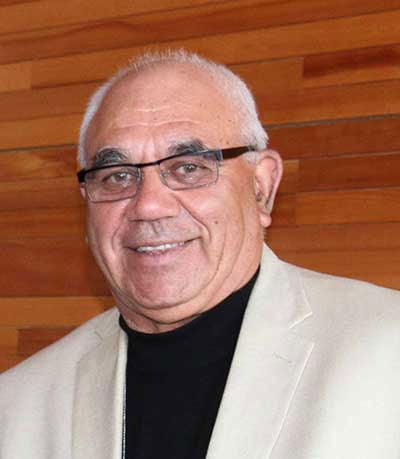
Professor Morgan is a Gumilaroi man from Walgett western NSW.
He is a highly respected and acknowledged Aboriginal educator/researcher who has worked extensively throughout Australia and internationally in the field of Aboriginal knowledge and learning for over forty years.
Professor Morgan is currently Chair of the Board of Aboriginal and Torres Strait Islander Studies, Education and Research (BATSIER), and also serves as Conjoint Professor with the Wollotuka Institute with the University of Newcastle.
 For four decades The Echo has printed the stories some people loved, some people hated, and some pretended not to read. If you want us to keep telling the truth, the real truth, not the sugar-coated version. We’ll need your support to keep the presses rolling.



