

20.3 C
Byron Shire
October 20, 2026

La Nina coming again as world careens towards uncharted climate destruction

Latest News

Cinema: NAZA

A must-see, award-winning documentary investigating AI warfare in Gaza. Fresh from winning the Special Jury Prize at the 2026 Venice International Film Festival, NAZA, the latest documentary from Academy Award-winning filmmakers Yuval Abraham and Rachel Szor (No Other Land), examines artificial intelligence and surveillance in Israel’s military operations in Gaza.

Other News

Editorial – Time for a little respect

In 2020 unpaid care was estimated at three million unpaid carers in Australia that provide approximately $80 billion of unpaid care a year, that is $1.5 billion a week.

A timeless story of self-discovery

A husband with a promotion, two adorable children and a lovely new house. Nora thought she had it all. But did she? What was the discontent that was whispering to her in the shadows?

Calls on NRPP to defer consent for Mullumbimby’s 57 Station Street DA on Monday

At Thursday’s Byron Shire Council meeting there were multiple calls for a deferral of the 57 Station Street, Mullumbimby car park development application.

Call for the community to join the Mullumbimby clean up

The Mullumbimby Chamber of Commerce and Community (MCCC) are calling on local businesses and the community to join them in cleaning up the main street of town on Sunday, 25 October from 8am to 10am.

Domestic violence: Lismore

I witnessed the aftermath of a serious assault on a woman in Conway Street, Lismore in broad daylight. This was...

Interview with Genevieve Clay-Smith, director of Boss Cat showing at the Byron Bay Film Festival

When Sonja (Olivia Hargroder) loses her mother without warning, the only steady presence left in her life is her grandmother, Doris. But Doris’s idea of stability means dismantling everything Sonja has built. For Sonja, who lives with Trisomy 21 (Down syndrome) and has spent her life fighting to be underestimated by no one, Doris’ plan feels less like protection and more like erasure. Directed by Genevieve Clay-Smith, Boss Cat is a vibrant, big-hearted Australian dramedy about independence, family and self-determination, anchored by a fearless lead performance.

The Tweed River at Chinderah during the February-March 2022 flood. Photo supplied.

We’ve experienced a number of difficult years on the Northern Rivers and the east coast of Australia as we’ve lurched from crippling drought and bushfires to ‘unprecedented’ destruction from flooding. The Australian Bureau of Meteorology (BOM) has now confirmed that we are heading into a third year of La Niña at the same time as multi-organisation report United in Science 2022 has stated that, ‘Without ambitious action, the physical and socioeconomic impacts of climate change will be devastating’.

Landslip on Tyalgum Road. Photo from The Select Committee on the response to Major Flooding across NSW in 2022.

Another La Niña

For the third year in a row the east coast of Australia, including the Northern Rivers, will experience a La Niña year.

The Bureau of Meteorology has declared ‘a La Niña event is underway in the Pacific Ocean and communities in eastern Australia should be prepared for above-average rainfall over spring and early summer’. 

‘Australia’s climate has warmed by around 1.47 °C for the 1910–2020 period. Southern Australia has seen a reduction of 10–20% in cool season (April–October) rainfall in recent decades. There has also been a trend towards a greater proportion of rainfall from high intensity short duration rainfall events, especially across northern Australia,’ states the Bom

Dr Andrew Watkins, BOMs head of long-range forecasts said, ‘During La Niña events, waters in the eastern tropical Pacific Ocean are cooler than normal, and waters in the western tropical Pacific Ocean warmer than normal. This causes changes in wind, cloud and pressure patterns over the Pacific. When this change in the atmosphere combines with changes in ocean temperature, it can influence global weather patterns and climate, including increasing rainfall over large parts of Australia.’

Models have forecast this La Niña will be weak to moderate in strength, likely to peak during spring and ease during summer.

‘October to December rainfall is likely to be above median for the eastern half of Australia, but below median for parts of Western Australia and part of western Tasmania,’ states the BOM.

‘La Niña is not the only driver influencing this wet outlook. To our west, a significant negative Indian Ocean Dipole (IOD) event is underway. We expect the IOD influence will reduce in late spring or early summer,’ Dr Watkins said.

‘The Southern Annular Mode (SAM) is also in a positive phase, and likely to remain positive into summer. Positive SAM during summer pushes weather systems south, which increases the chance of rain in New South Wales, eastern Victoria and southern parts of Queensland,’ he said.

The BOM is reminding people that with the catchments already wet, the flood risk remains, particularly for eastern Australia.

‘There is a 93% probability that at least one year in the next five will be warmer than the warmest year on record, 2016, and that the mean temperature for 2022–2026 will be higher than that of the last five years,’ states the United in Science report.

‘Uncharted territory of destruction’

The last seven years have been the warmest on record and fossil fuel emission rates are now above pre-pandemic levels after a temporary drop due to lockdowns. The United in Science report states that, ‘emissions reduction pledges for 2030 need to be seven times higher to be in line with the 1.5 °C goal’.

UN Secretary-General António Guterres stated that ‘This year’s United in Science report shows climate impacts heading into uncharted territory of destruction. Yet each year we double-down on this fossil fuel addiction, even as the symptoms get rapidly worse’.

‘Floods, droughts, heatwaves, extreme storms and wildfires are going from bad to worse, breaking records with alarming frequency. Heatwaves in Europe. Colossal floods in Pakistan. Prolonged and severe droughts in China, the Horn of Africa and the United States. There is nothing natural about the new scale of these disasters. They are the price of humanity’s fossil fuel addiction,’ he said.

The report highlights the immediate need for reducing greenhouse gas emissions (GHG) and bringing ‘aspirations’ inline with ‘reality’.

‘Collectively, countries are falling short of meeting their new or updated pledges with current policies,’ states the report summary. 
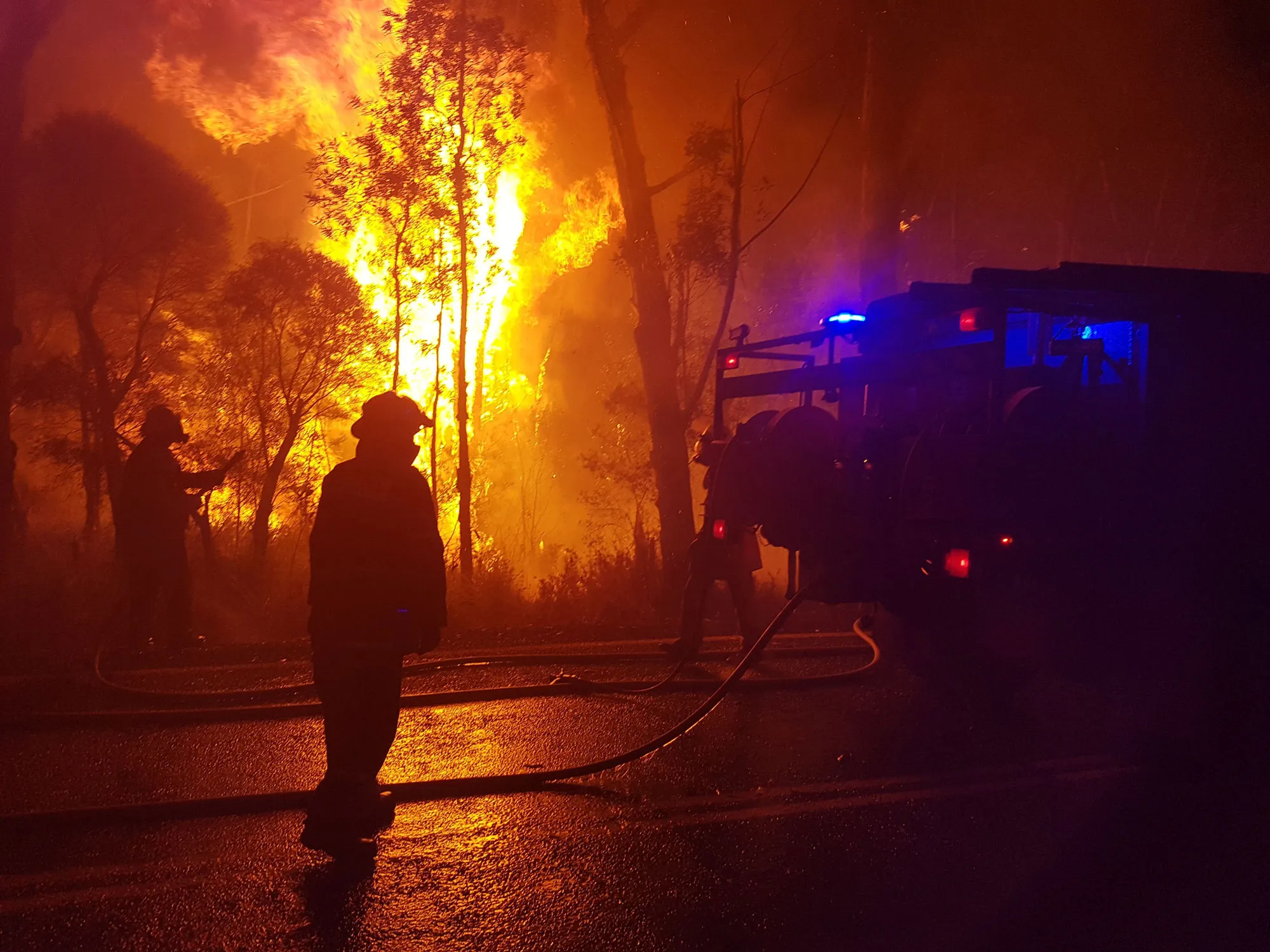
Fire fighters battling flames on the Woombah to Iluka road in November 2019 during the Black Summer fires. Photo Ewan Willis.

‘The number of weather, climate and water-related disasters has increased by a factor of five over the past 50 years, causing US$ 202 million in losses daily.

‘As attribution science continues to improve, evidence of the link between human-induced climate change and observed extremes, such as heatwaves, heavy precipitation and tropical cyclones, has strengthened.’
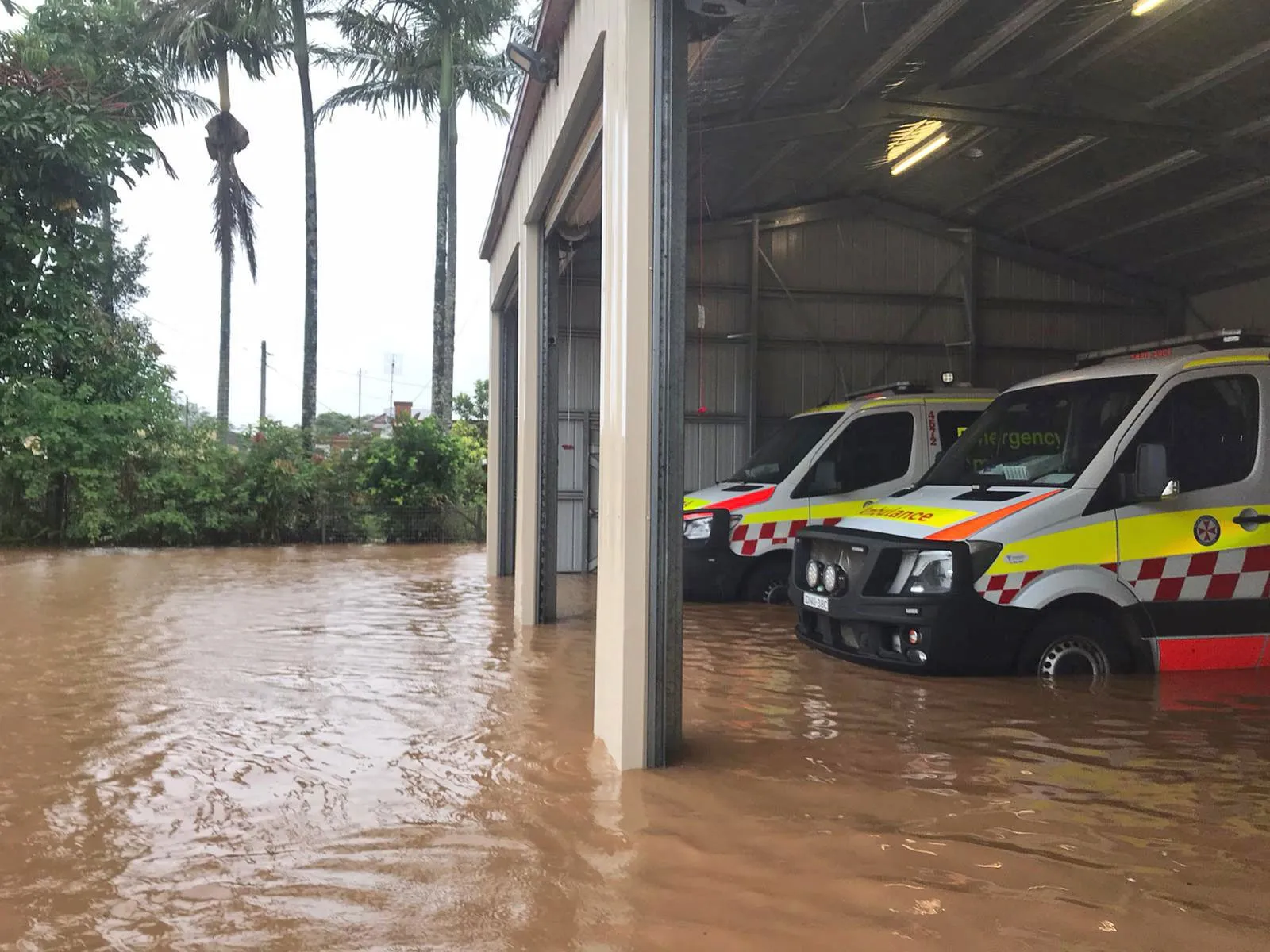
The Mullumbimby Ambulance station during the Feb/March floods. Photo supplied

The reports is clear that billions of people are highly vulnerable to the impacts of climate change as we have seen here with droughts, the Black Summer fires and the recent floods that local Northern Rivers are still trying to recover from. 

‘The science is clear – urgent action is needed to mitigate emissions and adapt to our changing climate,’ says the report. 

♦ The United in Science 2022 report was compiled by the World Meteorological Organisation (WMO) under the direction of the United Nations Secretary-General to bring together the latest climate science-related updates from key global partner organisations – WMO, Global Carbon Project (GCP), UN Environment Programme (UNEP), Met Office (United Kingdom), Urban Climate Change Research Network (UCCRN), UN Office for Disaster Risk Reduction (UNDRR), World Climate Research Programme (WCRP, jointly sponsored by WMO, IOC-UNESCO and the International Science Council (ISC)) and the Intergovernmental Panel on Climate Change (IPCC).



For four decades The Echo has printed the stories some people loved, some people hated, and some pretended not to read. If you want us to keep telling the truth, the real truth, not the sugar-coated version. We’ll need your support to keep the presses rolling.


If you are a local business owner help us and in turn we help you. All The Echo asks for is advertising, not a free ride. It is every advert in The Echo and on www.echo.net.au, which creates the space for all the stories and coverage of community events, happenings and concerns.

If you are a reader you can become a sponsor of The Echo. Your support keeps the us independent.

Even a small one-off or regular donation from you will help keep the echo’s independent voice alive and strong.

Support Us

Become one of the supporters who helps keep independent, local journalism alive in the Byron Shire by contributing anything from as little as the cost of a coffee each month.

You're Wonderful, Thank you for supporting independent journalism in the Byron Shire

You’re supporting The Echo, thank you

Your contribution is keeping independent, local journalism alive in the Northern Rivers.

Because of supporters like you, we can keep every story free for everyone — no paywall, no exceptions. Your money goes directly to funding our newsroom of 40-odd local workers covering the stories that matter to this community.

Tell us what you think, give us your opinion

The Echo loves your letters and comments and is proud to provide a community forum on the issues that matter most to our readers and the people of the NSW north coast. So don’t be a passive reader, email us your epistles at editor@echo.net.au.

The letters deadline for The Echo is noon Friday. Letters longer than 200 words may be cut. The publication of letters is at the discretion of the letters editor. Please remember to include your full name, address and telephone number.

Online comments are no longer available.

Interview with Genevieve Clay-Smith, director of Boss Cat showing at the Byron Bay Film Festival

When Sonja (Olivia Hargroder) loses her mother without warning, the only steady presence left in her life is her grandmother, Doris. But Doris’s idea of stability means dismantling everything Sonja has built. For Sonja, who lives with Trisomy 21 (Down syndrome) and has spent her life fighting to be underestimated by no one, Doris’ plan feels less like protection and more like erasure. Directed by Genevieve Clay-Smith, Boss Cat is a vibrant, big-hearted Australian dramedy about independence, family and self-determination, anchored by a fearless lead performance.

Something for everyone at the Picture House

From Australian superstar musos, to brand new documentaries, to comedians at the top of their game, there really is something for everyone at the Brunswick Picture House.

Thirty-six unmissable films

The 2026 Russell Hobbs British Film Festival features an unmissable line up 36 films, including five retrospectives which will screen from 28 October to 29 November at Palace Byron Bay and Ballina Cinemas.

A timeless story of self-discovery

A husband with a promotion, two adorable children and a lovely new house. Nora thought she had it all. But did she? What was the discontent that was whispering to her in the shadows?
