


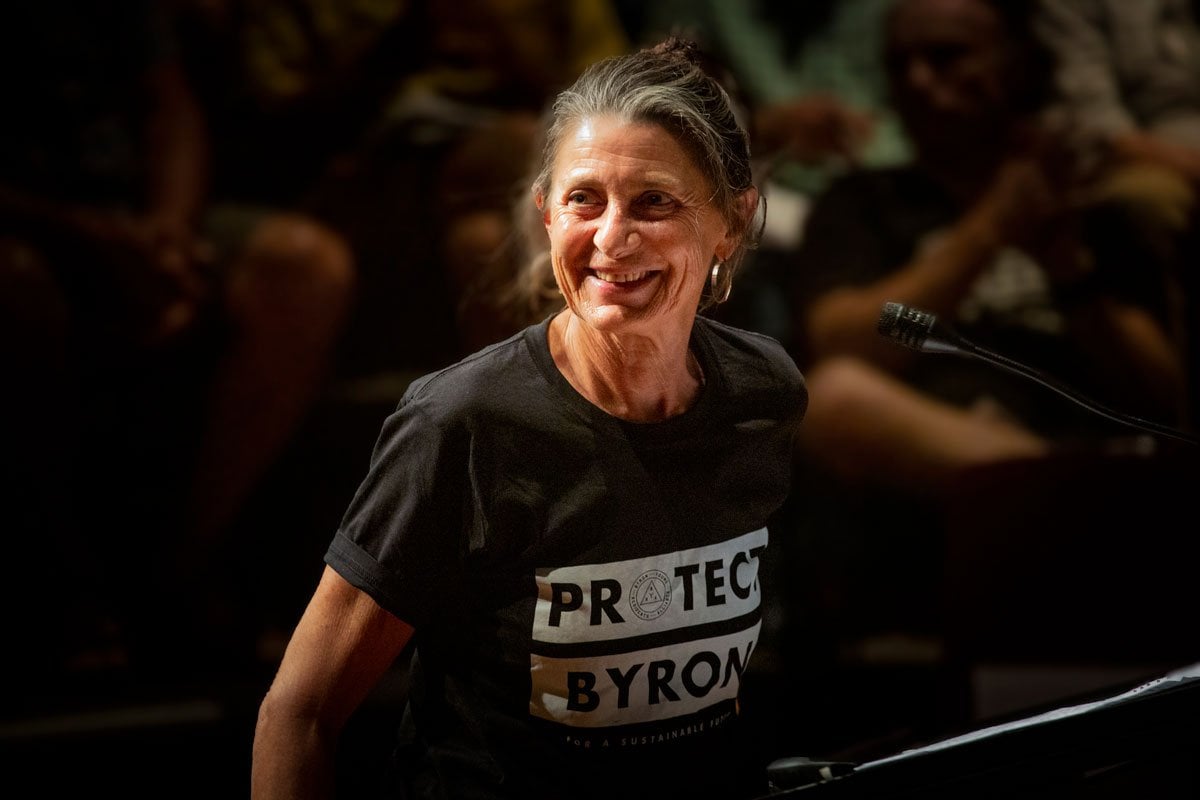
Former Greens mayor Jan Barham has joined the Byron Chamber of Commerce in a blistering critique of Council’s latest business strategy.
Submissions for the Draft Business, Industry and Visitor Economy Strategy closed last week.
The 41-page document aims to ‘provide Council with specific guidance and direction to manage future economic growth in a sustainable and ethical manner’.
Newly-elected mayor, Sarah Ndiaye (Greens) told The Echo that while she acknowledges the critical feedback, she said, ‘This is exactly what the process is designed to do – gathering and reviewing input from a wide range of stakeholders to ensure the strategy reflects the needs of the community’.
She did not say whether the strategy should go back to the drawing board, when queried by The Echo.
The draft strategy largely outlines key industries with statistical data, along with identifying ‘strengths, weaknesses, opportunities and threats (SWOT)’ and an implementation plan. Three key themes are presented for the future: ‘foster business engagement’; ‘celebrate our business and brand identity;’ and ‘plan for a sustainable economy’.
Yet the ‘sustainable economy’ details are light.
The strategy’s ‘sustainable economy’ section focuses on how Council are facilitating development through forward planning documents and housing projects.
No vision, says biz pres
Chamber President, Matthew Williamson, said in the submission: ‘In summary, our view is the strategy, in its current form, is a document that says very little, makes no meaningful plan for the future and fails to accurately reflect on the role that Council actually has in the local economy. There is no vision, nor are there any goals or milestones set down. As it stands, we believe this to be a missed opportunity to provide a meaningful, clear and reasoned roadmap to the future of our shire’.
Institutional disdain
Williamson said there appeared an ‘institutional disdain for the visitor economy and the fundamental role it plays in our shire’.
‘…It has taken two years to arrive at this position. Money has been spent, effort has been made and yet we are in no better a position than we were before this process was started. The cost of [consultant] Lucid Economics in this exercise would be interesting to know, and we would ask that this figure be disclosed’.
As for the ‘Foster Business Engagement’ section of the document, Williamson said, ‘This is somewhat of an insult’.
‘The Chamber sought a seat on the Council’s own Business and Industry Committee and was rejected’.
He said Council’s website and minutes show that in 2023, ‘this group tried to meet twice, but couldn’t form a quorum, met once where it was able to manage a quorum, but [it was] with all committee members being made up of councillors and Council staff. No attempted meetings in 2024’.
The Echo asked Council staff if correct, why was the chamber rejected from a committee that is supposed to engage with business. A reply will be published if received.
Issues to address
Williamson said that issues that need addressing include: ‘The delays, the poor culture of engagement, the lack of clarity and complication in Council’s DA process for businesses; the lack of flood-free industrial land, in particular land that is located adjacent to the highway’; and ‘the lack of a strategy on how to deal with parking, and traffic flow through Byron town’.
He added that some genuine vision on the Byron foreshore is needed, and that ‘consideration should be given to the beautification of the town’s streetscape; along with some stewardship of the ‘brand’ of Byron, post Covid’.
A Council employee devoted to the largest driver of employment and economic activity – the visitor economy – ‘would be worthwhile investment,’ he said, as would fast-tracking the rail trail.
Local certification
Jan Barham, a former Byron Shire mayor and NSW MLC (Greens), also made suggestions to improve the document, saying in her submission that ‘…there is no information regarding the funding available to deliver [outcomes] and the draft actions are likely to create expectations that may not be able to be fulfilled’.
‘It also fails to draw on some of the prior plans and strategies that contributed to the success of the Shire’.
Within her detailed assessment, Ms Barham suggested Council develop ‘a local-based certification process that identifies a commitment to Ecologically Sustainable Development (ESD) standards’.
Mayor Ndiaye told The Echo, ‘The feedback from this current exhibition will be reviewed in detail and presented to councillors at a workshop in early 2025’.
‘While a significant amount of stakeholder input has already been considered during the development of the strategy, it’s important that the new Council not only reviews the work done by the previous Council, but also provides direction and input before the strategy is finalised.
‘I have struggled with both [this draft strategy] and the Festivals and Events Strategy, which were presented to councillors during the previous term.
Feedback overlooked
‘Even basic feedback from the workshops seemed to have been overlooked by the consultants, and as a result, these key areas – integral to our community and local economy – need to be better reflected in the documents. There are very valid points raised in both submissions, and I look forward to seeing staff’s responses to the ideas and concerns raised.
‘The new Council is well-placed to take this feedback on board, address the concerns, and work with staff to revitalise and improve these important documents. By doing so, we can ensure they better serve our community, and environment, and contribute to a thriving local economy’, Mayor Ndiaye added.
 For four decades The Echo has printed the stories some people loved, some people hated, and some pretended not to read. If you want us to keep telling the truth, the real truth, not the sugar-coated version. We’ll need your support to keep the presses rolling.


