



Once again, our Northern Rivers communities have been let down by a less than transparent ‘consultation’ process.
In August, we were asked by the CSIRO/NEMA to rank which of a predetermined, limited but vague list of hard engineering flood mitigation measures for the Richmond catchment we would like to be modelled, without clear and detailed information to make an informed decision.
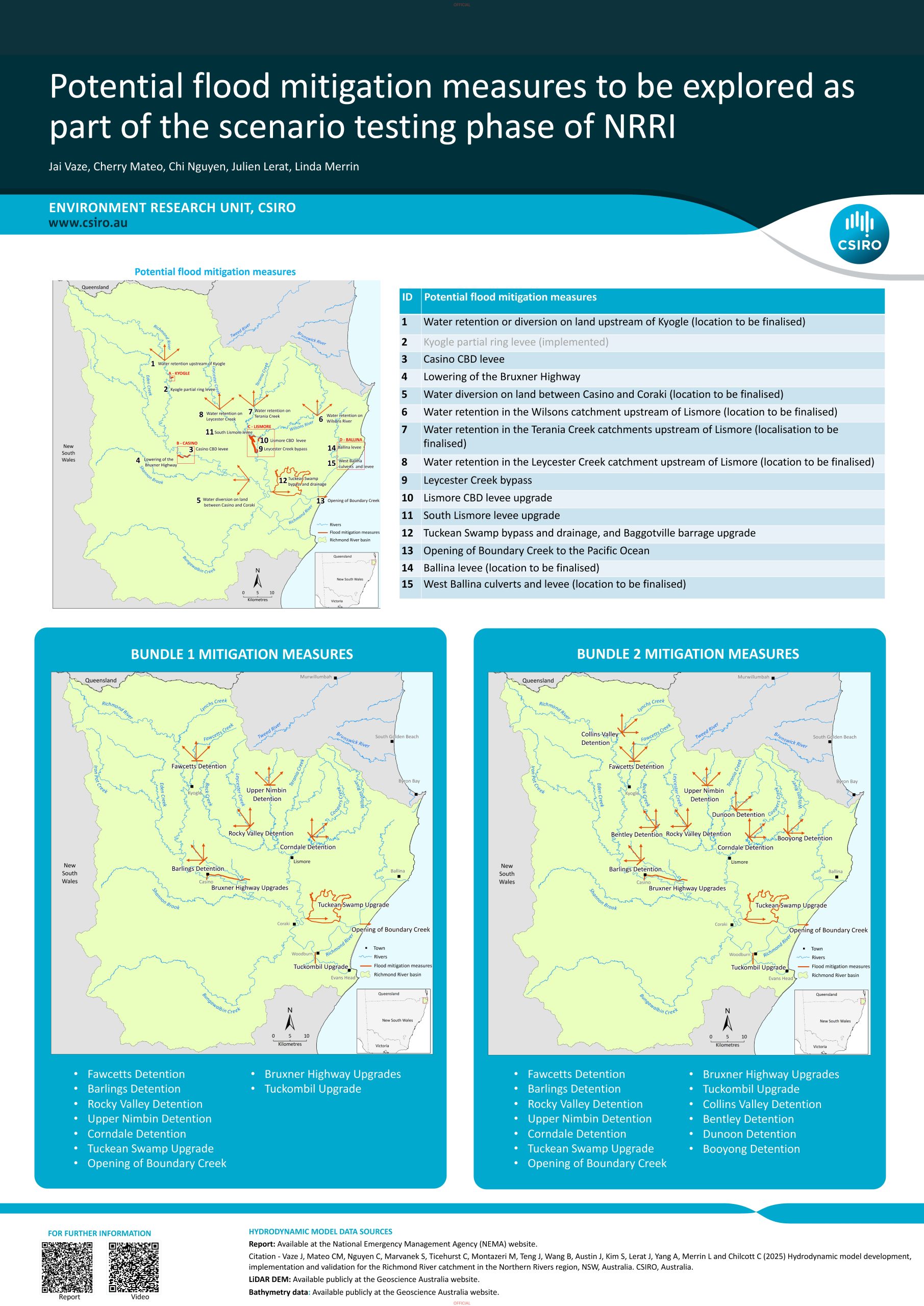
The measures now selected by the CSIRO include many new names and locations that no-one could have specifically voted for.
Bundle 1 includes Upper Nimbin, Rocky Valley, Corndale, Fawcetts and Barlings detention basins, and bundle 2 in addition includes Collins Valley, Booyong, Bentley, and ominously, Dunoon. Along with the ‘Tuckombil upgrade’, none of these particular locations were listed in the original fifteen options presented.
Dams or detention basins?
After multiple attendees being consistently told at drop in sessions that there would be no dams, only gated detention basins to hold back water ‘temporarily’ during floods, flood model lead scientist Jai Vaze later admitted that there could in fact be dams after all, saying that a detention basin could serve a dual purpose, so it becomes part dam.
Given ‘Dunoon’ snuck into the second bundle of measures, I suspect the excuse of flood mitigation (in this case only a few percent of total flows into Lismore) might be used by some to try and resurrect the enfeebled case for the Dunoon Dam zombie.
Yet we otherwise still don’t know exactly where all these dams/detention basins would go. To make any substantial impact on flood heights in a 2022 scenario, it has been estimated they will need a combined holding capacity of 400-500 gigalitres. It would require 28 to 35 basins the size of Rocky Creek Dam (14 gigalitres) to hold that much water back!
If it really wanted community consultation and social licence for the mitigation measures it chose to model, NEMA/CSIRO should have clearly stated the specific dam/basin locations and sizes up front, clear to all, so people could give proper informed feedback on them.
These specifics need to be decided before the model takes its many months to run, so why not tell us beforehand? Have these organisations been directed to keep potentially controversial details from the public, or at least make them very difficult to obtain?

Whose homes and farms, which forests or cultural sites will be endangered during construction and floods? How long will forests and farm vegetation remain inundated – what are the kill-zones? Where will the earth come from for construction? How will all this affect landslip risk?
How much will these multiple large, basins/dams with gates cost to build, operate and maintain?
The CSIRO has spent millions of taxpayers dollars developing this flood model, and it is so complex that scenarios take many months to run on their supercomputers. It is a waste of valuable modelling time and money to include measures that would likely never be granted the social licence, let alone the many billions of dollars of government funding required, if the details of their costs and impacts were known.
Nature based solutions
However, when it comes to Nature Based Solutions (NBS), we see a double-standard applied. Despite NBS not being included as an option to vote for in August, they were nonetheless demonstrated to have deep community support through comments on feedback forms.
Yet the CSIRO responded that ‘no details have been provided for these proposed interventions… Therefore we are not in a position to implement any of these at this time’. This is disingenuous. Few details were provided for the hard engineering measures, yet we were given a tiny box on the paper forms and only 255 characters online to provide their ‘detail’ for NBS.
If the NEMA/CSIRO were serious about this consultation, they should have proactively sought to delineate and model NBS, alongside other mitigation measures with community support, from the start.
To ensure the flood model incorporated the multiple, specific parameters needed to look at NBS, and to use data from NEMA-funded small-scale NBS trials run by Richmond Landcare and associated universities to then model NBS at a catchment scale.
Then and now
Our rivers used to be pristine and full of life – deep, clean water that was drinkable, swimmable and fishable. But with the clearing of 99 per cent of Big Scrub rainforest, the draining of wetlands and inappropriate agricultural practices, they now have some of the worst river health ratings in this state.
Further hard engineering measures such as massive dams and interfering with natural wetlands are likely to only make this worse. In contrast, NBS such restoration of rainforest, riparian zones and wetlands, in addition to helping mitigate small-medium floods, could have multiple other benefits, including erosion prevention, decreasing sediment loads and restoring water quality in our rivers, restoring vital habitats and native fish stocks, and sequestering carbon.
And yes, ‘beautification’ of our degraded landscapes and rivers too, with all the added benefits that brings for our mental and physical health, and for recreation and tourism.

Ultimately, however, for major and catastrophic floods like 2022, no mitigation measures are likely to stop them. As reported in his recent Lismore App interview (29/9/25), lead scientist ‘Jai reinforced that nothing could hold back the impacts of a February 28 2022, 14.4m flood.’
Real solutions needed
So what would be the point of spending billions of dollars on infrastructure that won’t prevent another flood like 2022? Are we expected to cross our fingers and hope it doesn’t happen again?
I doubt this will be good enough for the insurance companies, let alone taxpayers paying for wasted infrastructure and especially those still sitting in harms way on the floodplains.
Indeed, the only guaranteed way to keep people and property safe is to get them off the floodplains. The NSW government’s attempts to do this so far been have been grossly inadequate – patchy, glacially slow, and again, with poor community consultation.
A relocation and house raising program – based on 2022 flood levels (at least) – done once and properly is likely to be far cheaper than building, maintaining and compensating landowners for the large-scale, widespread and invasive hard engineering measures proposed.
Our community wants to be protected from the impact of flooding. We do value the role of good science in helping achieve this. But we expect to be consulted properly, and not corralled into meekly accepting a mutating list of expensive and destructive hard engineering measures that do not have the social licence claimed.
It is not too late for the CSIRO/NEMA and government to finally listen, and serve our community.
Dr Luke Robinson (Upper Richmond catchment resident & spokesperson for Lismore Greens)
 For four decades The Echo has printed the stories some people loved, some people hated, and some pretended not to read. If you want us to keep telling the truth, the real truth, not the sugar-coated version. We’ll need your support to keep the presses rolling.


