


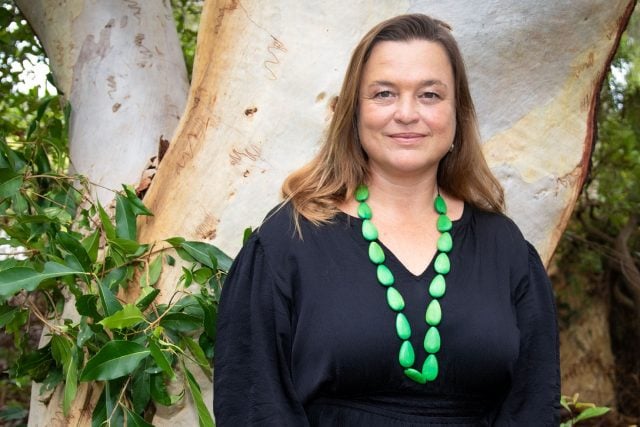
Plans for a network of massive flood detention basins across the Richmond River catchment have drawn opposition from Byron’s mayor, who wants governments to instead investigate nature-based alternatives to reduce the impact of future floods.

Mayor Sarah Ndiaye will take a mayoral minute to next week’s Byron Council meeting calling for Council to formally oppose further progression of the large-scale basins until their potential impacts, costs and locations are publicly disclosed and affected communities consulted.
The proposal follows the release of the final CSIRO Northern Rivers Resilience Initiative report in June, four years after the catastrophic 2022 floods.
CSIRO modelled two bundles of flood mitigation measures across the Richmond catchment, with the larger package incorporating 10 detention basins alongside other works.
The results were significant. CSIRO found the larger package could have reduced Lismore’s February 2022 flood peak by up to 2.07 metres, with substantial reductions also modelled for Casino and benefits extending downstream to Coraki, Woodburn and Ballina.

However, CSIRO stresses that the modelling does not mean the basins will be built. Detailed business cases, cost-benefit analysis, environmental and geotechnical investigations, design work, government approvals and funding would all be required first.
The federal and state governments have committed a further $3 million to investigate flood resilience options following the report.
Cr Ndiaye argues that money should instead be used to investigate nature-based measures and other scientifically supported alternatives.
‘Large-scale dams have the potential to significantly alter rural landscapes, affect farming enterprises, disrupt transport networks and impact communities that have existed for generations,’ she says in her background notes.
‘Important questions remain regarding land acquisition, loss of productive farmland, effects on roads and bridges, biodiversity and native habitat, cultural and historical values, compensation, funding, project costs and long-term impacts.’
The mayor also argues that nature-based approaches were not investigated as viable options in the CSIRO modelling, despite evidence that measures which slow, store and absorb water can provide broader environmental benefits.
The issue has already attracted political scrutiny. Questions were raised in NSW parliamentary budget estimates last year over the absence of nature-based measures from the options presented during community consultation. The NSW Government responded that broader environmental impacts would need to be assessed through subsequent disaster adaptation planning.
Cr Ndiaye’s motion also highlights Byron’s own flood vulnerability, noting that the Brunswick River catchment was excluded from the CSIRO modelling. It calls for previously identified local works, including Jonson Street flood protection and drainage upgrades, to proceed urgently.
‘Regional collaboration must be equitable,’ Cr Ndiaye says. ‘It should not result in one community bearing disproportionate impacts for the benefit of another.’
 For four decades The Echo has printed the stories some people loved, some people hated, and some pretended not to read. If you want us to keep telling the truth, the real truth, not the sugar-coated version. We’ll need your support to keep the presses rolling.


