


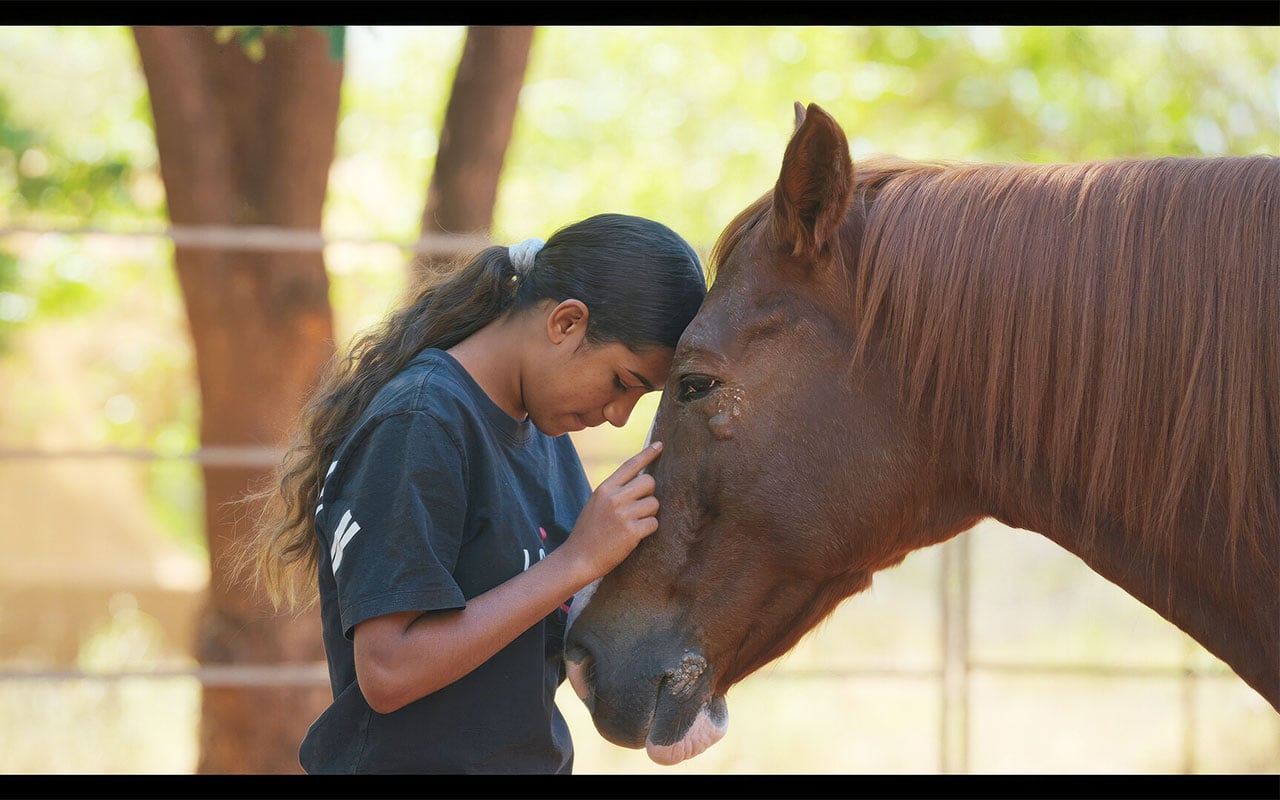
Letting horses take the lead
Guided by Horses is a film that follows Aboriginal Professor Juli Coffin and the young people of Yawardani Jan-ga (‘horses helping’ in Yawuru language), a groundbreaking Aboriginal-led equine-assisted learning program where horses, Country and culture come together in unexpected ways. For young people navigating the pressures of growing up, questions of identity and the effects of cultural disconnection, the horses offer something remarkably simple: a chance to be present, to be seen and, gradually, to see themselves differently.
Seven spoke to Professor Coffin and Guided by Horses filmmaker Sean O’Reilly in the lead up to the Byron Bay Film Festival.
What inspired this film?
Sean: My partner, Sophie, and I were looking for an Australian story involving animals – something emotional and uplifting. We heard Juli speak on a podcast, and her work seemed to bring all those elements together. We got in touch, talked, and gradually found our way into the project.
Juli: The work has always felt visual to me. When people visit the block, they can see and feel what happens there. Film offered another way to share that experience. It also fits with how I think about telling stories – instead of reducing a young person’s progress to boxes on a form, we can show a fuller picture of their journey.
What does the program offer young people?
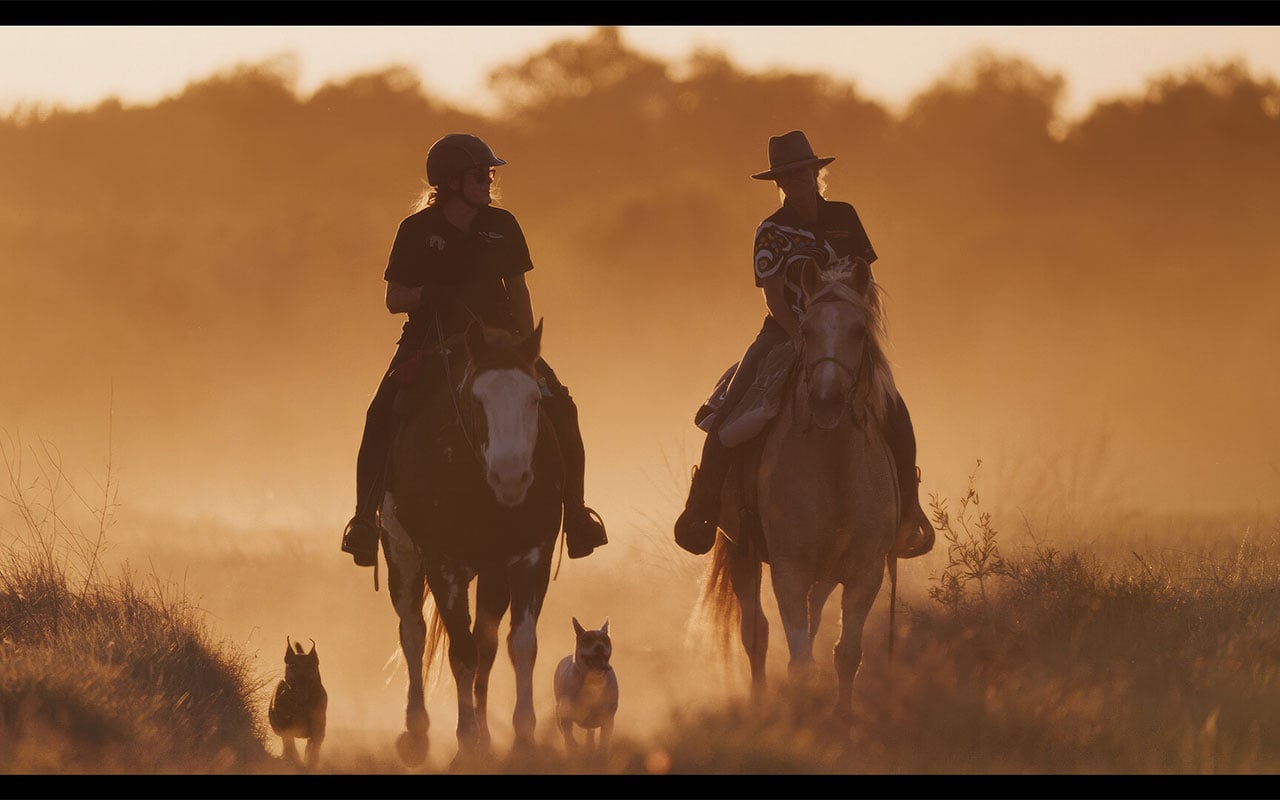
Juli: We work with horses through equine-assisted learning. The horses help create a space where young people can be present and build relationships. The focus isn’t on labelling a young person or defining them by a problem. It’s about what’s happening that day and what the horses can offer.
The program serves around 45 to 50 young people. We currently have four Aboriginal equine-assisted learning practitioners, and we hope to grow to six next year. Building stability for the team matters – secure employment helps practitioners keep doing this work.
How did you make sure filming didn’t disrupt the young people’s experience?
Sean: That was really important to Juli. We learned to observe rather than interfere. Much of the filming with the horses was done from a distance, and we placed microphones on the practitioners, not on the young people. We wanted the children to be able to focus on their time with the horses, not on the camera.
Juli: The young people in the film were chosen thoughtfully, so the story could show a range of ages, genders and personalities. They were familiar with photos and video at the program, which helped make filming feel natural.
What role do the horses play in the film?
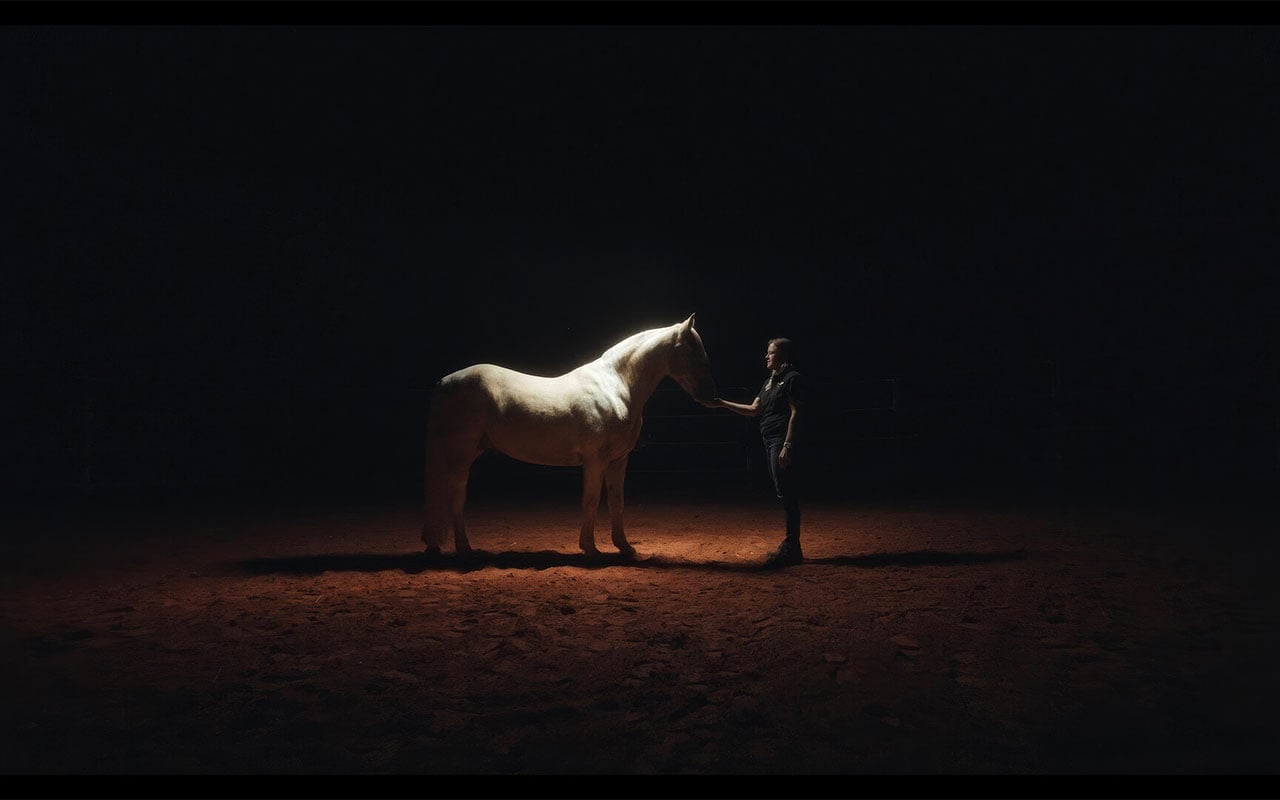
Juli: We have eight horses, each with their own character. Elvis, for example, is a rescue horse who arrived unhandled. He can be very clear about boundaries. In the film, you see him ask Athena to communicate differently. Those early lessons help her develop a connection with another horse (Paris) later on. He’s kind, reflective and a favourite with the young people.
What do you hope will be the audience take away?
Sean: We wanted the film to be welcoming even to people who aren’t especially interested in horses. It should be entertaining and feel cinematic, while also giving audiences a quiet moment to reconnect with nature. People have told us they feel immersed in the visuals, music and sound.
Juli: I hope audiences leave with three things: hope, change and gratitude for the chance to witness the work. Aboriginal wounds do need Aboriginal medicine – we have our own ways of supporting young people and creating these spaces in culturally grounded programs. Young people have the capacity to change and become their best selves, but too often lack the support they need. I hope audiences look beyond negative statistics and see the possibility of healing, rebuilding and reaching potential. Sharing the program through the film is a gift, an opportunity to offer people insight into the work and its positive impact on brighter futures.
For Juli, the film is an invitation to glimpse the program’s everyday work – and the possibilities that can grow when young people, practitioners and horses meet with patience, care and curiosity.
Screening times for this and all other films can be found at bbff.com.au.
 For four decades The Echo has printed the stories some people loved, some people hated, and some pretended not to read. If you want us to keep telling the truth, the real truth, not the sugar-coated version. We’ll need your support to keep the presses rolling.