


Byron Shire Council largely does not know the condition of its $114 million underground stormwater network, with a draft infrastructure plan warning that limited inspections are creating a risk of pipe failure.
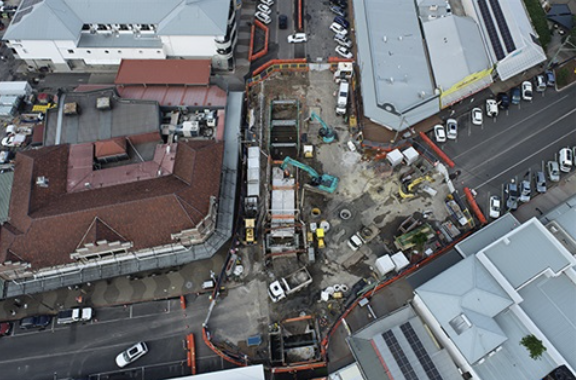
The finding concerns 131 kilometres of drainage pipes and 5,623 pits and inlets that form part of the shire’s stormwater and flood mitigation system.
Council’s draft Stormwater Asset Management Plan 2026–2035 says minimal camera inspections have left it without reliable information about the network’s condition and future repair needs.
‘Minimal underground stormwater pipe CCTV data is available and is creating a risk of potential pipe failure through Council not knowing the overall condition of the underground network,’ the plan states.
‘This has primarily been a result of challenges in operations and maintenance funding availability to date.’
The document will go before council’s Transport and Infrastructure Advisory Committee on October 29 for comment. It is a draft, with the agenda item seeking feedback rather than adoption.
 The pipes have a replacement value of $92.1 million, while pits and inlets account for another $21.8 million, based on council’s July 2025 valuations.
Camera inspections undertaken on an ad hoc basis have already identified deteriorated pipes requiring repairs. The document anticipates that more extensive inspections could reveal greater renewal needs.
However, the accompanying staff report says an external consultant is currently inspecting a sample of stormwater pipes, pits and inlets.
The results will inform a future amendment to the plan, including updated condition information and funding allocations.
The document also identifies problems in parts of the drainage system where condition information is available.
Excluding the underground pipes and pits, it rates approximately $30 million, or 42 per cent by replacement value, of the remaining stormwater assets as being in poor condition.
For major culvert components, including the structures that carry water beneath roads, the proportion classified as poor rises to 63 per cent by replacement value, or $21.6 million.
Those figures do not represent the percentage of individual culverts that are unsafe. Council’s assessment system assigns an asset’s overall condition according to its poorest component, rather than the condition of the entire structure.
The plan says culverts with poor components will be progressively addressed through capital works and flood recovery programs.
‘Rural table drain maintenance is essential in retaining the condition of adjoining road pavements,’ the plan states.
‘Inadequate maintenance of these drains (primarily due to current budget limitations) is continuing to cause a risk to Council of early road pavement failure.’
Ongoing funding for underground camera inspections is needed to establish the network’s condition and determine what money is required to rectify defects, the plan says.
 For four decades The Echo has printed the stories some people loved, some people hated, and some pretended not to read. If you want us to keep telling the truth, the real truth, not the sugar-coated version. We’ll need your support to keep the presses rolling.



