


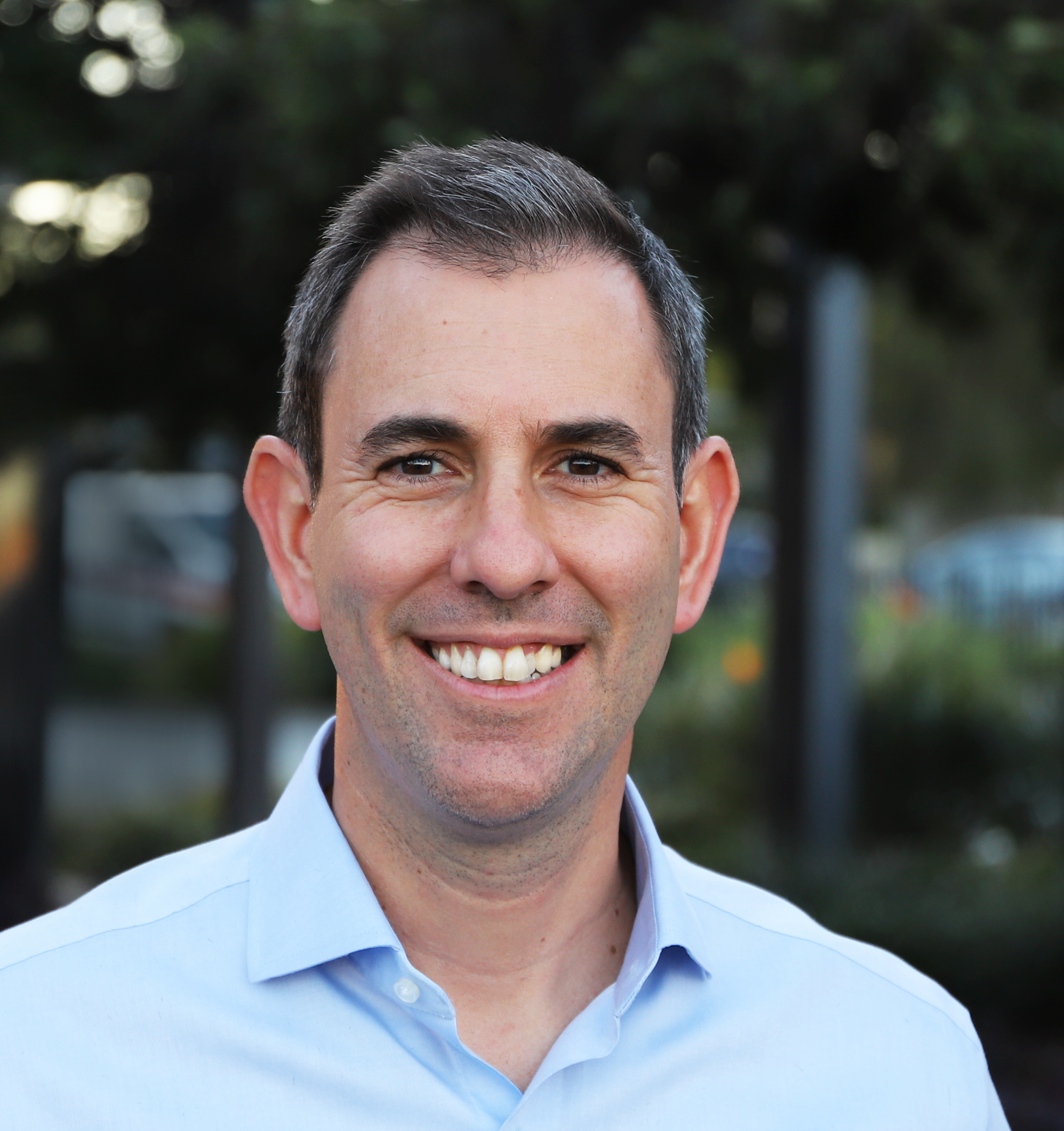
Logan boy made good Jim Chalmers fronted up to the Shine Dome in Canberra last week to give a memorable and candid speech about the challenges facing his government, and the nation.
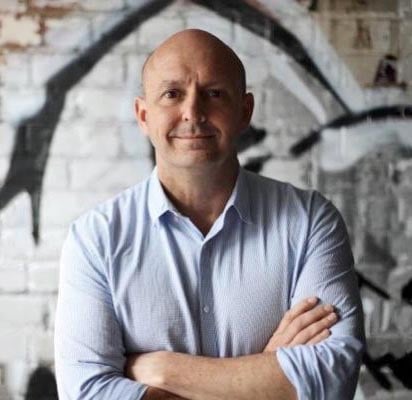
The MC for this event, Australia Institute economist Richard Denniss, has been a strong critic of the Albanese government on a number of issues, so it was good to see Treasurer Chalmers venturing beyond bean-counting territory in his Bernie Fraser oration to talk about the potential and perils of reform, in an increasingly hostile political climate.
Denniss honoured Bernie Fraser’s transformative public service career before talking about the practical effects of the government’s changes to the Stage 3 tax cuts, which were derided by many as a broken promise but have shifted more than $84 billion toward low and middle-income Australians.
He noted that this was the first piece of legislation introduced to permanently increase the taxes paid by the highest income Australians since the 1960s. The recent changes to capital gains tax and negative gearing have also helped to correct the widening gulf between rich and poor.
‘It’s important that we recognise these things because change is not easy,’ he said. ‘Most of the media I read suggest it’s the worst thing that ever happened, because it might even make houses cheaper!’
As Dennis put it, ‘Democracy isn’t perfect, but democracy thrives on high expectations.’
A volatile landscape
Jim Chalmers acknowledging Bernie Fraser’s immense contributions to Australia’s economic institutions, including the Treasury, the Reserve Bank, inflation targeting and compulsory superannuation, before described the contemporary economic and political landscape: conflict in the Middle East was adding pressure to inflation, interest rates and borrowing costs, while rapid changes in technology, energy, demographics and geopolitics were contributing to uncertainty.
He said these pressures were leaving many people feeling disconnected from opportunity and more receptive to nostalgic promises. ‘The past will always feel safe and familiar and desirable because, by definition, we understand it better than we understand the future…
‘Facts don’t beat feelings. Feelings are as real as facts,’ he said.
‘Our role as progressive people is not to scold those who see appeal in that message. It’s not to mock them, cancel them or talk down to them. The true mission of serious progressive people is as old as liberal democracy itself,’ Chalmers said.
‘The far right strategy is to divide people, and it’s working. Their goal is to talk down our economy so that their endless negativity becomes a self-fulfilling prophecy.’
He said it was necessary to show people that far right policies would weaken the nation that we love. ‘There’s no going back to an imagined past. Partly because it never really happened the way that they remember it, but also because we need to respond to the world as it is, and not the world as it was.
‘[We need to] persuade working people that the path that we advocate, the path that we haven’t walked before, is actually the safer, more secure, and more prosperous path for them and for their loved ones. And you do that by starting not from a place of smug moral superiority, but from a place of genuine respect and understanding.
‘Hoping that the far right goes away or implodes again is not actually a strategy.’
Bernie’s response
Bernie Fraser praised Chalmers’ focus on working people, while urging attention to small businesses, farmers and tourism operators reliant on migrant labor. He questioned whether interest-rate rises were effectively addressing inflation while imposing hardship on households and businesses, and called for greater consideration of the Reserve Bank’s broader responsibilities.
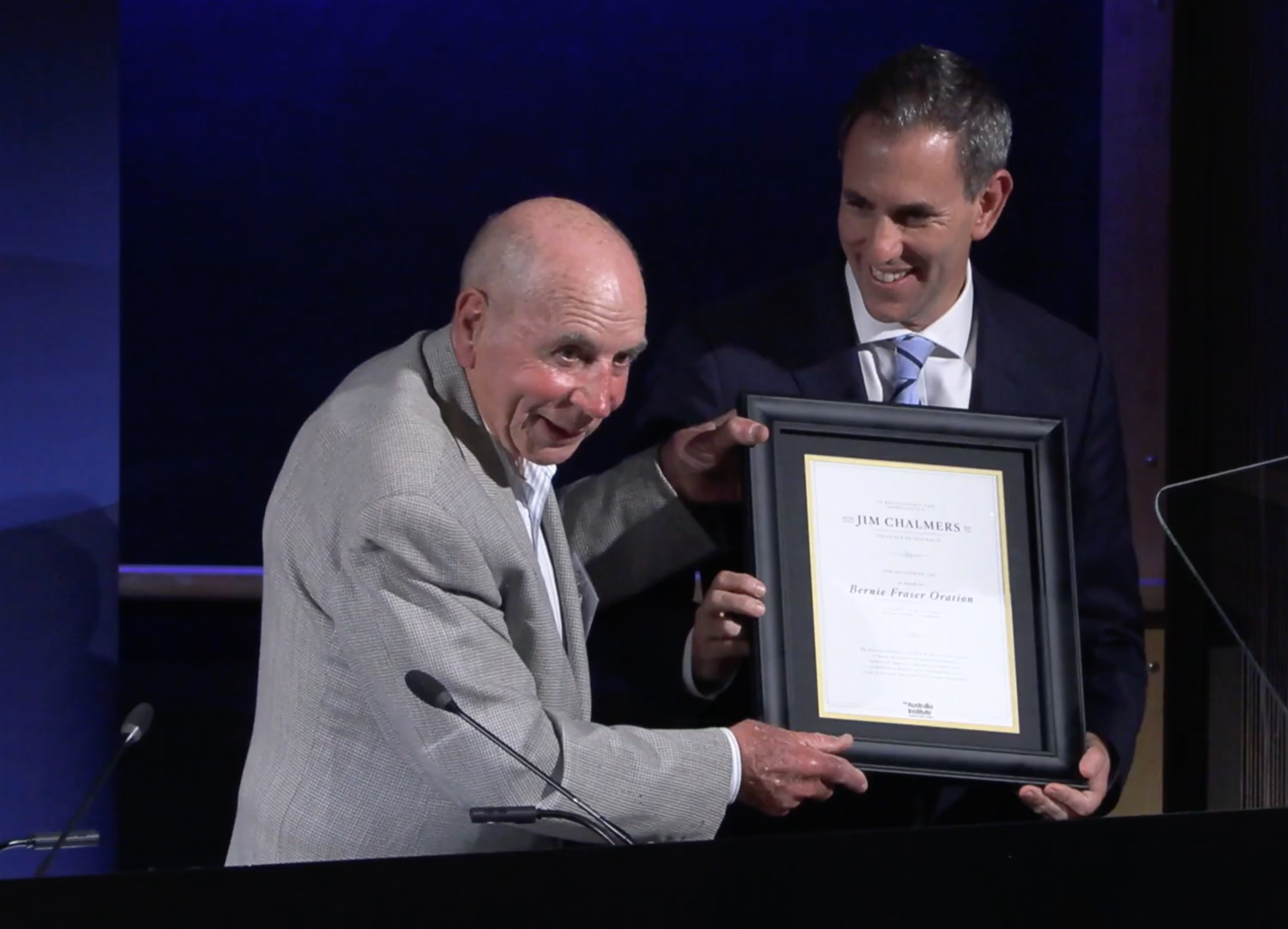
Mr Fraser also renewed his strong criticism of AUKUS. ‘Now might be the time to pull on those ridiculous nuclear submarines,’ he said.
Richard Denniss closed with a defence of tax as an essential part of any functioning democracy. ‘Tax is good because tax is the price we pay to live in a civilized society, and if we don’t collect tax, we can’t have the nice things.’
He said that despite all the mumbo jumbo around the subject, it was actually pretty simple. ‘Tax things you want less of, subsidise things you want more of.’
Labor may have its challenges when it comes to tax and economic reform, but these pale when compared to what’s left of their opposition. The merest suggestion from former treasurer Josh Frydenberg last week that the GST could be tweaked was instantly shot down by Angus Taylor.
With France exploding into violence as the gap between rich and poor threatens to drive that country into the hands of the extreme right, or another revolution, it’s good to be reminded why things like democratic government, economics and monetary policy were actually invented, to deliver a better life for ordinary people, not billionaires.
Hopefullly Anthony Albanese and Jim Chalmers can hang on to that as they stumble forward, instead of pursuing political power for its own sake.
The complete Australia Institute event is now available to view on YouTube.

Originally from Canberra, David Lowe is an award-winning filmmaker, writer and photographer with particular interests in the environment and politics. He’s known for his campaigning work with Cloudcatcher Media.
 For four decades The Echo has printed the stories some people loved, some people hated, and some pretended not to read. If you want us to keep telling the truth, the real truth, not the sugar-coated version. We’ll need your support to keep the presses rolling.