


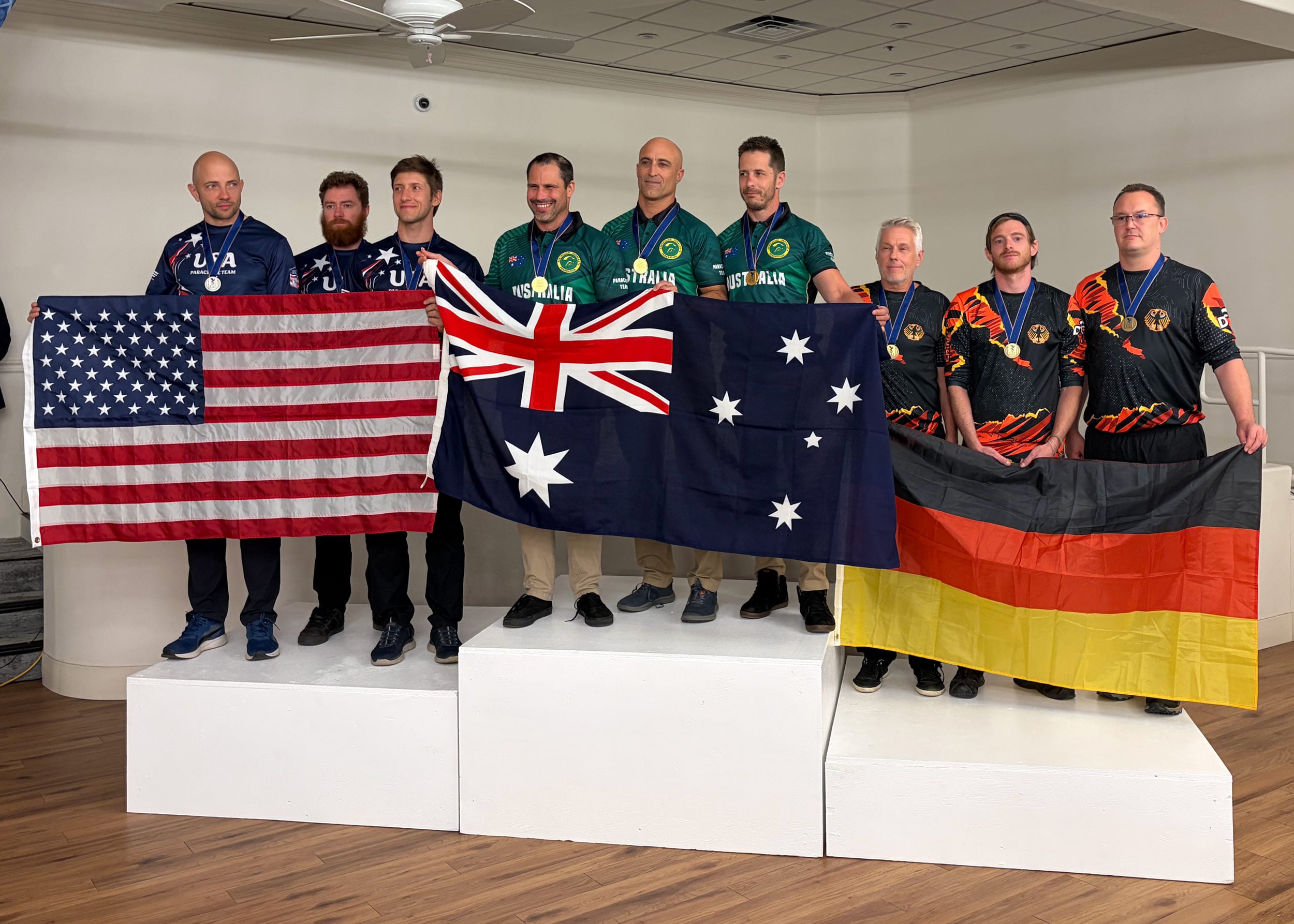
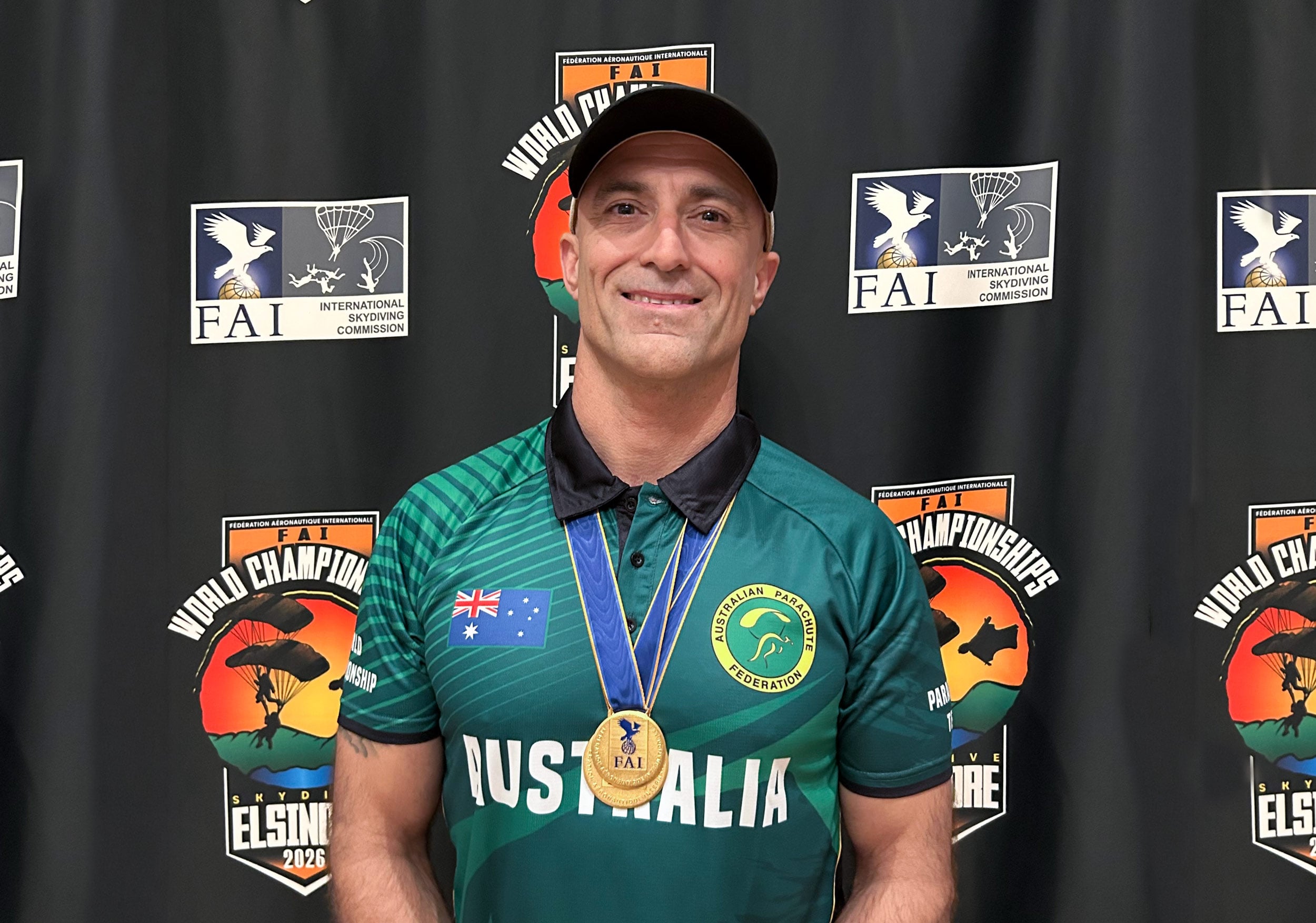
Northern Rivers wingsuit pilot Chris Geiler has returned from the the sixth World Championships in Performance Wingsuit Flying held at Skydive Elsinore in California, with a win in the speed division.
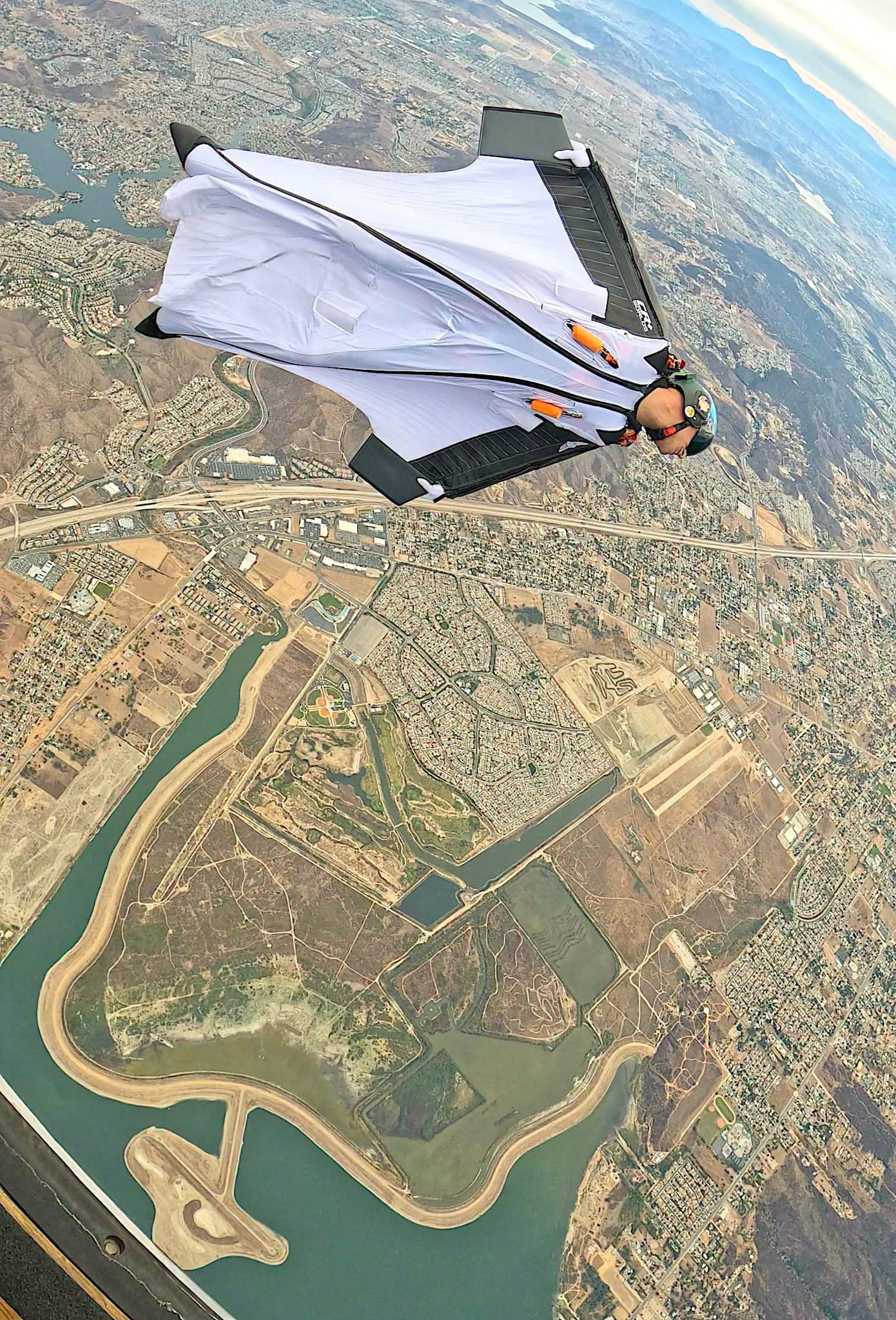
Geiler, who is the fastest unpowered human to fly horizontally across the planet (think as fast as your average formula one racing car: with no car), holding the world record of 326.8kph since October of 2021.
Geiler is part of a team who between them have won five out of six Worlds, with team-mate Luke Rogers securing the overall championship this year to claim his second world title.
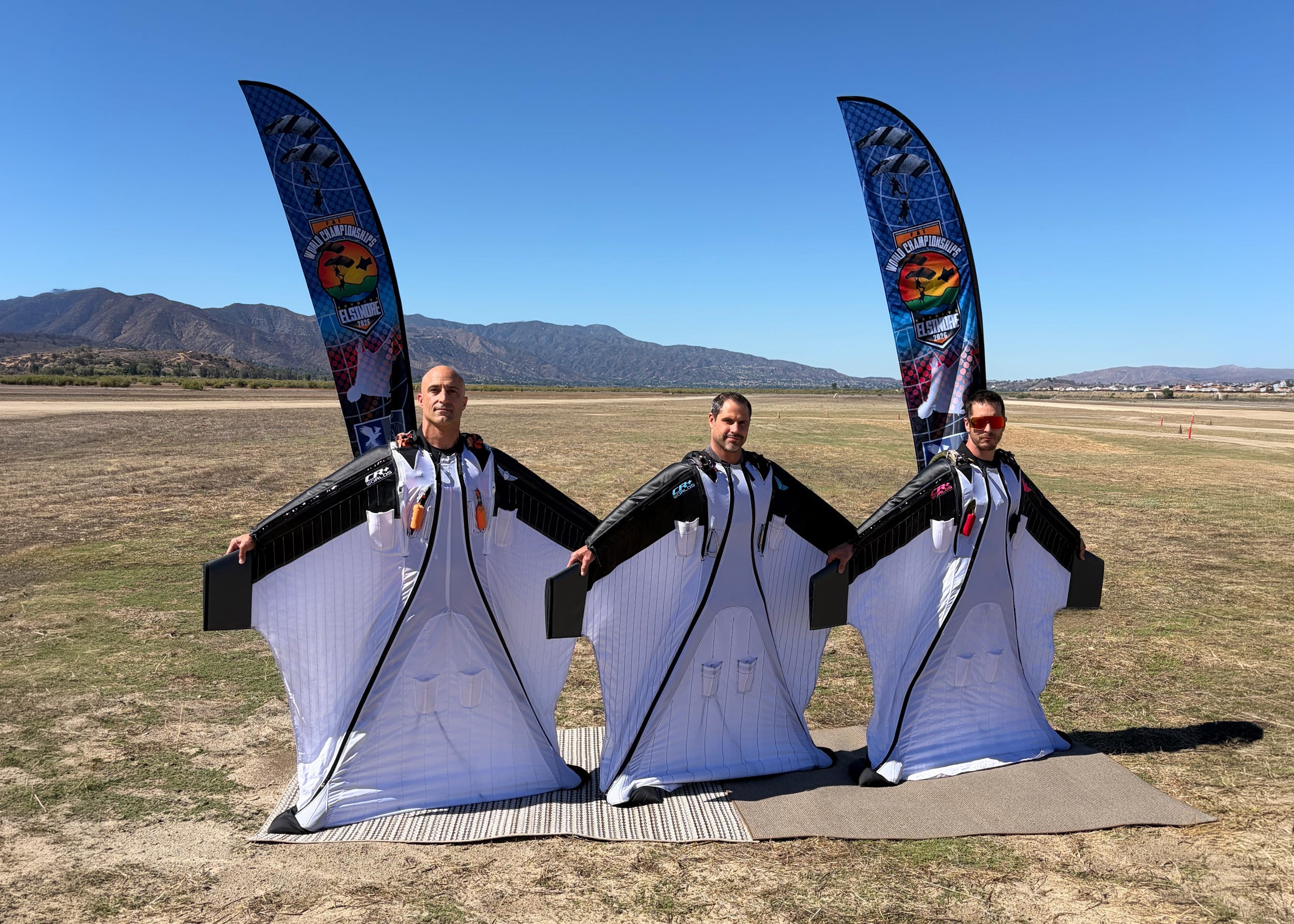
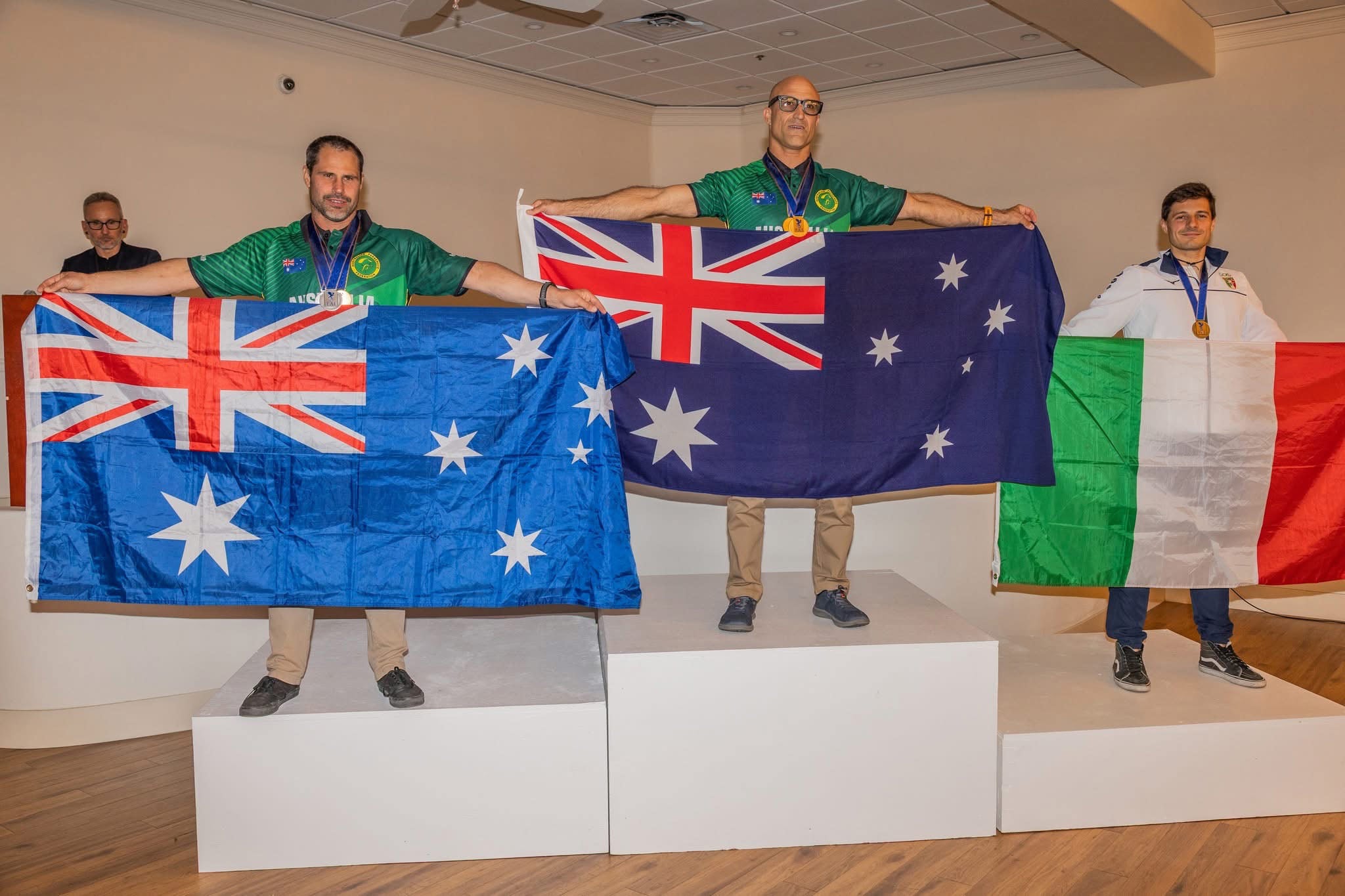
The Championships ran from October 8 to 14 with Geiler, Rogers and Jason Dodunski making up the Australian team. Dodunski won the distance category and placed third overall. Geiler placed fourth overall and the Australians won the combined team event.
There was a hurricane
Weather delays interrupted the competition for about two days owing to the rare presence of a hurricane off the Californian coast, but competitors still managed to complete all nine competition jumps.
For Geiler, it was his first competition back since retiring in 2022 after winning his third world championship title, the result marked a successful return to competition and opportunity to represent Australia.’
Australian Performance Wingsuiting is strong
Geiler, who coached Rogers and Dodunski when he retired, says he taught them all his secrets. ’So, Australian Performance Wingsuiting is super strong.’
Geiler says the comp went well, though he feels he could have done better with more training.
‘I only did 60 training jumps in the past 12 months when I should have done at least 200. The work/family life makes it hard without having any financial support. I think I’d need to find a major sponsor to compete again at the next Worlds. There’s no prize money for these events. It’s not fair on my wife and kids for me to keep sacrificing so much time and money into something that has no financial gains.’
Though he loves to fly, Geiler says the comps are all business.
‘Even after finishing the comp run you’re just focused on having a good deployment and then you’re physically exhausted once the parachute opens. The big (flying) suits are a work out and stressful!’
Geiler says he and the team also try to help lesser experienced people with their flying skills and preparation while on the ground in between jumps.
‘Apart from that we’re just in comp mode, with less than an hour in between jumps.’
‘A lot about this sport is analyzing the jump afterwards on the computer and working out what could have been done better and then improving on the next jump. It’s all GPS based so there’s a lot of information available for competitors to decipher.’
On the edge of being out of control
Geiler says the speed runs can be tricky. ‘Flying at that speed is like being right on the edge of being out of control. Every movement needs to be slow and smooth to stop you from flipping and being out of control in a flat spin.’
‘Speed runs are kind of scary but my best speed runs feel easy, everything just falls into place and happens smoothly. The worst are where you’re swerving across the sky at over 300kph, hoping you can hold it together until the end of the competition window.’
 For four decades The Echo has printed the stories some people loved, some people hated, and some pretended not to read. If you want us to keep telling the truth, the real truth, not the sugar-coated version. We’ll need your support to keep the presses rolling.