


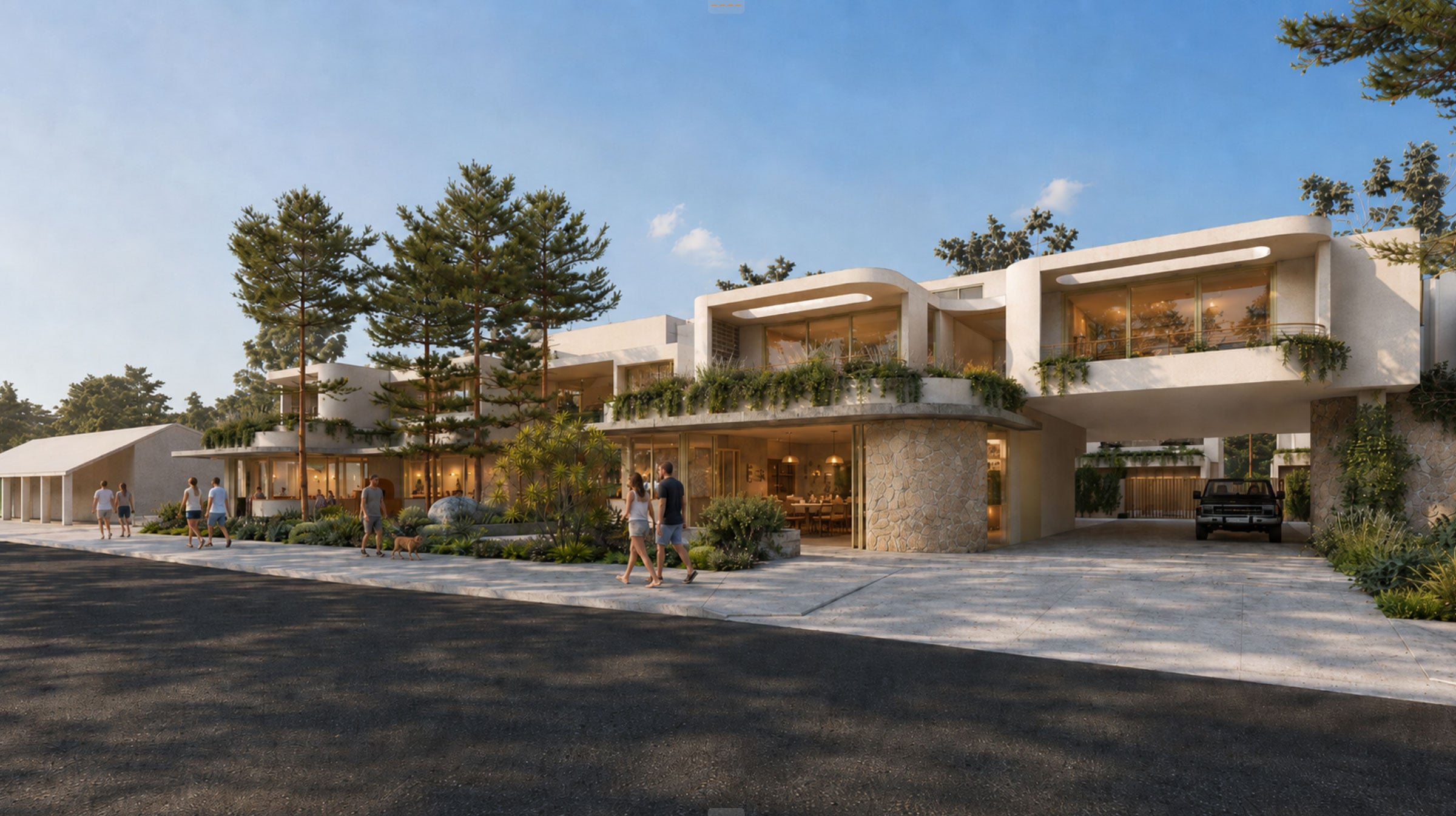
The proposed development at 9-13 and 15 Clifford Street, Suffolk Park has again raised significant community concerns as the developer and community debate the range of potential impacts on the site and the broader community.
Of particular contention is the ecology of the site, with the community raising concerns over the loss of biodiversity and established important trees and lower-storey vegetation as well as the impacts on koalas and other native species.
Following the Land and Environment Court (L&EC) refusal of the first development application (DA) for the site the project manager for developer Denwol, Mark Howard, told The Echo that, ‘The current 2026 application is a substantially different scheme, specifically redesigned to address many of the concerns raised previously’.
‘The buildings have been carefully positioned around the clusters of coastal cypress pines.’ They have a proposed offset of more than 1,000 native planting and have had ‘detailed root mapping, increased setbacks and the establishment of a dedicated restoration area, including the planting of an additional 11 coastal cypress pines. The ecological assessment identifies just one koala food tree, a swamp mahogany, which is proposed for removal. The ecologist found no koala scats or other evidence of koala use during the site assessments,’ he told The Echo.
‘These findings come from Mark Free of Blackwood Ecological Services, an experienced and highly regarded local ecologist who assessed the site in May 2025 and July 2026.’
Disputed
However, community members have disputed some of these findings pointing out that Byron Shire Council (BSC) has commented in development advice that, ‘It is noted that the coastal cypress pine community on the site is not restricted to cypress pines only; it includes any native vegetation on the site which forms part of this community’.
There are 16 trees the DA seeks to remove and while only one, the beach bird’s eye, is listed as endangered the community says the others are native species protected under BSC’s DCP Chapter B1 – Biodiversity.
‘This is not insubstantial. It may be below the Biodiversity Offsets Scheme Entry threshold, but these trees, with the exception of one of the cheese trees which is young, are mature, in good health, with significant canopy, habitat and other ecological values. Three palms to be removed are protected native vegetation. These trees also support the grey-headed flying-fox.’
Community members have said that Commissioner Danielle Dickson, in the previous L&EC refusal, stated that she, ‘preferred and accepted the evidence of Council’s arboricultural expert, (Mr Tesoriero), that the coastal pine endangered ecological community is actually an assemblage of species, not just coastal cypress pines.’
Mr Howard told The Echo that according to their ecologist’s report, ‘The site is not located within a designated wildlife corridor’.
‘The existing property is heavily developed, with high fencing along its northern, eastern and western boundaries and a busy road along its southern frontage,’ he explained.

Koalas
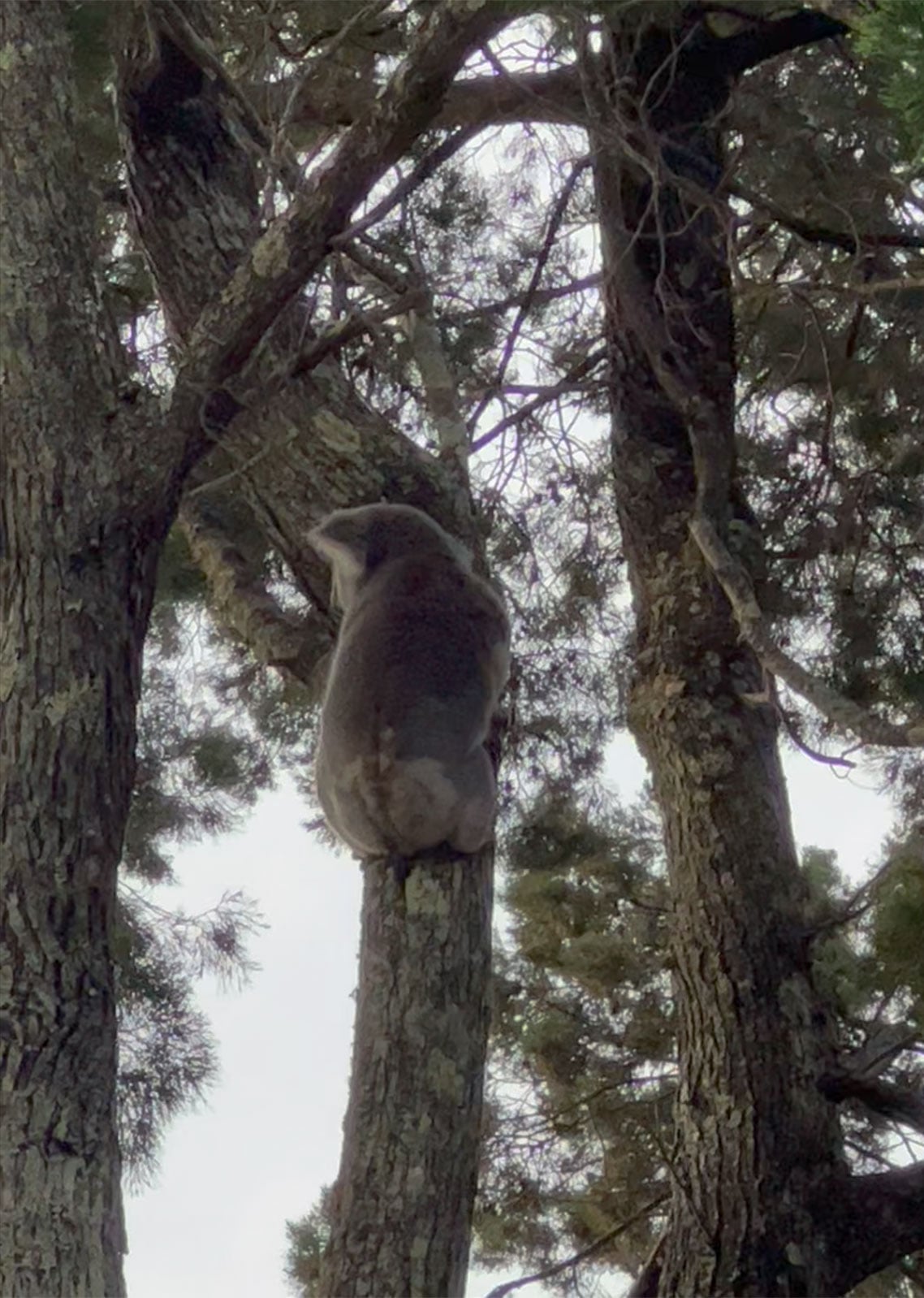
‘These conditions already significantly constrain wildlife movement through the property. Koalas are occasionally sighted in the broader area. In fact, one was recently found in a pine tree on the site and relocated to a wildlife corridor for its own safety.’
Nonetheless local community members say that the Community Consultation Report notes that the site is a koala corridor.
‘Available data from Friends of the Koala (FOK) testifies to significant koala activity in Clifford Street and other localities throughout Suffolk Park. Five koalas have been sighted or rescued from 9-15 Clifford Street over the period from 2020 to 2022 according to their data spreadsheet.’
Community members pointed out the significant and complex documentation that has come with the DA has taken time and effort to try to understand, saying it would have been helpful for the developer to run some public meetings as they did for the previous DA to clarify points where potential misunderstandings could arise.
 For four decades The Echo has printed the stories some people loved, some people hated, and some pretended not to read. If you want us to keep telling the truth, the real truth, not the sugar-coated version. We’ll need your support to keep the presses rolling.



