


Luis Feliu
Tweed Shire ratepayers face an average rate rise of around $12.50 a year for 10 years to fund riverbank restoration works after councillors last night voted to introduce a one per cent levy in the 2015–16 budget.
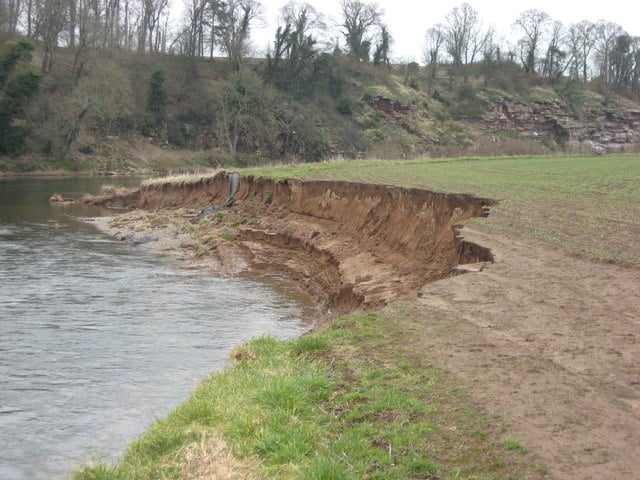
The proposed environmental levy, which has to be approved by the Independent Pricing and Regulatory Tribunal (IPART), would be used initially to fund repair work for the eroded riverbank between Murwillumbah and Stotts Island, estimated at $5 million over five years.
Other identified projects that the levy could fund, including biodiversity and bushland management, pest control, sustainable agriculture, water recycling and efficiency, are estimated to cost a total of around $1.25 million a year.
The money raised for the various projects would be matched dollar for dollar by the state government and councillors overwhelmingly welcomed the move, which they say would open up an avenue for extra state funding for the projects and benefit the shire as a whole.
The levy is expected to raise around $500,000 a year for 10 years, which would be matched by the state.
Councillors voted 5–1 (mayor Barry Longland against, Cr Katie Milne absent) to start the process for the introduction of the levy.
But a move by deputy mayor Michael Armstrong to delay the levy for a further year failed to get support from other councillors.
Cr Armstrong said that while there was no doubt all councillors supported such a levy, ratepayers needed more time to look at what was proposed.
‘Because of the process involved, the community gets only a few weeks to comment and this is too short; by delaying it another year they get an opportunity to look at it more carefully and examine all the projects and issues.
‘People have to start talking on this now. They should pick up the phone or send an email to councillors because there’s not much time,’ he said.
Cr Armstrong said there was ‘no doubt’ a need to protect the Tweed’s natural assets.
‘We have the Tweed River, Mt Warning, the caldera, so much here of significance we have to protect.’
Leverage
Cr Gary Bagnall said the proposed levy was a small and insignificant contribution, which would give Tweed Shire Council ‘leverage’ in obtaining state funding for the works.
Cr Bagnall said he would be happy to ‘double’ his $12.50 contribution, which he described as a ‘ridiculously small amount to look after our environment’.
‘Every year you don’t have it is money lost, as well as in-kind contributions from the government for these projects.’
He said that unlike a proposal last year by Cr Warren Polglase to introduce an ‘environmental’ levy of around $14 for maintenance works around the shire, including roadworks, the latest levy plan would give the community a ‘good outcome’.
‘There are plenty of other councils doing similar things to protect their natural assets,’ Cr Bagnall said.
‘Because of the rich biodiversity of our Green Cauldron, we need to look after this environment as best we can and this helps us do that.
‘It is only $12.50 a year average per ratepayer. The leverage we gain will be big. All councillors think it’s a good idea,’ Cr Bagnall said.
In their report, staff said expenditure on the Tweed River Bank Management Project was estimated at $5 million over five years.
They say erosion in parts of the river has been severe and could undermine Tweed Valley Way, requiring further strengthening and cost.
Up to $350,000 a year would be needed for biodiversity and council bushland management per year to look after around 3,000 hectares of bushland, including weed control and removing illegally dumped rubbish.
Up to $150,000 a year would be needed for animal pest control on council lands and staff say species targeted for control would include wild dogs, foxes, feral cats, rabbits, wild pigs, Indian mynas and cane toads.
A similar amount would be needed to boost Council’s sustainability program, adding on to already established renewable-energy and energy-efficiency projects for council-operated assets.
Sustainable agriculture projects for acid-sulfate soil remediation is estimated to cost $300,000 and a similar amount for Council’s integrated water cycle management.
 For four decades The Echo has printed the stories some people loved, some people hated, and some pretended not to read. If you want us to keep telling the truth, the real truth, not the sugar-coated version. We’ll need your support to keep the presses rolling.


