


Luis Feliu
A push to develop the old Broken Head Road quarry site at Suffolk Park into an estate for 41 houses, to be debated by Byron shire councillors tomorrow, has sparked a backlash from a residents group which claims it should never have been considered in the first place.
They say the site has not been rehabilitated, as per the quarry’s court approval for its operation 15 years ago, and are puzzled as to why the controversial plan has surfaced.
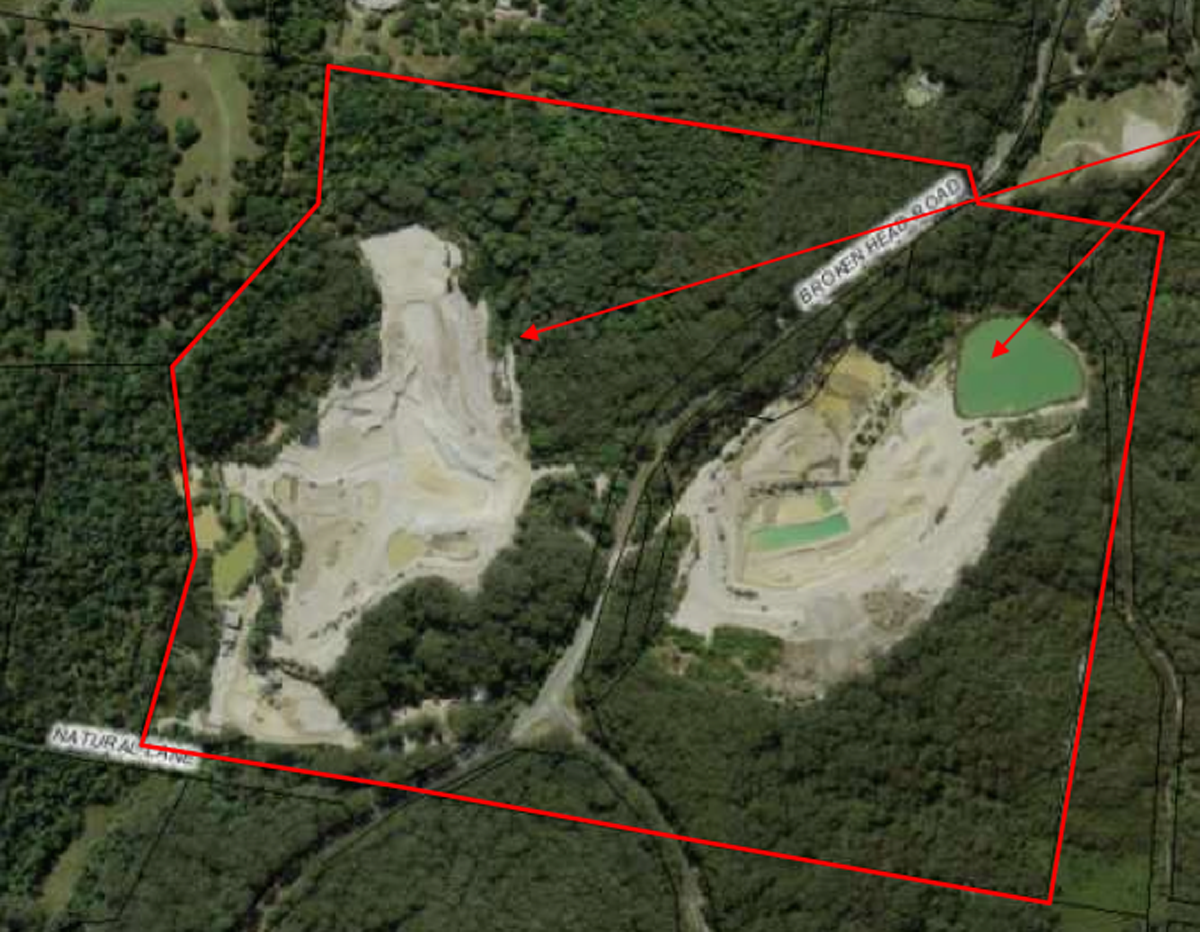
Council planners have recommended refusal, saying the subdivision, proposed for the 52-hectare site on both sides of Broken Head Road, was not suitable for residential development nor in the public interest.
Planners say issues such as the character of surrounding development, Aboriginal cultural issues, the importance of the site as a wildlife corridor, soil contamination and access had to be further explored.
Byron Residents’ Group (BRG) say the plan ‘contravenes all Byron’s planning policies and strategies and should never have progressed this far’.
BRG president Cate Coorey told Echonetdaily the site was far too sensitive to turn into housing.
’This area is adjacent to one of the most significant sites to the Arakwal people with its close proximity to Taylors Lake, which is well known as a Bundjalung women’s sacred lake,’ Ms Coorey said.
‘Since the 1998 heads of agreement between Byron Council and the Arakwal community, council has long had a commitment to protect the ti-tree lake (Taylors Lake),’ she said.
‘This commitment must be upheld. Why is this site even being considered for development? It is not in any strategic document for development such as the Far North Coast Regional Strategy, the Byron Rural Settlement Strategy or the Byron Suffolk Settlement Strategy.
‘This DA is an ambit claim that should never have been accepted for exhibition by council in the first place.’
Ms Coorey said the zoning for the site (extractive resources) did not allow residential subdivision and the site had a long and controversial history.
‘The court approval that authorised the quarry’s operation in 1999 also required that the site be progressively rehabilitated, yet this requirement to rehabilitate has not been fulfilled,’ she said.
‘The site forms part of a wildlife corridor and should be rehabilitated. At least 13 endangered fauna species and 13 flora species of regional, state or national significance were identified before the 1999 approval of the quarry development.
‘The requirement to rehabilitate the site to ensure regeneration of the ecological values of the area must be a priority.’
Ms Coorey said ‘common sense’ suggested council rejects the proposal ‘out of hand’.
‘There is no need to approve any more housing developments in Byron Bay. With the West Byron rezoning we have dwelling numbers that far exceed growth needs,’ she said.
‘Developers should not be of the belief that they can just pick a block of land in Byron Bay and do what they want with it, although it would be easy to get that impression in Byron lately.’
Former Byron shire mayor Jan Barham, now a state MLC, gives background on the quarry site here.

 For four decades The Echo has printed the stories some people loved, some people hated, and some pretended not to read. If you want us to keep telling the truth, the real truth, not the sugar-coated version. We’ll need your support to keep the presses rolling.


