


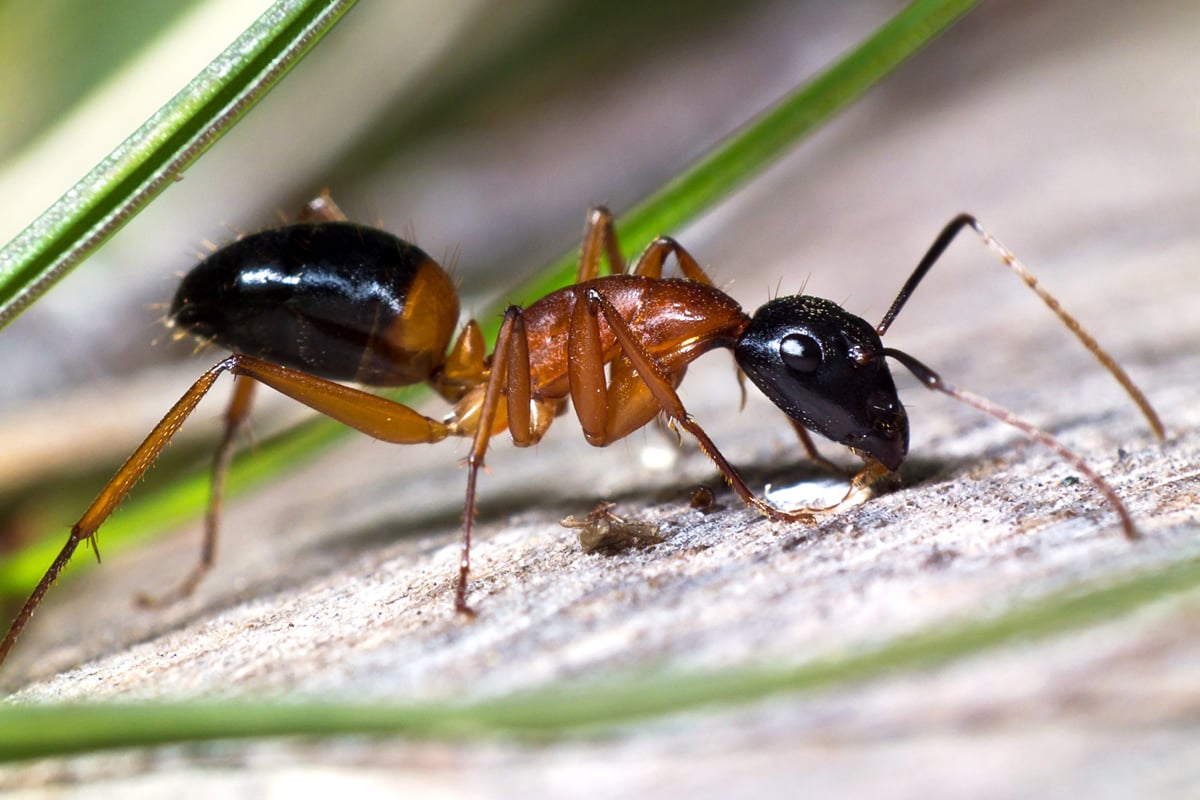
Right now the humble sugar ant is doing great things in your backyard and neighbourhood.
As you start seeing them more during the warm summer months, just follow some handy tips and the sugar ants will leave your house alone. These buddies will instead, get on with the business of planting trees, aerating soils, farming, and cleaning.
Backyard Buddies is a free program run by Australia’s Foundation for National Parks and Wildlife. Each month, you get a Backyard Buddies email (B-mail) with tips to make your backyard inviting and safe for native animals. Sugar ants featured in January B-mail. Sign up for B-mail and download a free factsheet about sugar ants at www.backyardbuddies.net.au.
Susanna Bradshaw, CEO of the Foundation for National Parks and Wildlife, said, ‘Like their name suggests, sugar ants do indeed like to eat sugar and all things sweet but they aren’t fussy and will go for a wide range of foods from insects to seeds. So you can thank these ants for helping to keep your backyard clean and tidy.’
‘During the summer months, sugar ants become much more active as the heat and wet weather drives them out of their nests to explore their surroundings,’ Ms Bradshaw said.
‘As they wander around enjoying the summer weather, the sugar ants will be growing their complex, invisible chemical trails all over your garden.
‘Because of the large size of their colonies, pheromone trails are used by sugar ants to communicate to each other.
‘It’s a good thing these trails are invisible to humans or you might be a little shocked at how many hundreds of ant highways there are in your garden and house.
‘Sugar ants are great little weather predictors. If you see hundreds of ants running around the place in a frenzy, chances are they are trying to find somewhere dry before a storm, so it might be a good time to get your washing off the line.
‘It’s a shame that when you look up sugar ants on the internet, most of the websites that appear are for pest control and tips on how to kill them.
‘These ants are harmless, native animals that play an important role in our natural food web. It is better to find safe, non-toxic ways to deal with any troublesome sugar ants,’ Ms Bradshaw said.
Tips for living with sugar ants
- Make sure these buddies aren’t enticed into your home by keeping all your ingredients in sealed containers and your surfaces free from crumbs.
- These ant buddies actually prefer to stay outside so by making your garden more sugar ant friendly, they will have no reason to leave their comfy homes. They love leaf litter and bushes that attract their sap-sucking buddies, which they collect honeydew from.
- Ants hate citric acid so a safe and natural way to keep them out of your house is to make a lemon and water mixture and spray it around the perimeter of your house. If you know where the ants are getting in, spray just lemon juice around the spot.
‘Ants are the great vacuum cleaners of our natural world. Without them we would have plenty of old food and dead insects lying around. Plus ants help aerate our soils and bring seeds into their underground nests that help grow our forests,’ said Ms Bradshaw.
‘Much like farmers tending their livestock, the sugar ants often tend aphids, caterpillars and other sap-feeding insects.
‘They move these insects to better “pastures” and protect them from predators. Some of our common nocturnal sugar ants have even gone as far as bringing caterpillars and other bugs into their nests during the day and then escorting them back outside under the cover of darkness.
‘This is a mutually beneficial arrangement as the ants eat the “honeydew” secreted by the insects and in turn the insect gets the protection of the whole ant colony,’ said Ms Bradshaw.
‘Some of Australia’s rare butterflies actually rely on this help from the sugar ants to complete their life cycle.’
Interesting facts about sugar ants
The Honeypot Ant is a type of sugar ant found in desert areas in the Northern Territory. The ant stores sweet liquid in its swollen abdomen, much like a honeypot. This sweet juice is a common treat for local Aboriginal people.
- Most sugar ants are nocturnal. They mainly come out at dusk and return to the nest at dawn, but you can often still see some during the day.
- During autumn, flying male and female sugar ants take to the skies to mate. Once the female has mated, she chooses a suitable spot and then bites off her wings and begins growing her own colony.
Ms Bradshaw said, ‘There are hundreds of different types of sugar ants all over Australia.
‘The Banded Sugar Ant is particularly common in eastern parts of Australia and has an orange band around its middle.
‘The Bearded Sugar Ant is common in central Australia and the Golden- tailed Sugar Ant is common in Queensland. These are just some of the common species to keep an eye out for.
‘If you live in Sydney or Brisbane, be on the lookout for the invasive and destructive fire ant, which could be mistaken for sugar ants.
‘Fire ants are usually a reddish colour all over, however people generally notice their sting first! These ants are very aggressive and when disturbed they will give you a painful, fiery sting.
‘If you see a fire ant nest, it is important to notify authorities as they cause significant environmental and agricultural damage,’ she said.
To see if sugar ants are in your area, consult the Atlas of Living Australia. You can search your location and see what species have been seen in it, or you can search by type of animal, click the occurrence records and display these on a map of Australia.
For local information, contact the wildlife officer or bushcare coordinator at your local council, or speak to a ranger at your nearest national park office.


 For four decades The Echo has printed the stories some people loved, some people hated, and some pretended not to read. If you want us to keep telling the truth, the real truth, not the sugar-coated version. We’ll need your support to keep the presses rolling.


