


By Sophie Vorrath, www.reneweconomy.com.au
The potentially industry crippling home battery installation safety guideline proposed by Standards Australia has again been slammed by the industry, as fundamentally flawed and – if passed – certain to throw the energy storage industry into chaos, both in Australia and overseas.
In a newsletter to members on Tuesday, Australia’s Energy Storage Council said that the current Draft Battery Standard ASNZ5139 – which effectively bans the installation of lithium-ion battery storage systems inside homes and garages on the basis that they are a fire risk – needed to be completely re-written.
‘The draft Standard is not evidence-based and has enormous implications for the Australian and global battery storage industry,’ the ESC said.
‘The Energy Storage Council will oppose the adoption of the Draft Standard. The Energy Storage Council will vote against the Draft Standard and will urge other committee members to do the same.’
The call to arms comes at the close of a nine-week consultation period, during which time the draft standard was open for public submissions by Standards Australia, attracting more than 2,900 public submissions.
The submissions will now be ‘considered in detail’, and ‘resolved’ by the technical committee, with any ‘substantive changes’ released for further consultation. Once all comments are resolved, the SA technical committee will hold a vote to decide whether the document is published, or not.
As we first reported here, the draft standard, which requires battery systems to be located outside of homes and garages, in purpose-built ‘kiosks’ or ‘bunkers,’ was first aired in February this year, but was thought to have been hosed down after a major industry-side backlash.
It resurfaced in June, however, as part of the draft voluntary standard for On-Site Battery Systems, when it was released by Standards Australia for nine weeks of public consultation.
In a June 13 media release, SA said that the draft standard – which it noted had ‘not been without controversy’ – currently included provisions to minimise the risk of self-sustaining fires.
‘In considering the fire hazards associated with some of these systems, the draft contains provisions that exclude certain battery systems from being installed inside domestic homes,’ it said.
‘They may be installed externally and adjoining to domestic homes provided certain fire related safety measures are met.
‘These provisions have been included to try to safeguard against hazards during potential failure modes of a storage system, in the absence of available product standards.’
Not surprisingly – even despite the fact that the use of all of SA standards is voluntary – the response has been enormous, with 2917 submissions recorded at the close of the consultation period on Tuesday this week.
These are not published by SA, so it is impossible to know how many were for, or against the standard. But according to the Energy Storage Council – which has led the bid to dump ASNZ5139, and provided a template for members to do the same – not too many of those submissions are likely to have been supportive. Particularly considering the growing number of international battery storage companies putting down roots in Australia for what should be a booming residential market.
In emailed comments to One Step Off The Grid, the ESC said that while it thought the draft standards needed ‘a total re-work’, it had also commented on ‘the most egregious issue of Fire Hazard classification.’
And in a release to members, it outlined its concerns in detail:
‘The draft is based on an old Lead Acid standard that is simply not fit for purpose,’ it says, adding that it takes a ‘lowest common denominator approach’ to battery technology, putting unreasonable restrictions on all systems, regardless of their chemistry and manufacture.
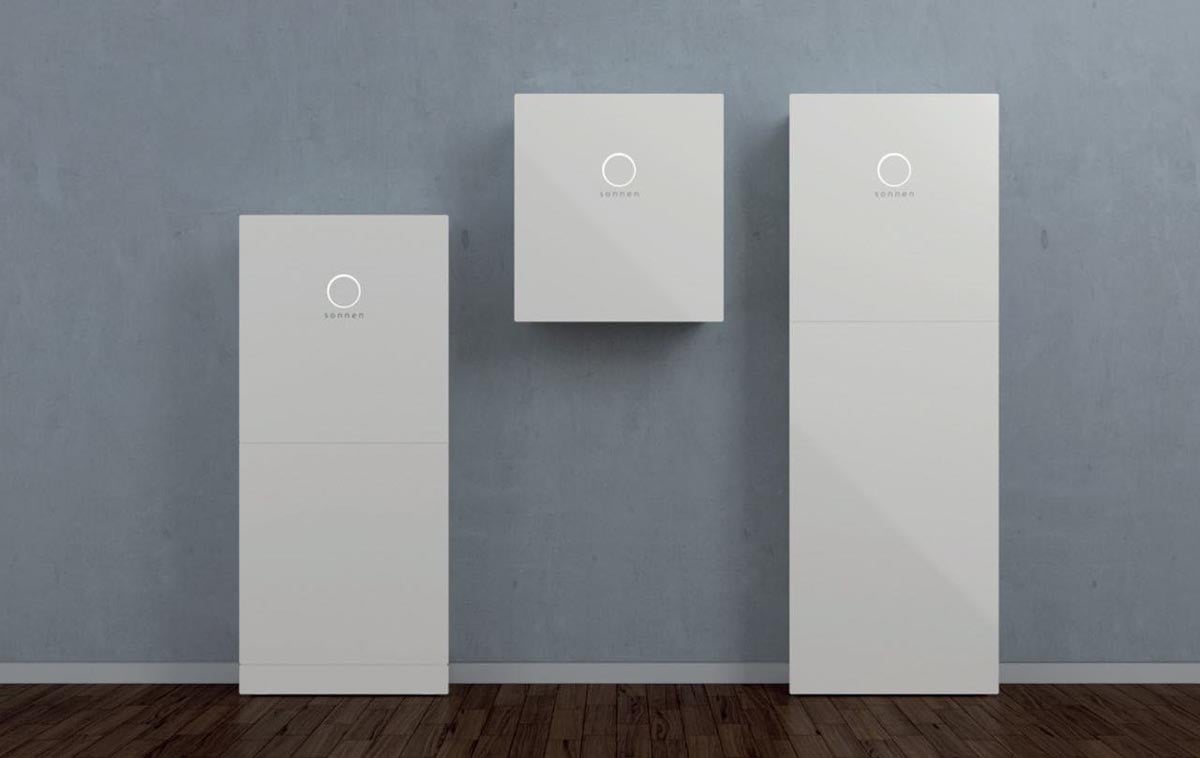
The release also notes that the fire safety issues and the consequential framing of the Draft have not been supported by evidence of actual risks, mirroring criticisms from leading international battery installers, like Germany’s Sonnen, who have rolled out tens of thousands of home batteries across Europe without incident.
‘In Europe, we have 30,000 installations and some of those have been around since 2010, and not one fire has happened, no one has been injured,’ said Chris Parratt, who heads up the Australian operations of global battery giant Sonnen, in comments in February.
‘There is a standard being released in Germany that allows for lithium-ion batteries to be installed in homes. So why Australia appears to be going the opposite way, I don’t know,’ Parratt said.
In an extract the battery maker’s own submission to the SA draft standard, Sonnen argued that the assumption that all lithium-based battery’s posed a fire risk would penalise even those ‘non-hazardous forms of lithium based modules,’ including the lithium-iron phosphate that Sonnen uses.
‘Hazards for specific technologies need to be set out through appropriate certification rather than general statements,’ the company said. ‘The adoption of (the European standard) will identify hazardous and non-hazardous lithium-based products.’
The ESC also notes that the Draft standard ‘blurs, conflates and confuses a range of technologies,’ which it says would make certainty impossible for consumers, manufacturers, resellers and installers.
‘The Draft assumes that ‘any Standard is better than none’,’ the ESC said in a recent newsletter. ‘80 battery storage manufacturers met in Germany this week and the draft Australian standards were the number one issue on the agenda.
‘The global battery storage industry is watching and is alarmed by the proposed Australian approach,’ it said.
‘If this Draft were adopted then the energy storage industry in Australia and globally would be thrown into chaos.’
This article was originally published on RenewEconomy’s sister site, One Step Off The Grid, which focuses on customer experience with distributed generation. To sign up to One Step’s free weekly newsletter, please click here.
 For four decades The Echo has printed the stories some people loved, some people hated, and some pretended not to read. If you want us to keep telling the truth, the real truth, not the sugar-coated version. We’ll need your support to keep the presses rolling.


