



By Eve Sinton
Former Human Rights Commissioner Gillian Triggs has called for an Australian charter of human rights.
Speaking at the Ngara Institute’s annual lecture in Mullumbimby last Saturday (June 30), Professor Triggs said Australia is the only democracy without a bill of rights, and over-reach in executive power by successive governments in the 21st century was deeply damaging to the public.
‘We now need, as a matter of urgency, some form of legislated charter of rights to protect fundamental common law freedoms in Australia and ensure we meet our international human rights obligations that we as a nation have committed to by treaty over the last 70 years or so,’ she said.
‘It could be quite simple. We could draft one tonight – the ‘Mullumbimby Charter of Human Rights.’
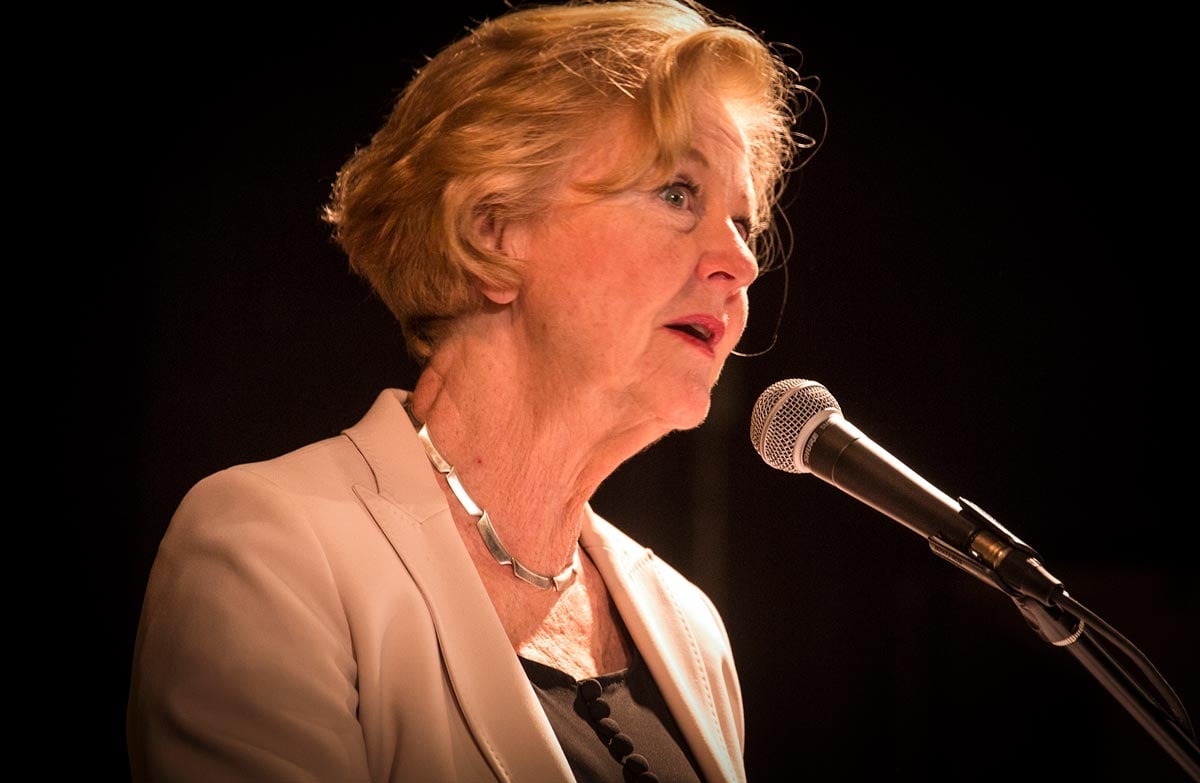
Prof Triggs said the current legal system is failing all Australians, especially the most vulnerable.
‘I date the regression of respect for human rights in Australia [to] that dramatic year in 2001 – the children overboard, the Tampa and 9/11,’ she said.
‘Australia has failed to protect many fundamental freedoms or to comply with its international human rights obligations and has passed laws explicitly to deny those obligations.’
Examples include the government’s attempt to silence whistle-blowers with the threat of two-year prison sentences, and reduced funding for community legal centres to restrict their advocacy.
The recent passage of foreign influence and espionage bills is extremely worrying.
‘The Foreign Influence Bill could criminalise publication of information including opinions or reports of conversations to international organisations.
‘That could include information and opinions about food security, energy security, climate security, economic conditions, migration and refugee policies because these may affect Australia’s ‘political, military or economic relations with another country’.’
She said our implied freedom of political communication may be breached because of broad definitions in offences that criminalise dealing with information that may harm national security.
Espionage offences appear broad enough to capture reputational damage and loss of confidence in an Australian government.
Public interest defence does not extend to journalist sources or civil society advocates. The evidential burden is on the defendant and there is a potential 10-year jail penalty.
Prof Triggs said, ‘It is the most vulnerable in our society – the homeless, the mentally ill, those in administrative detention without trial, indigenous Australians and families – who shoulder the burden of Australia’s declining respect for human rights.’
She said a federally legislated Charter of Rights would better protect the rights of citizens, minorities and non-citizens, and ensure a culture of respect for the rights that underpin our democracy – freedom of speech, the right to vote and equality.
‘The tragic personal stories along with generalised breaches of the rights of Indigenous peoples, juvenile detainees, asylum seekers and the homeless, can be prevented if we enact a federal charter of rights.
‘Above all, Australia could return to the rule of law and the principles of legality upon which our multicultural democracy is based,’ she said.
Activists awarded
Professor Triggs also presented the 2018 Australian Activist of the Year Award to local activists who have fought long and hard against CSG extraction in NSW: Annie Kia who developed the hugely successful ‘neighbour to neighbour’ community engagement process for Lock the Gate movements across the country; and the Knitting Nannas Against Gas, whose creative and persistent nonviolent strategies have been so important at blockades and protests.
 For four decades The Echo has printed the stories some people loved, some people hated, and some pretended not to read. If you want us to keep telling the truth, the real truth, not the sugar-coated version. We’ll need your support to keep the presses rolling.


