


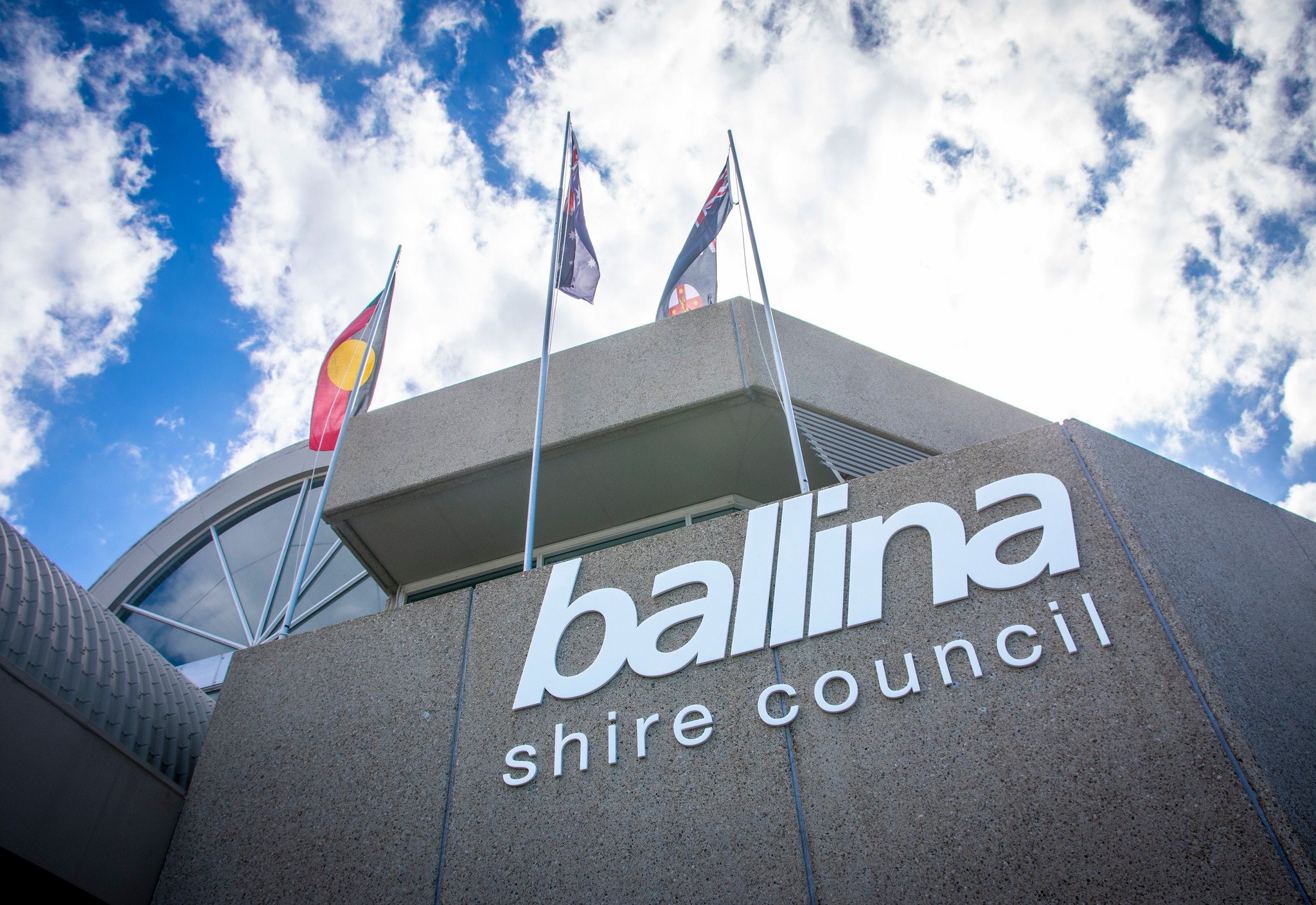
At the last meeting of Ballina Council, Greens councillors Kiri Dicker and Erin Karsten were successful in encouraging renewed support for music and the arts in the Northern Rivers, following SCU’s recent decision to discontinue undergraduate arts programs.
The Executive Director of the National Association for Visual Arts, Penelope Benton, made a passionate deputation emphasising the critical role of the arts across the region, noting the Northern Rivers’ renown as an arts and creative hub, which contains the largest population of artists and cultural workers in NSW outside the metropolitan area.
Ms Benton also said the region has seen a 40 per cent growth in cultural and creative employment over five years, more than double the growth in creative industries nationally.
‘The sector drives innovation, attracts visitors, supports local businesses and enhances the quality of life for residents in the Northern Rivers,’ she said.
‘Creative industries generated $887 million in business turnover in 2021 with visual arts and related fields forming a significant part of this growth. The creative arts programs at Southern Cross University have been instrumental in building this skills pipeline. It is important to note that these programs are not only vital to the region, but are the last remaining creative arts courses offered in regional NSW, outside of Sydney.’
Ms Benton explained that the arts were deeply embedded in the regional economy. ‘Additionally, the arts play a vital role in disaster recovery and resilience. After the 2022 floods, numerous arts projects supported community healing and strengthened social connections.’
She urged Ballina Council to advocate for equitable government funding for tertiary arts education, and to lobby SCU to reconsider their decision, so that emerging artists might be able to stay in the region and build meaningful, sustainable careers locally.

Cumulative impact
Cr Kiri Dicker’s motion called on Southern Cross University to reconsider its decision, noting the critical role which music and the creative arts play in the vibrancy, diversity and resilience of the Northern Rivers, and formally requested that Ballina Council write to state and federal ministers urging them to restore equity to regional arts funding, including music festivals and arts education.
‘For decades, young people have flocked to our region to study at one of SCU’s many arts, media, music and design programs,’ said Cr Dicker. ‘Many of those people choose to establish themselves here as professional artists and make a vital contribution to our vibrant arts, culture and music sector.
‘From 2025 this opportunity will no longer exist, and these students will go elsewhere.’
Cr Dicker noted that federal reforms in 2020 means arts and humanities degrees were now prohibitively expensive. She said women were particularly affected by this, with men tending to study STEM subjects.
‘And so it really risks burdening a particular cohort of our population with a lifetime of student debt,’ she said. ‘But this is just one of many decisions, and it’s come amid a compounding strain on the music, arts and creative sector in NSW, which is having a significant and direct impact on the Ballina Shire.

‘2025 will see the last ever Bluesfest which pumps millions of dollars into our local local economy as thousands of people travel in and out of the Ballina Byron Gateway Airport and stay in the Ballina Shire to attend this event,’ Cr Dicker continued.
‘And we’ve just spent years rezoning the Tuckombil Quarry with the vision of building the film industry in the Ballina Shire, and this is now under threat due to lack of support for the film industry in regional NSW.
‘And so this Notice of Motion simply asks council to raise awareness of the impact of these decisions that they’re having in our community and economy. In conclusion, I’d like to say that a thriving arts and music scene is part of our region’s identity, and it’s part of our story.
‘It didn’t happen overnight – it’s taken decades to build, and once it collapses, it will take decades to rebuild, if it ever happens at all.’
Cr Dicker’s motion was carried unanimously. Crs Michelle Bailey and Eva Ramsey were not present.
Further motions in support of the SCU arts program are expected from other Northern Rivers regional councils this month.
More stories about Ballina Shire Council:
Ballina Shire Council says it now has three new overland flood studies on public exhibition for community feedback. The studies cover Alstonville, Wardell and Lennox Head. Ballina Council's October meeting opened with Mayor Sharon Cadwallader acknowledging the attack on Dr Helen Haynes and calling for respectful public service. She said, 'Democracy depends on people being able to participate freely, respectfully, and without fear'. The agenda for Thursday's meeting includes six notices of motion from four councillors, with issues including missing persons, volunteer recognition, and arts funding. Construction on a $4.35 million flood-resilience upgrade of Ross Lane at Lennox Head is due to begin today, ahead of a nine-week closure of the busy road later this month. With Ballina Shire Council General Manager Paul Hickey deciding to retire after almost twenty years in the role, and even longer as a staff member, the task of finding a replacement has begun. Cr Damien Loone was also returned as Deputy Mayor after Cr Simon Chate withdrew his nomination.
Overland flood studies open for community feedback
Ballina debates regional arts funding, missing people and live music
Big meeting for Ballina Council this week

Ross Lane flood-resilience works begin ahead of nine-week closure

Ballina Council will be getting a new general manager
 For four decades The Echo has printed the stories some people loved, some people hated, and some pretended not to read. If you want us to keep telling the truth, the real truth, not the sugar-coated version. We’ll need your support to keep the presses rolling.



