



With Richmond Valley Council doubling the capacity of the Evans Head Sewage Treatment Plant (STP), a local community group has raised concerns over effluent which they say is being released into a national park.
Dr Richard Gates from the Evans Head Residents for Sustainable Development Inc. told The Echo, ‘The existing 2007 facility is ageing, challenged by storm and ground water infiltration and extreme peak summer holiday visitor loads, and does not have capacity for the population growth Council is pursuing aggressively’.
‘The current STP not only serves Evans Head, but Broadwater and Woodburn, many kilometres away, generating an additional energy cost burden on sewage management because of the pumped distance it has to travel for processing. Council admits electricity is a significant cost for operation of the plant which will dramatically increase with larger capacity.
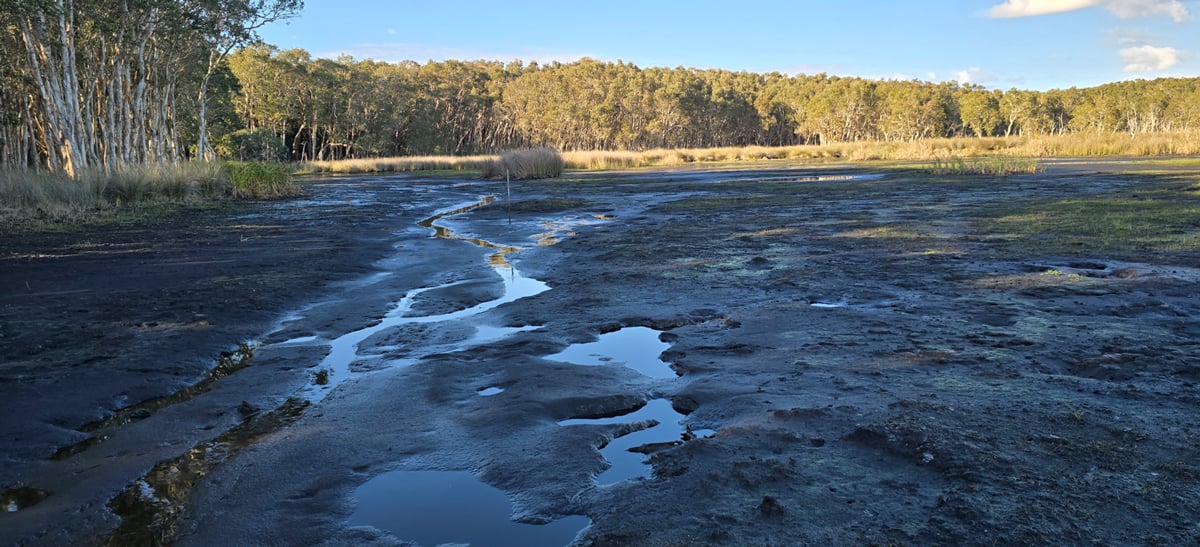
‘A critical concern for the current STP is the fact that treated effluent is being released into a waterway that runs into Salty Lagoon in Broadwater National Park. The area is of major significance to the Bundjalung Nation as a womans’ site.
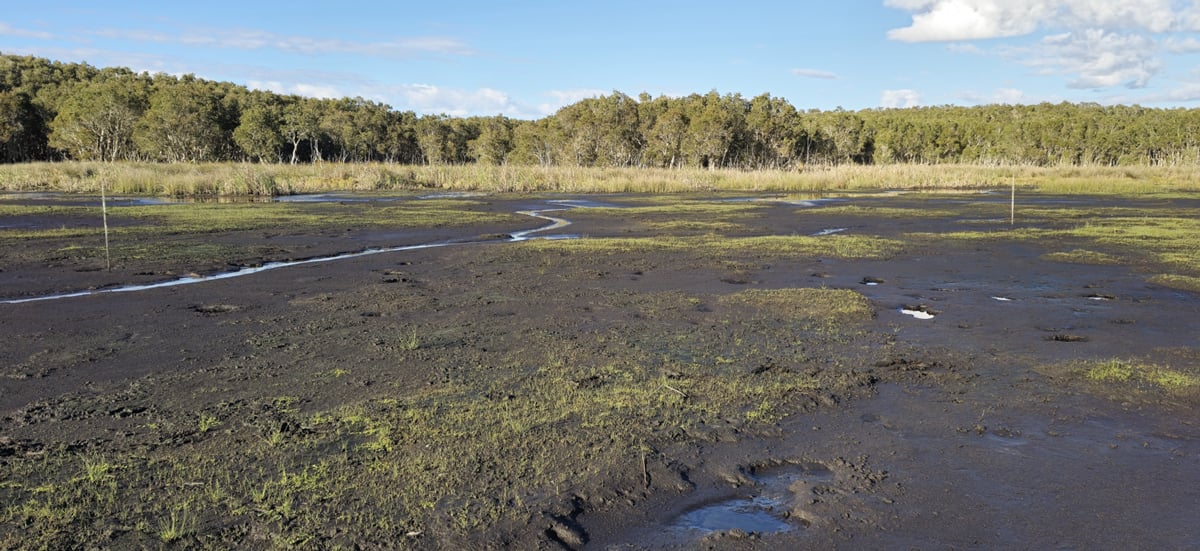
‘The Environment Protection Authority (EPA) licences Council to pollute the lagoon, notwithstanding National Parks legal obligation to conserve “habitat, ecosystems and ecosystems processes, and biological diversity”.
‘While community pressure forced Council to upgrade its STP in 2007 to reduce the pollutants being released into the lake system, this improvement did not resolve serious ecological problems.
‘Council then took the radical and financially-expensive step of closing off the lake from an adjoining creek, which intermittently opened and closed to the ocean, in an attempt to keep the lake full of water to stop fish kills. This changed it to a freshwater lake, again a breach of National Parks’ legal obligations.

‘In putting in place this strategy, Council failed to deal with the legacy effects of the previous pollutants which left a massive sludge layer at the bottom of the lake. These only served to set conditions for algal blooms and because of health risks impaired traditional recreational use of the lake and creek for fishing and swimming. But more than that, the strategy failed when water from the lake created a new pathway to the creek returning the lake and creek to its intermittently filling and emptying habit from the ocean on high tides.
‘In licensing Council to pollute the lake, the EPA placed strict rules on what could be discharged, and made it clear in its licensing rules that no other substances were to be released. But there was no monitoring program for “chemicals of emerging concern” or CECs, so how could they ever know what else was being discharged? Absence of evidence is not evidence of absence!

‘The failure to monitor is, in our view, a serious breach of public trust and raises questions of competence and political interference. National Parks should have put its foot down years ago.
‘The failure to monitor is particularly egregious given that the EPA has known for some time now through research done in Australia on STP waste that there are at least six classes of substances which get through the system, even after tertiary treatment, that have potential to impair lake, creek and marine microbiomes and human health.
‘And there is now international research on micro and nanoplastics in treated sewage showing that they carry Antibiotic Resistant Genes or ARGs, can harbour pathogens, and can impair primary producers such as phytoplankton with potential effects on coastal carbon cycling.
‘There appears to be no monitoring for these microplastics in Australia despite the fact that they are persistent and have been detected in aquatic systems, air, soil and human organs and tissues, underscoring their pervasive distribution.
‘In the Final Evaluation Report on the Salty Lagoon Post Closure Monitoring Program (2022) it is recommended, inter alia, that a long-term plan for the Evans Head STP (>15 years) be developed with a clear discharge strategy.
‘So far, the community has heard nothing from Council or the EPA, despite that same report recommending liaison with “Aboriginal stakeholders and other members of the community regarding future management of the Salty Lagoon”.
‘The Salty Lagoon saga reached national attention in 2006 following the December 2005 massive fish and bird kill and is destined to do the same again. Here we are 20 years later and local government under pressure from the State, wants to double the amount of treated sewage being dumped into a once pristine lake in a national park and the EPA, the licencing authority, is not only going along with that but is failing to monitor the effluent for substances known to cause harm to the environment and human health.
‘No wonder there’s a loss of faith in our institutions which are supposed to be looking after the public interest and in the case of Evans Head, one of its major natural tourism attractions!’, Dr Gates said.
A Richmond Valley Council spokesperson told The Echo, “Richmond Valley Council operates the Evans Head Sewage Treatment Plant in accordance with the conditions and reporting requirements of its Environment Protection Authority (EPA) Licence. Routine monitoring and reporting as required under that Licence is undertaken, and Council liaises with the EPA as needed in relation to the operation of the plant”.
A National Parks media spokesperson told The Echo that matters around sewage is a matter for the EPA and Council.
EPA statement
A spokesperson for the NSW Environment Protection Authority (EPA) told The Echo, ‘The NSW Environment Protection Authority (EPA) regulates sewage treatment plants (STPs) through site-specific Environment Protection Licences (EPLs) to protect waterways, ecosystems and drinking water supplies’.
‘We acknowledge community concerns regarding effluent discharges from the Evans Head Sewage Treatment Plant (STP) and have been engaging with Richmond Valley Council in relation to both current operations and proposed upgrades to the facility.
‘Under the standard development assessment process, Council is required to prepare a Review of Environmental Factors (REF) to assess the potential environmental impacts of the proposed upgrades. The EPA has provided advice on key matters to be addressed in the REF, including mitigation of potential impacts of effluent discharges on receiving waters connected to Salty Lagoon.
‘Any discharges from the Evans Head STP must comply with the conditions of its Environment Protection Licence (EPL), which regulates the quality of treated effluent and how it is released to the environment.
‘The EPL also requires Richmond Valley Council to undertake regular detailed monitoring of effluent quality, which it must report on to the EPA. We routinely review this information to assess the plant’s performance and ensure the receiving environment is adequately protected.
‘The EPA will continue working closely with Council and will review the final REF as part of the planning assessment process to ensure environmental risks associated with the proposed upgrades are appropriately assessed and managed.
‘Community members concerned about the potential pollution of waters arising from non-compliance with licence conditions are encouraged to contact the EPA’s Environment Line on 131 555’.
Further information was provided by EPA:
- The current Environment Protection Licence for the Evans Head STP does not require routine testing for chemicals of emerging concern (CECs), which is consistent with current sewage treatment plant licences across NSW.
- The EPA is continuing to strengthen its regulatory approach in this area and recently finalised public consultation on a proposed new PFAS monitoring Chemical Control Order which will require licensed landfills and sewage treatment plants to monitor certain PFAS chemicals in their discharges.
- More information about the proposed new requirements: https://yoursay.epa.nsw.gov.au/proposed-pfas-monitoring-chemical-control-order
- The EPA is also working on broader policy measures to tackle other emerging contaminants of interest.
The Echo asked further questions: “Can you please clarify whether the discharges from the Evans Head STP is complying with the conditions of its Environment Protection Licence (EPL)?”; and “Whether the EPA is satisfied with Council’s Review of Environmental Factors (REFs), specifically that regular detailed monitoring of effluent quality is being performed, and it poses no ecological issues for the national park?”
An EPA spokesperson replied they understand the Review of Environmental Factors (REF) has recently been finalised and the EPA will review the document in due course.
“We provided earlier advice on what should be included in the REF as part of standard practice for this type of development proposal”.
“Under the conditions of their Environment Protection Licence (EPL), Richmond Valley Council is required to monitor a range of potential pollutants and report any non-compliances to the EPA.
“The EPL is available on the EPA’s public register: ViewPOEOLicence.aspx”
Assessable pollutants
Dr Gates subsequently told The Echo, ‘As it currently stands, Richmond Valley Council can discharge “Assessable Pollutants” such as Nitrogen up to 9.636 tonnes, Oil and Grease up to 4.818 tonnes, Phosphorus up to 482kg, and Total Suspended Solids up to 7.227 tonnes into a National Park lagoon. It’s required to measure them every 14 days’.
‘Council has a statutory obligation under Section 66(6) of the Protection of the Environment Operations Act 1997 to report monitoring data to the public within 14 days.
‘A check of Council’s website again today however, shows there has been no reporting since February, more than 90 days ago, with the last testing in January, more than 100 days ago. It is not meeting licensing requirements. [https://richmondvalley.nsw.gov.au/services/water-and-sewer/water-results/sewerage-treatment-plants/ ]
‘Humans make mistakes and equipment fails regularly. But given the long-standing sensitive nature of the Salty Lagoon issue, and that Council is apparently charged with responsibly for the lagoon’s health and not National Parks in some special arrangement out of the public view, we have concern about this failure.
‘It begs several questions; is there a problem being withheld; are there risks to human or ecological health which have not been reported; and, how is it that National Parks have handed over responsibility for a lagoon in National Park for which it is responsible to a council which, in our view, has an abysmal track record when it comes to looking after the lake’s health and management of waste water?
‘Notwithstanding National Parks claim ‘it is up to Council and the EPA to deal with the problem’ it doesn’t seem to be removed entirely from the management scene. It’s currently reporting through its own “water quality monitoring program” that “Salty Lagoon [has] excellent water quality”.
‘When we checked we found testing was done over the summer of 2024-25, more than a year ago, once a month for three months for two measures, hardly a triumph in sampling given the dynamic nature of the Salty Lagoon complex and location of the monitoring site far away from the effluent entrance point to the Lagoon. Oh, and the lagoon has emptied and refilled in the meantime!
‘The website also failed to tell us the claim refers to ‘ecological health’, not ‘human health’. The two have different standards. And because the testing is more than a year old, the results provide no corroborative data to deal with Council’s current data gap.
‘Sadly, the public could be left with the impression that the water in the lagoon and creek are fit for human recreation when it may not be so.
‘So, how is it that National Parks can cede control of its lagoon to Richmond Valley Council? Where is the agreement to do this? From a management and accountability perspective, it’s critical that the arrangement be spelled out to deal with, inter alia, issues of liability, monitoring, reporting and potential conflicts-of-interest’, Dr Gates added.
 For four decades The Echo has printed the stories some people loved, some people hated, and some pretended not to read. If you want us to keep telling the truth, the real truth, not the sugar-coated version. We’ll need your support to keep the presses rolling.


