


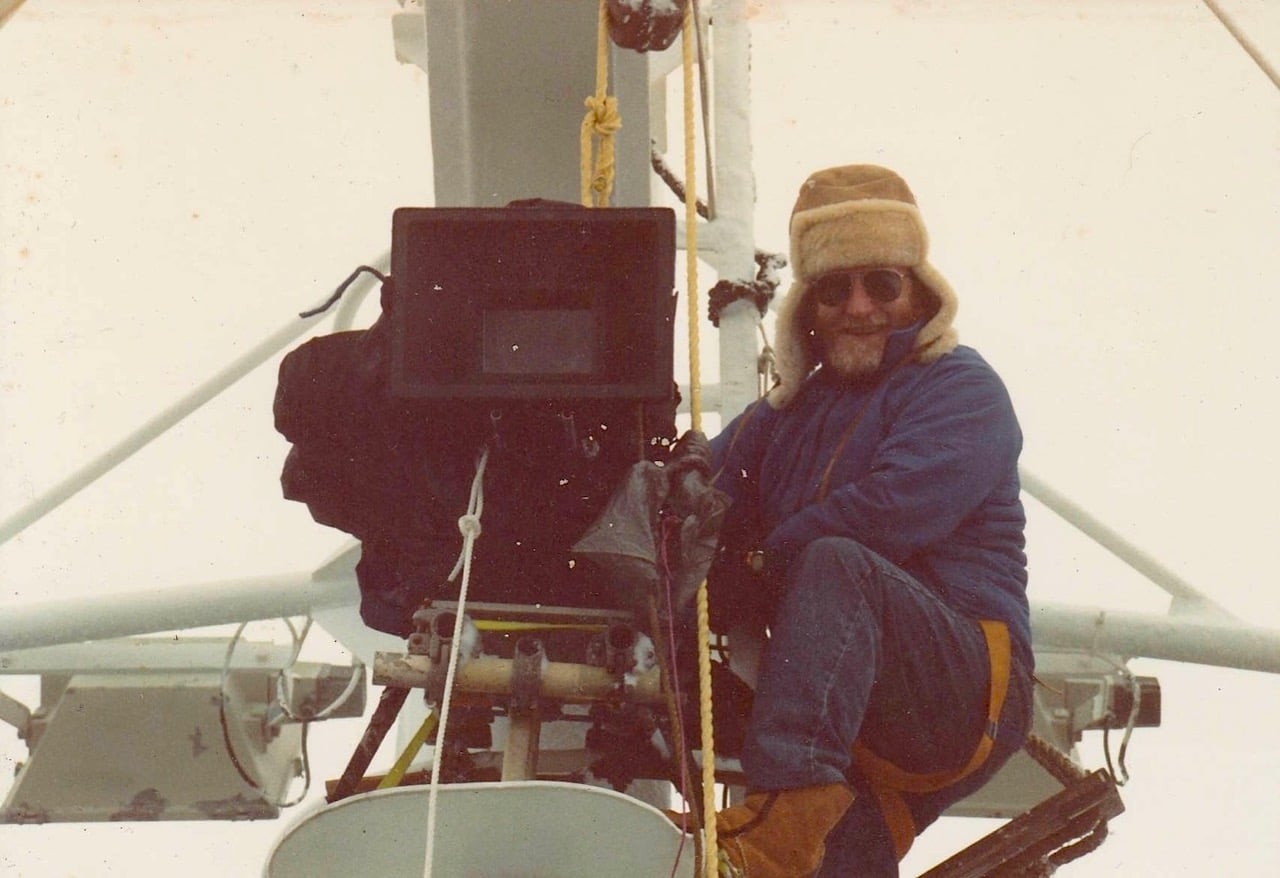
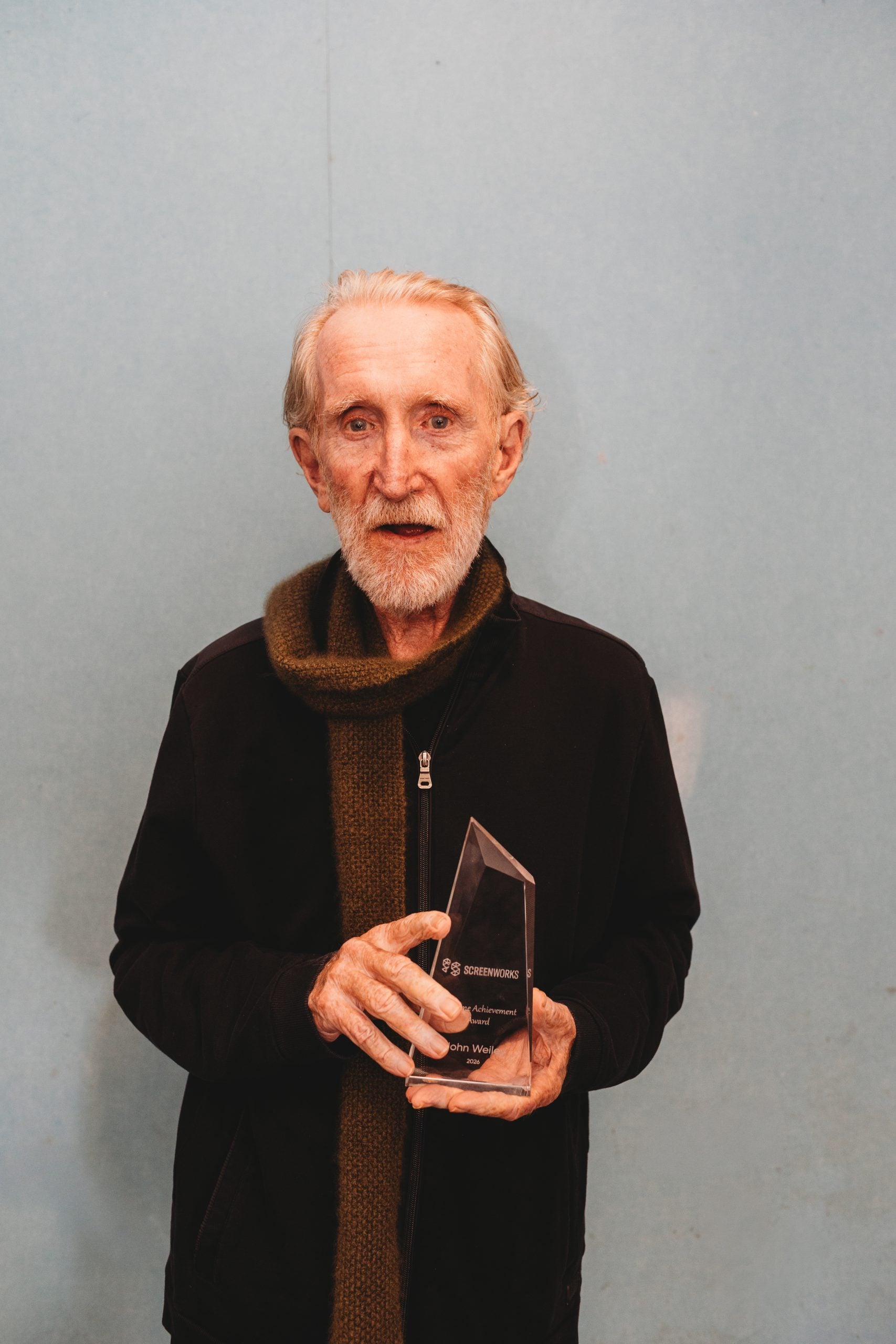
Last week a local filmmaker who has made a significant international impact was presented with the inaugural ScreenWorks Lifetime Achievement Award, at the Regional to Global Screen Forum in Lennox Head.
John Weiley enlarged the frame of screen storytelling throughout his long career, from his early TV documentaries in the UK, through to dramatic features here in Australia, and then to giant-screen IMAX films that carried Antarctica to audiences around the world.
Presenting the award, ScreenWorks chair and legendary publicist Tracey Mair began with a story about John Weiley and his partner Susannah opening their house to host the first gathering of local screen creatives in the region, more than 25 years ago, to discuss the possibility of establishing a regional screen development agency.
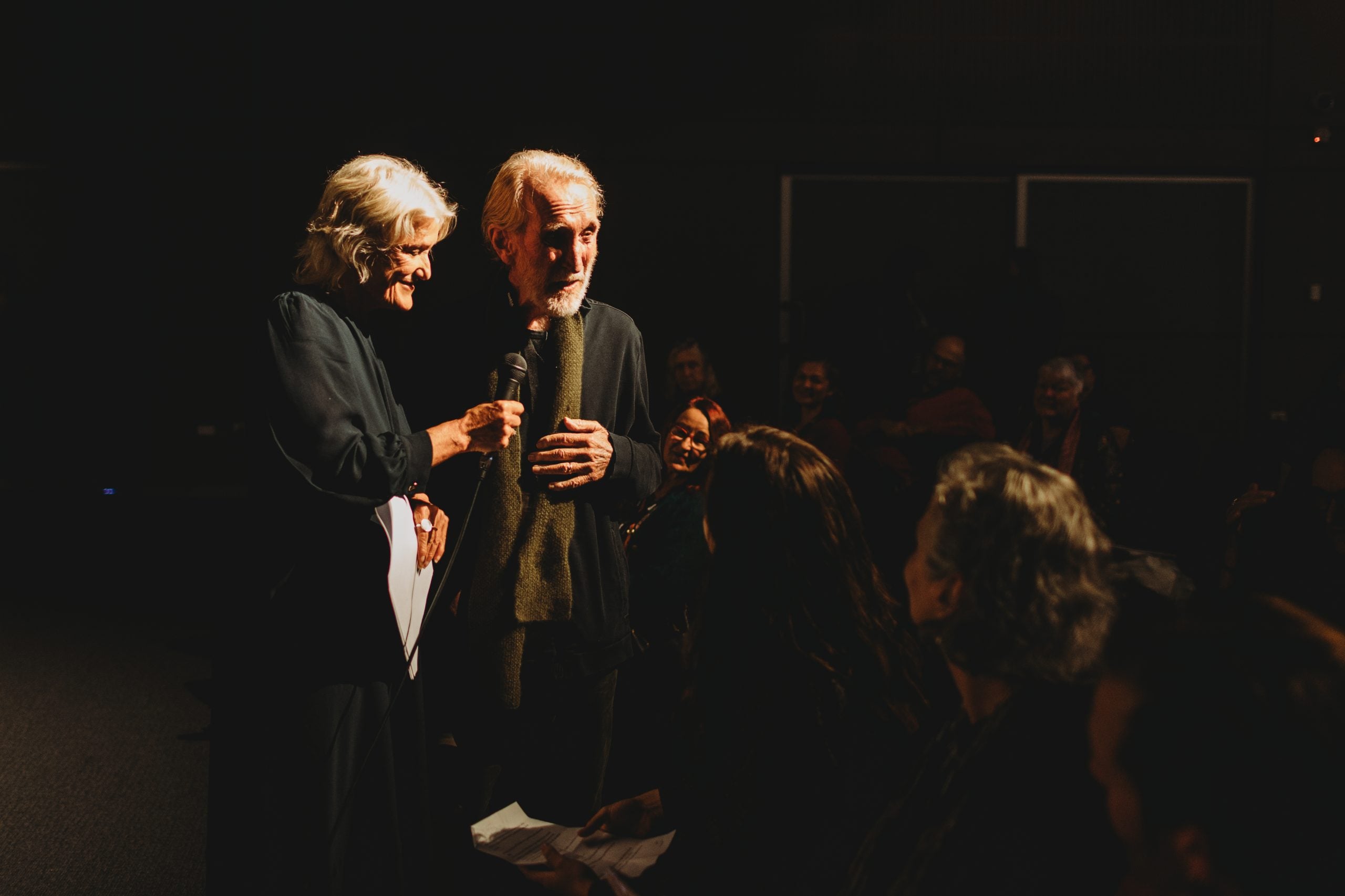
‘More than a hundred people attended from those Northern Rivers beginnings,’ she said.
‘Screenworks is now a truly national organisation championing screen voices from outside metropolitan areas. John, thank you.’
A career built on enlarging the frame
Tracey Mair told the forum that Weiley’s apprenticeship was served at Granada in the UK, during the early days of TV documentary, and he went on to become the BBC’s youngest producer.
His film The Press We Deserved was described by The Times as the best film on the subject ever made – a verdict that set the register for the work to follow.
Back in Australia, he produced major features including The Coolangatta Gold, Dimboola, and Journey Among Women. His documentaries included Autopsy on a Dream, about the making of the Sydney Opera House.
But it was the large-format work that made his name internationally. Weiley’s company Heliograph created and produced giant screen films for thirty years. He also established the original IMAX theatre in Sydney, which at the time housed the largest cinema screen in the world.
As a producer and director, John Weiley was instrumental in bringing IMAX documentary storytelling to global audiences with films like Wild Australia: The Edge, Antarctica and Solarmax.
Antarctica proved that rare thing – a critical and commercial success – winning international prizes and grossing more than $100 million at the box office, a figure Tracey Mair said ‘seems astonishing in today’s box office world.’
In 2002, in recognition of that film and his body of work in television, John Weiley was invited to join the Academy of Motion Picture Arts and Sciences, a rare honour for an Australian filmmaker.
‘Deeply curious, utterly impractical, entirely unwilling to accept defeat’
Standing with some difficulty, Weiley accepted the lifetime achievement award in person. A cold had taken his voice, he said, and he was ‘overwhelmed with admiration for these hardworking people that have done so much.’
What he saw in the room, he added, was a passion he could only read as ‘a real rocket’ for more audacious projects to come.
A further tribute was delivered by John Weiley’s daughter Ruby, who explained that a Parkinson’s diagnosis some years ago had affected her father’s speech. She described Weiley as ‘deeply curious, utterly impractical, and entirely unwilling to accept defeat’ – always conscious of the mountainous work a project demanded, and somehow certain it would be done anyway.

She also stressed that it had always been a team effort, and thanked her father’s many collaborators on his behalf, including David Attenborough and the composer Nigel Westlake.
Noting ‘our world is a strange and wonderful place,’ Ruby said her father’s body of work was a true reflection of a life well lived, saying his aim had always been to make his audience fall in love with the planet and its people, and to champion Australian filmmaking at home and abroad.
‘I ask you to take on his mission,’ she said. ‘Fight hard, stand up to those who silence truth and deny dignity, make good films, with good people, for good causes. I thank you for honouring a humble, well-deserving man.’
At afternoon tea, John Weiley and his family handed out offcuts of 70mm film from Antarctica for anyone who wanted them, a penguin or two to take home.
You can find coverage of the rest of the Regional to Global Screen Forum here.
 For four decades The Echo has printed the stories some people loved, some people hated, and some pretended not to read. If you want us to keep telling the truth, the real truth, not the sugar-coated version. We’ll need your support to keep the presses rolling.


