


Giles Parkinson, reneweconomy.com.au
The West Australian government appears to have overcome years of institutionalised resistance and recognised that the state’s energy future will be built around solar energy.
In a landmark speech this week, energy minister and state treasurer Mike Nahan said solar PV would meet the daytime electricity needs of WA within the next decade. Nahan noted that solar was cheap, and democratic, and was likely to account for all new generation capacity, and it would displace the state’s ageing coal generators.
‘We expect that the bulk of generating capacity during sunlight hours in the [Perth] metro area in about 10 years time will be provided by rooftop solar,’ said Nahan in a speech to an energy conference in Perth.
‘That’s the reality. So it is going to provide the bulk of additional capacity going forward.
‘Solar will also displace a lot of the existing [coal-based] capacity. It’s low-priced, it’s democratically determined and it’s something we’re committed to facilitating.’
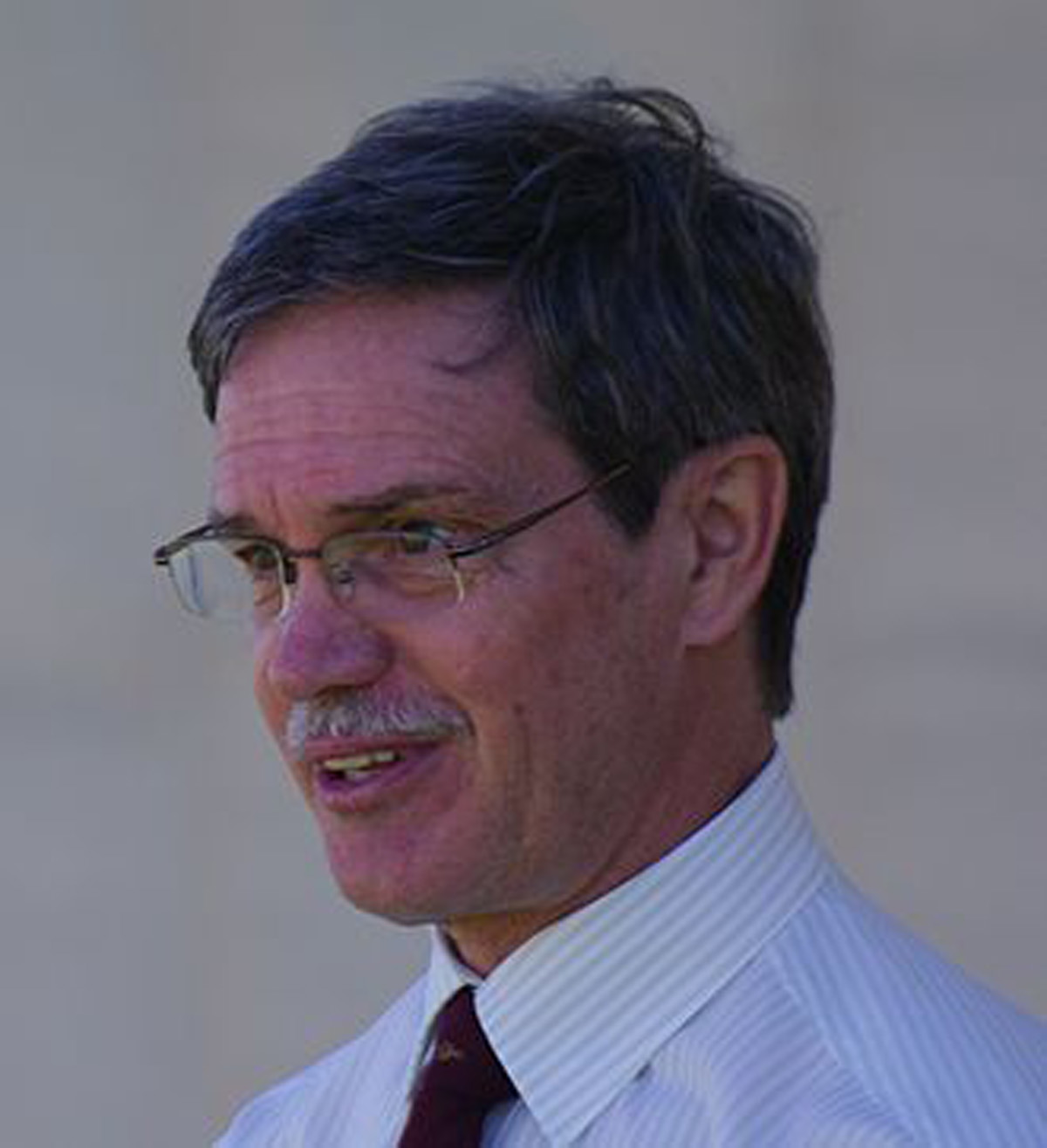
This is an extraordinary admission for someone, who as the former head of the right-wing think tank, the Institute of Public Affairs, had constantly ridiculed the prospects of renewable energy and solar in particular.
But as the IPA and other conservative commentators continue to ignore the plunging cost of solar, and continue their stranglehold on the views of the Federal Coalition, Nahan has moved on.
Nahan’s comments are also in stark contrast to the findings a review commissioned by his own government last year, which bizarrely did not even consider solar as a future technology and even contemplated importing coal from Indonesia to solve future energy needs.
But Nahan has been presented with the reality of a state, which as RenewEconomy has mentioned on several previous occasions, is something of a basket case.
The centralised, fossil fuel system has relied on massive government subsidies that now equate to more than $600 million a year, or more than $500 per household.
This is putting a massive dent in the state’s finances – particularly as the mining boom ends – and Nahan admits that it is unsustainable.
He wants the subsidy phased out within a few years, which will make rooftop solar – and battery storage – even more attractive as retail electricity prices rise. So much so that as recently as May, Nahan predicted that virtually every household and every business would have rooftop solar within a decade.
‘Small-scale solar is growing at 20, 30 per cent a year and will do nothing but accentuate and it is actually quite cheap,’ Nahan said this week.
The other massive government subsidy went to the system of so called capacity payments, which Nahan admitted this week had been something of a rort. As we noted way back in 2012, fossil fuel peaking plants had been built and never switched on.
‘We needed a capacity market as an insurance mechanism but it has become a business plan for too many people,’ Nahan said this week.
‘Too much of our generating capacity is nothing more than a capacity plate, that it exists, it enters the market, or stays in the market solely because it gets a payment from electricity users to come in and stay.’
About 170,000 households in the main WA grid, known as the South West Interconnected System, now have rooftop solar, amounting to around 500MW of capacity – the equivalent of a major base-load power station.
This is expected to more than double within years, resulting in excess capacity. And because of the contracts given to the capacity market, the excess capacity that will need to be shut will come from the government-owned utility, and its ageing coal plants in particular.
‘Most of it is in (government owned) Synergy’s hands, 70 per cent, so some will shut.’
WA is not the only state where rooftop solar will play a dominant role in the future energy system.
South Australia already meets more than 40 per cent of its demand from wind and solar alone.
The Australian Energy Market Operator has forecast that South Australia will meet all of its daytime energy needs with rooftop solar on occasions within a decade.
This is turning conventional energy systems upside down. In such a market, there is little or no place for baseload generation. Indeed, South Australia’s two coal fired generators will be closed, possibly as early as next year, leaving gas and storage, and the connection with the main grid to provide the remainder.
In WA, however, there is no connection to the main grid, so it finds itself in a similar position to Hawaii – a state with strong renewable resources and a declining and expensive fossil fuel infrastructure.
Hawaii has decided to embrace the decentralised future and set a 100 per cent renewable energy target by 2045.
Nahan is unlikely to make any similar undertaking, but it is clear that WA now stands at the cutting edge of the transformation from a centralized fossil fuel system to a decentralised, renewable based system.
Its emerging wave power, excellent wind resources and solar resources, both small scale and large scale, a push by miners into solar and storage solutions, and the prospect of a renewable-based hydrogen fuels for transport and export, open a huge range of opportunities.
It seems that Nahan has now recognised that. This is a big change in his own thinking. Just a few years ago, in a parliamentary debate, Nahan insisted wind energy required ‘one-for-one’ backup by fossil fuel generators and did not reduce greenhouse gases, said solar cells were ‘hugely more costly’ than polluting alternatives.
 For four decades The Echo has printed the stories some people loved, some people hated, and some pretended not to read. If you want us to keep telling the truth, the real truth, not the sugar-coated version. We’ll need your support to keep the presses rolling.


