


Darren Coyne
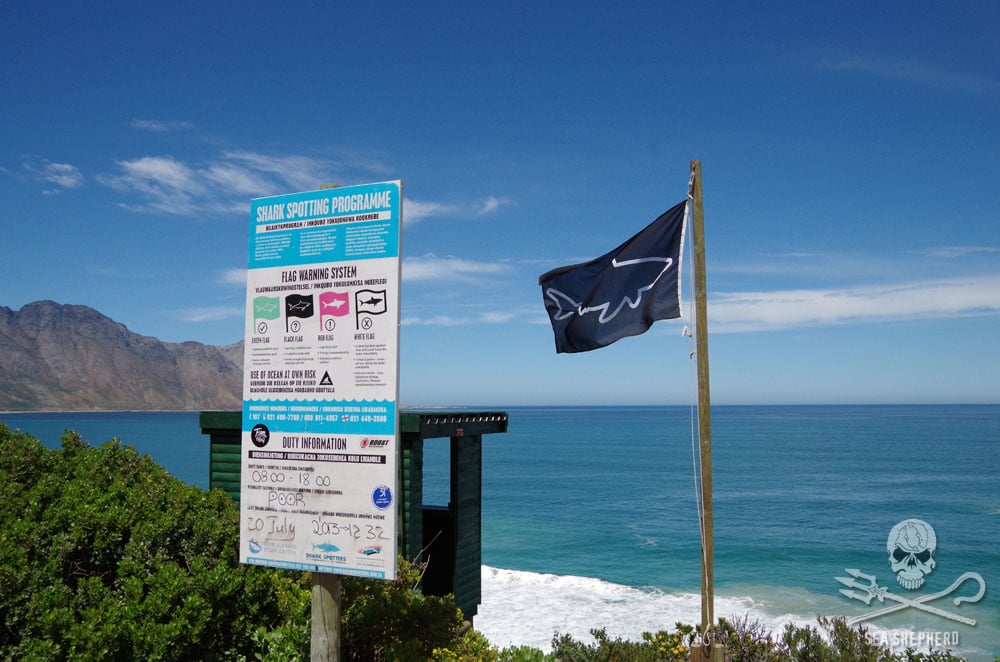
Only a handful of beaches in Ballina and Byron shires were deemed suitable for a ‘shark spotters’ program by visiting South African experts.
But a majority of Ballina Shire councillors recently voted to not even receive a report from the experts, who toured the region visiting beaches.
Nevertheless, a copy of the report sent to Echonetdaily reveals that Lennox Head and Boulders Beach are ranked as ‘good’ and ‘medium’, and should be subjected to further investigation.
Wategoes, Broken Head and the Pass in Byron Shire were deemed ‘good, while Little Wategoes and Cosy Corner were ranked ‘medium’.
The rankings relate to such things as elevation and depth of water, which determine whether observation towers could be used to spot sharks.
Lighthouse Beach, where an eco-barrier is set to be installed, was ranked as ‘poor’ because of its location next to the river mouth, and no elevation, while North Shelley Beach, Evans Main Beach and Sharpes Beach were also ranked as poor.
Cr Keith Williams had lodged a notice of motion at the last meeting of the Ballina council, asking that the council consult with relevant authorities and ‘receive a report investigating the establishment of a local shark spotting program, as an addition to the existing shark mitigation measures’.
The motion was lost, as was a follow-on motion by Cr Jeff Johnson that the council simply receive the report.
The South African Shark Spotters said it was not ‘possible to categorically determine if shark spotting will work at a location after just one site visit, rather one is able to say that the site shows potential, and that further investigation needs to be carried out to confirm if it is a suitable spotting location’.
‘We recommend that sites listed as either good or medium for spotting potential are subject to a feasibility assessment, where a trained observer spends a substantial period of time at a location (minimum 2 weeks) under varying environmental conditions to evaluate the site and identify the limitations and factors affecting spotting conditions specific to that area,’ they said.
‘The results of this assessment need to be objectively examined to determine if it is a suitable spotting location. ‘
The South Africans also suggested the following.
* Signage informing water users of shark risk before entering the water and simple tips on how to minimize the risk.
*Signage noting the last shark sighting and/or factors indicating a possible increased likelihood of shark activity so that water users are aware of potential increased risk.
*Establishment of a shark sightings communication network in each region to record shark sightings and share with relevant authorities and the public.
*Partner with research organisations to better understand shark behavior and ecology in an area in order to inform public safety policy with current and accurate scientific information.
*Educating water users around factors affecting shark activity and the presence of sharks in an area so that people are able to understand the risk and make informed decisions when entering the water
* Introduction of shark attack first aid kits at beaches, especially at remote locations, to improve medical response in the event of a shark bite, thereby reducing fatalities.
* Public education around the importance of conserving sharks and the necessity of a non-lethal approach to shark attack mitigation.
 For four decades The Echo has printed the stories some people loved, some people hated, and some pretended not to read. If you want us to keep telling the truth, the real truth, not the sugar-coated version. We’ll need your support to keep the presses rolling.


