


Melissa Allen shares her insights after a week on a refugee diet
Have you ever wondered what it would be like to be on rations? Melissa Allen from South Golden Beach has not only wondered but has just finished a week on a diet of rations that is designed to reflect, as closely as possible, the weekly rations of a Syrian refugee in Jordan.
During Refugee Week (June 17–24), Melissa ate rations as part of the Act for Peace Ration Challenge that has been set up to raise money for food, medicine and education for refugees.
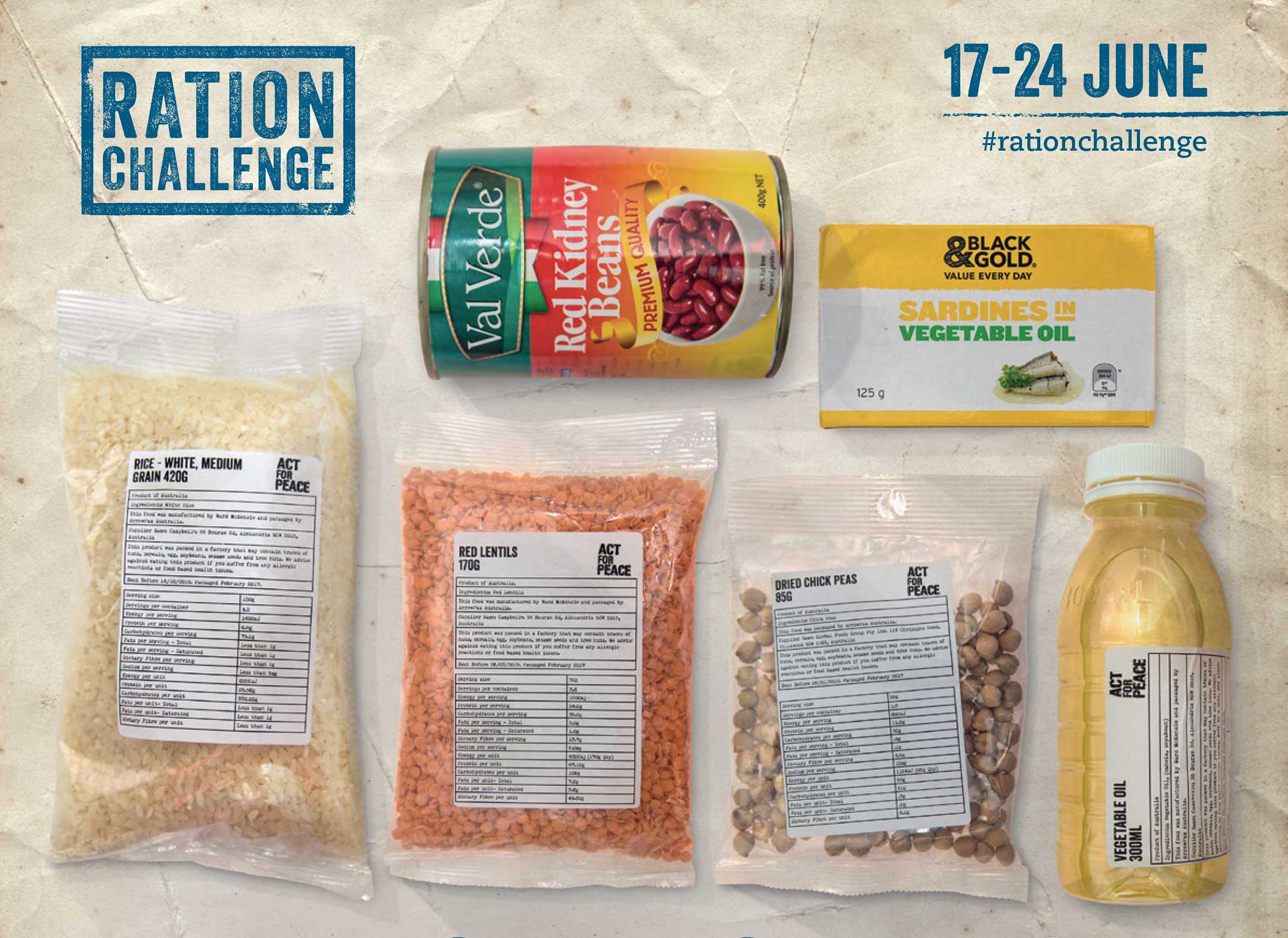
With a starter pack of rice: 420g, lentils: 170g, dried chick peas: 85g, tinned sardines: 125g, tinned kidney beans: 400g, vegetable oil: 300ml and two vouchers that allow you to buy 1.5kg extra rice and 400g flour, Melissa began her seven-day challenge to eat like a refugee while the rest of the family followed their normal diet. Having raised $324 Melissa was able to add an extra 200ml of milk and 50g of sugar to use over her seven days.
‘I had a direct experience of working with refugees when I did a six-month volunteer program working in a centre for refugees in Bolzano, Italy, back in 2002,’ said Melissa.
While there Melissa had spent a night in the living quarters of the refugees who live in the same building with 80 other families.
‘I also had the experience of sleeping rough next to a river with the other volunteers. We carried our cardboard box beds through the wealthy part of the town, past the bars we would have otherwise been in, in our pyjamas, without anything but a box and a blanket,’ recalls Melissa.
‘The six months in Italy closely connected me to the refugee experience – each day was a seminal part of my life.’
On day two of the challenge Melissa and her seven-year-old son went to the farmers market for their weekly shop.
‘Every Tuesday we do the same thing together. We finish the shopping and then we sit and have a chai together before leaving for school. It is “our thing.”
‘As we were arriving at the markets I realised I only had 200ml of milk to use. This meant I couldn’t get a chai but technically I could have a hot milk though that meant using up a lot of my milk ration,’ explains Melissa.
‘This sparked a dialogue with my son: “Because I’m a refugee this week I can’t have chai! And if I have milk now then I go without it for the rest of the week”.
‘My son was sad that our ritual wasn’t going to work out. We talked about how differently refugees relate to their food. “If you or I run out of milk, we just duck to the shop to get more. But refugees on rations can’t do that.”
‘The value of a celebration or special occasion and the use of ingredients on those occasions shows up more starkly when we come from a place of lack. I had to work out how much maintaining this ritual with my son really meant.
‘I got hot milk and my son had his chai. The ritual we share is precious. I tell you, I really enjoyed each individual sip of that warm milk, knowing it was a big portion of my rations that week.’
Rice brain

By day six Melissa had realised that her fridge was redundant on a ration diet and that she had had no fresh food all week.
‘I was really looking forward to green foods and fruit and a simple cup of tea instead of water,’ said Melissa.
On the ration diet Melissa had to re-think her priorities and work out what she had the energy to do.
‘While I have been able to manage working through this week, at times I’ve had a “rice brain” fog. I’ve adjusted by leaving myself a note when I feel like I’m not 100 per cent. This is only one week. I try to expand that out. Imagine not knowing the end point. Ration packs week after week and month after month.’
‘I am reminded of my time working with refugees in Italy. Handing out their government funded food – two repetitive food options each day on rotation for six months. No wonder when I made the kids toffee they thought I was a fucking magician. The kids enjoyed the sugar rush. The most energy they may have felt in bloody weeks.’
By the final day of the challenge Melissa had plain rice and flatbread – made simply with flour and water – for breakfast, lunch and dinner because that was all she had left.
‘The stodgy food I have eaten all week, the rice and flour and no fresh food, has left me feeling very bloated and you could say backed up,’ commented Melissa as she looked forward to going ‘back’ to her normal diet.
‘It’s no wonder there are major digestive issues in refugee communities. This ration diet allows the body to survive but certainly not thrive,’ she says.
‘This week I have learned that I like eating sardines and may continue to eat them. I also learned to make flatbread and that I do in fact like falafel.
‘I learned the value of each ingredient and the importance of not messing up in the cooking or you have even fewer rations to eat. I learned how particularly refugees need to mete out their supplies to make sure there is enough.
‘I learned how much our bodies need good nutrition to keep our brains firing well and how noticeably the absence of good nutrition can affect energy and brain power. I learned just how fuckin’ abundant our developed world is.’
Find out more about supporting refugees and the ration challenge online at www.actforpeace.rationchallenge.org.au.
 For four decades The Echo has printed the stories some people loved, some people hated, and some pretended not to read. If you want us to keep telling the truth, the real truth, not the sugar-coated version. We’ll need your support to keep the presses rolling.


