



David Lowe
The great Australian actor, director, teacher and writer, George Whaley, died last week in the Northern Rivers of NSW. I knew George as the Head of Directing at the Australian Film Television and Radio School in Sydney in the 1990s, but this was just one of many hats he wore in a long and distinguished career.
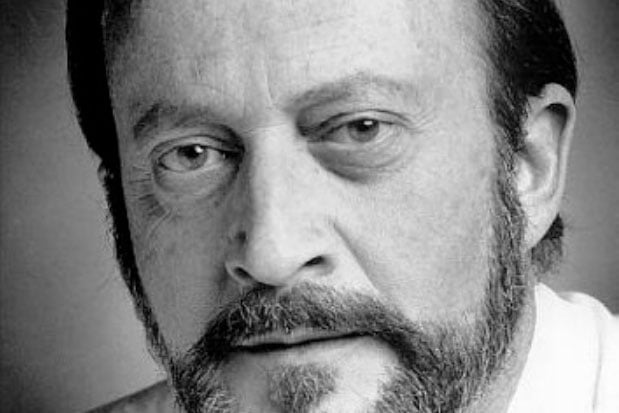
Born in Castlemaine, Victoria, on 19 June 1934, George initially trained as an engineer, before studying acting with Eileen O’Keefe. After she introduced him to the great Russian theatre genius, Konstantin Stanislavsky, the course of George’s life was set.
His first professional acting role was in John Osborne’s seminal play Look Back in Anger, in 1960, playing the archetypal angry young man. This was also the year he met his sweetheart Georgina (Georgie). Marrying in 1966, they stayed together for the rest of George’s life.
George went on to perform at the Emerald Hill Theatre in South Melbourne (which he opened with fellow director Wal Cherry in 1962), and the Melbourne Theatre Company. He won Best Actor in 1968 for his portrayal of John Proctor in The Crucible. In Sydney he became equally well-known, directing and/or performing in numerous plays in venues such as the Nimrod Theatre Company, the Old Tote Theatre, the Griffin Theatre Company and the Belvoir Street Theatre.
While George had a particular enthusiasm for Australian writing, directing works including David Williamson’s The Perfectionist and John Derum’s adaptation of C.J. Dennis’ More Than a Sentimental Bloke, he was equally at home with Harold Pinter and Bertolt Brecht.
Theatre was in his blood.
A teacher and director
As a teacher and director of actors, George famously discovered Geoffrey Rush, giving him his first stage role, in Waiting For Godot, at the Jane Street Theatre in 1979, and his first film role, in Dad and Dave: On Our Selection in 1995. This was also the film that introduced mass audiences to Essie Davis, one of George’s favourite performers. His students at NIDA included the actor (and later director) Mel Gibson and Judy Davis. Other big names associated with George include Phillip Quast, Hugo Weaving, Colin Friels, Kerry Walker, Steve Bisley, Robert Menzies, Scott McGregor, and John Howard.

George did an enormous amount of work with first Australians, directing David Gulpilil and Jack Charles on the stage, and bringing in people like Ivan Sen, Warwick Thornton, and Erica Glynn to study at AFTRS. All are important creative forces in Australian cinema today.
George Whaley was also a noted TV director, working with producer Anthony Buckley to create the classic Ruth Park adaptations Harp in the South and Poor Man’s Orange, as well as programs for children such as More Winners and Clowning Around.
In later life George became a published author, with his highly regarded 2009 biography of Leo McKern: the Accidental Actor (famous as Rumpole of the Bailey).
A big laugh and powerful baritone voice
Anyone who saw George in action promoting that book at the Byron Writers Festival will remember his big laugh and his powerful baritone voice, which he put to great effect playing Galileo Galilei on stage in the 1980s and ’90s. Innumerable other roles, in everything from A Country Practice to The Gods of Wheat Street, made him a familiar face to Australian TV audiences.
As a student at AFTRS, I remember George as a champion of anyone wanting to get the best performances from actors while treating them with complete respect for the extraordinary people they are. Cameras, editing and special effects were of little interest to him. For George, performance was everything. His favourite coverage option was the two-shot, allowing actors to bounce off one another and interact without too much technology and illusion getting in the way. I remember he used to find my signature very amusing, saying it looked like a fly splat, but he was always very supportive of young directors with ambitious ideas. His course on Overcoming Actorphobia was of great benefit to generations of screen practitioners.
Stanislavsky’s Method remained his god as the best way of rehearsing and then recalling performances with actors, moment by moment, beat by beat. As he told me, it’s laborious, but it works.
After George and Georgina moved from the big smoke to Dorroughby, in the Northern Rivers, George slowed down a little but continued working, and teaching, including a twelve month course on Acting for Stage and Screen at the Lismore Conservatorium.
Community mobiliser
When the great CSG fight loomed in this district, the Whaleys were at the forefront as activists and community mobilisers. In 2012, when their region went gasfield-free it culminated in a very theatrical and emotional declaration ceremony at Rocky Creek Dam. The members of this anti-gasfield group still meet to this day, which is a testimony to the powerful bonds of community formed at this time.
In his final years, George was increasingly paralysed with Parkinsons disease, which made life increasingly difficult. Needing additional support, he moved to Feros Village in Bangalow, where he received excellent care.
George Whaley is survived by his loving wife Georgie, sons Michael and Matthew and five grandchildren.
A powerful voice has been silenced, but George will be long-remembered by everyone he touched in a long and creative life.
 For four decades The Echo has printed the stories some people loved, some people hated, and some pretended not to read. If you want us to keep telling the truth, the real truth, not the sugar-coated version. We’ll need your support to keep the presses rolling.


