

17.1 C
Byron Shire
July 9, 2026

Uncovering the mangrove fiddlers

Latest News

Screen industry leaders to converge in Lennox Head

Film-maker advocacy group, Screenworks, has revealed the first speaker line-up for Regional to Global Screen Forum 2026, which will be held in Lennox Head on Wednesday 9 and Thursday 10 September.

Other News

What’s on in Tweed for NAIDOC Week?

NAIDOC Week celebrations will be held from Sunday 5 July to Sunday 12 July 2026, under the national theme 50 Years of Deadly. 

Independent audit

I was so shocked to see on our Council community page that company Micromax has been employed to do...

Beyond Blue charity rugby day returns to Bruns this weekend

Brunswick Heads rugby team the Mullumbimby Moonshiners will gather at Alby Lofts Oval on Saturday, July 11, for their annual Beyond Blue Charity Day, with the club’s senior women’s team reforming after a 30-year playing hiatus to run onto the field.   

Shooting the wrong threat

Why should anyone who cares about the environment care that the government is shooting Kosciuszko’s wild brumbies? Fair question. We...

First Nations voices at the opening and heart of writers festival

Byron Writers Festival opens on Bundjalung Country on August 14 with a Calling to Country led by local Arakwal Bundjalung custodian, Delta Kay, and this year will feature the inaugural Rhoda Roberts Oration, honouring the late, beloved Rhoda Roberts AO.

Cartoons of the week – 8 July, 2026

The Echo loves your letters and is proud to provide a community forum on the issues that matter most to our readers and the people of the NSW north coast. So don’t be a passive reader, send us your epistles.

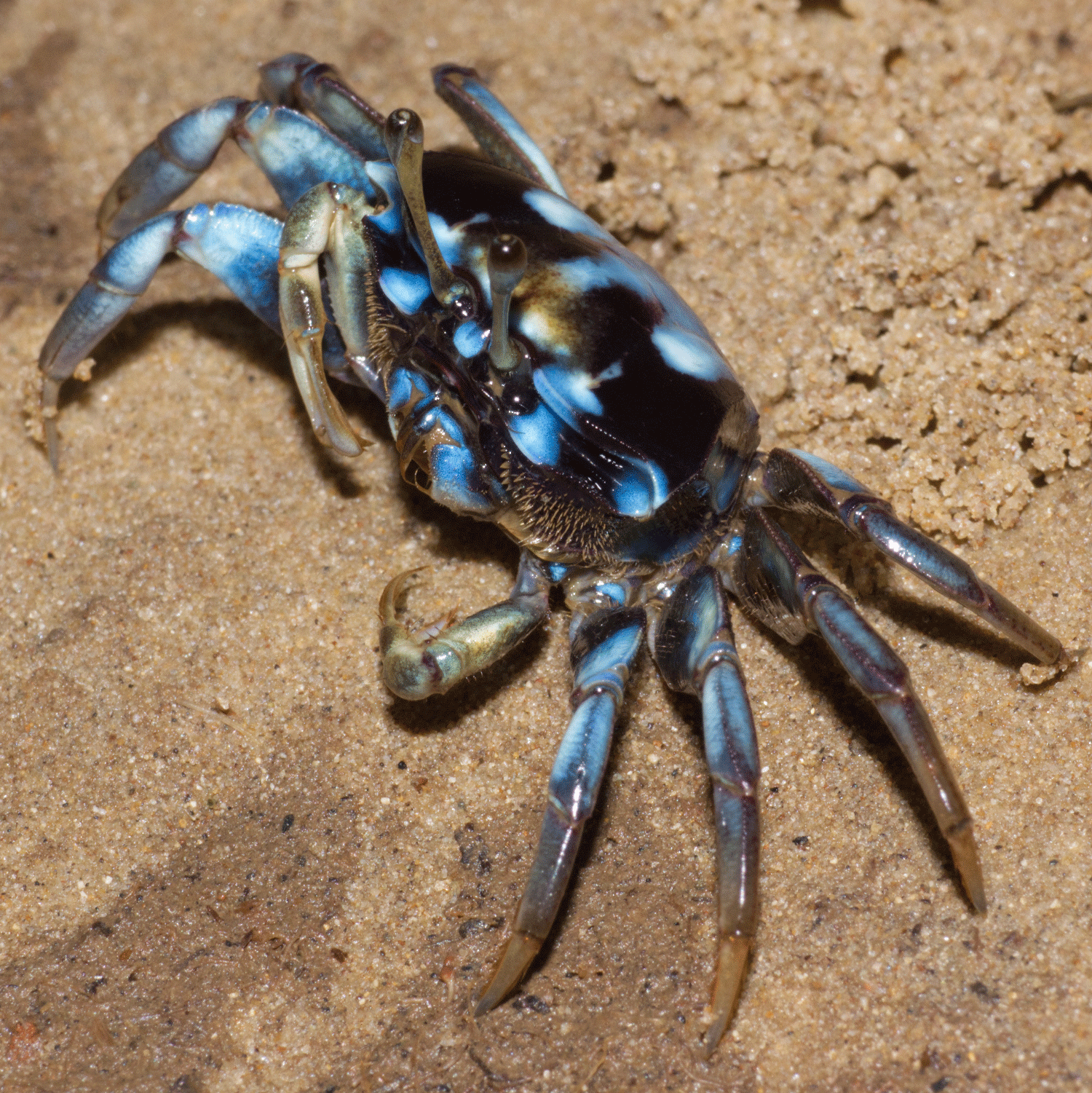
An example of the female fiddler crab Tubuca coarctata that has two small feeding claws. Fiddler crabs scrape up the surface sediment that they filter to extract organic matter to feed on. Photo Denis Riek.

Story & photo Denis Riek

The Brunswick River still has some extensive areas of mangroves that, thankfully, have not been sacrificed for development, and are a great place for photography if you know what to look for, and where to find it.

The only downsides are that on a hot summer’s day in the mangroves it can get as humid as a fettlerʼs armpit; the mud is thick, and the sandflies and mosquitoes annoying. An occasional wallaby or snake make it more interesting, and with climate change – keep one eye open for crocodiles!

Crustaceans haunt the mangroves, with Fiddler Crabs being the most colourful and definitely the most interesting. They are closely related to the Ghost Crabs that can be seen racing around the dunes. Female fiddlers have two small feeding claws while the males have one large and one small, and feed by scraping up the surface sediment, which is sifted in their complex mouth parts to obtain organic matter.
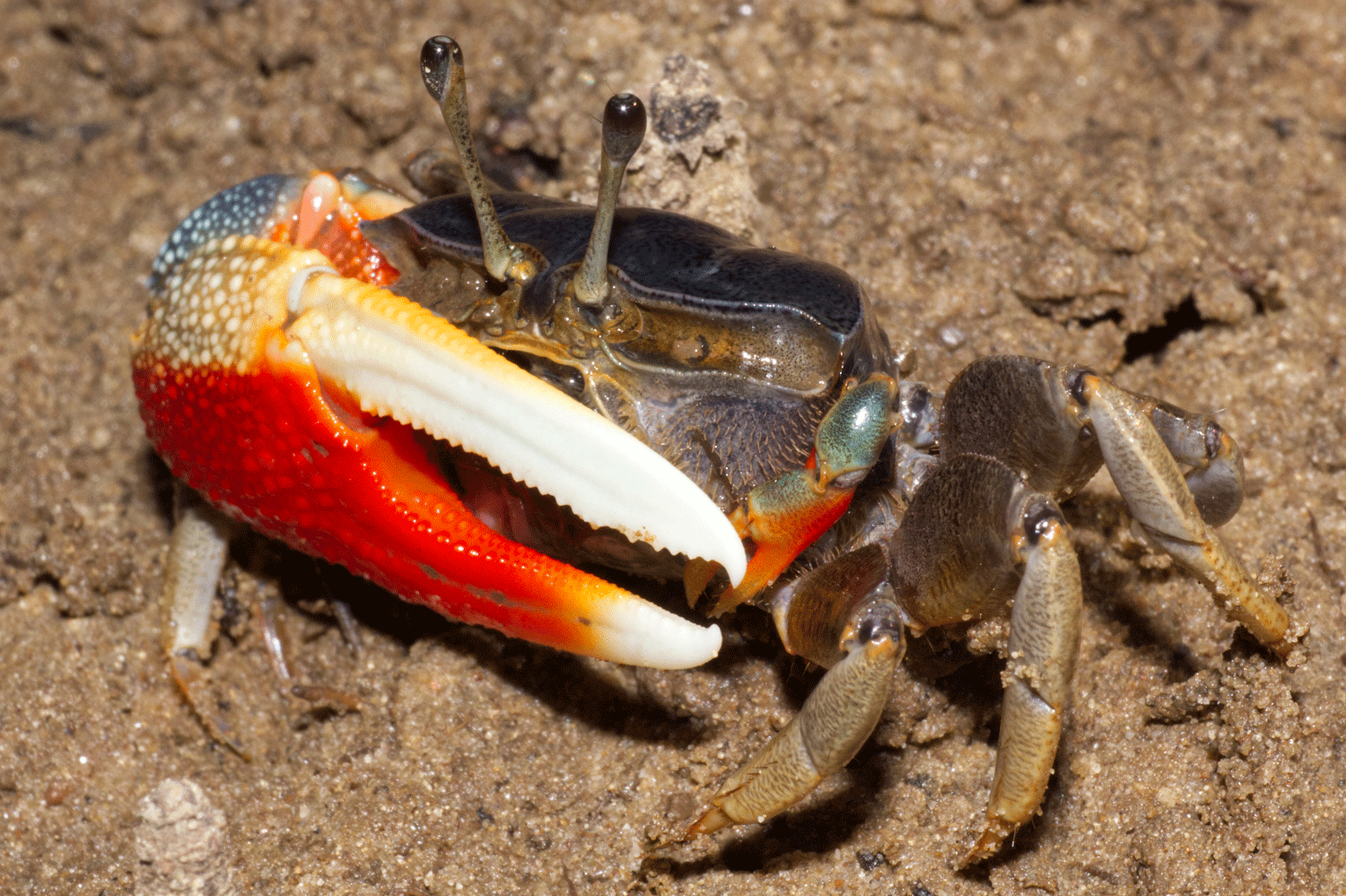
An example of the colourful male fiddler crab of the Tubuca dussumieri speicies with its large and small feeding claws.
Photo Denis Riek.

Gone before you get there

As the tide runs out, uncovering their holes, they come out to feed, attract a mate, or argue with the neighbours.

If you walk through the areas they favour, you will most likely never see one, they have already heard or seen you approaching and are away in a blink down their holes. You have to wait, almost motionless, until they slowly begin to re-emerge, and for some species this can take a considerable amount of time.
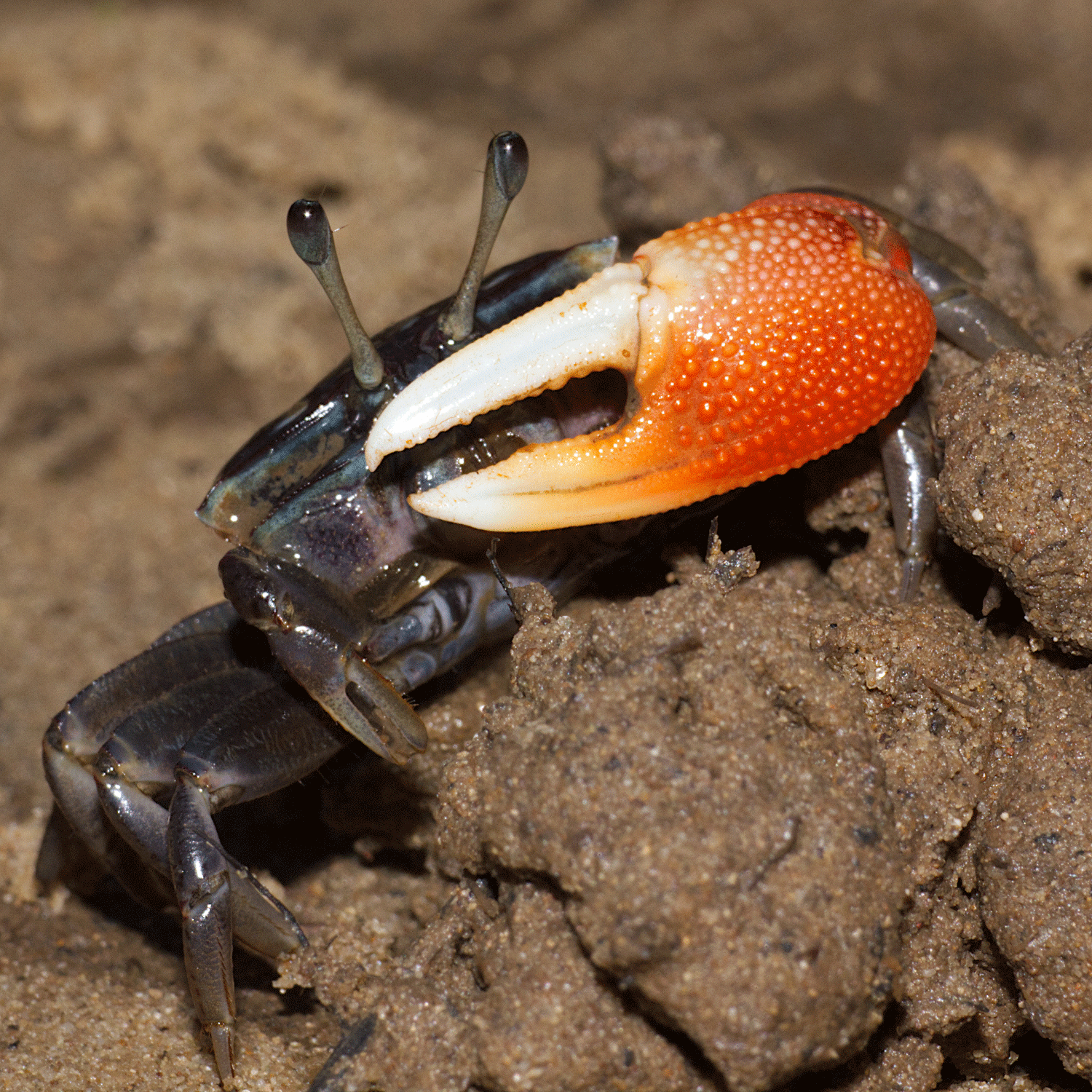
The Tubuca coarctata fiddler crab. Photo Denis Riek.

Not having a telephoto lens I have to spot a likely subject, and note the hole it disappears down as I approach, to get as close as I can. I move closer, then it’s back to waiting again, with camera up to face, and finger on the shutter. Some legs first feel over the edge of the hole, then ‘up periscope’ as one of the stalked eyes appears – and heʼs looking right at me, the large object that wasnʼt there the last time he looked. Donʼt move. Wait a little longer, and he moves further out, until eventually heʼs one of a number of Fiddlers out and about, waving their large claws to attract females, or warn other males.

Colourful species

I get some shots before I make a mistake and move, because he hasnʼt forgotten about me. This works fine with the species that favour firmer sand or sand/gravel but there are two very colourful species (Tubuca coarctata and Tubuca dussumieri) that prefer very muddy sand on the banks of some small creeks that drain through the mangroves.

To get good images of these crabs, that show the full colour pattern, requires catching them, washing off the mud, putting them back near their hole and getting the shots before they collect their wits and bolt back down to safety.

This species is called the Gelasimus vomeris. Photo Denis Riek.

Agility and speed the key

Catching a Fiddler crab requires far more patience than it does to photograph one, plus a fair amount of speed and agility that I can hardly muster these days.

There are six species of Fiddlers that I have seen in the Brunswick River and its tributaries, and luckily I have images of all.



For four decades The Echo has printed the stories some people loved, some people hated, and some pretended not to read. If you want us to keep telling the truth, the real truth, not the sugar-coated version. We’ll need your support to keep the presses rolling.

If you are a local business owner help us and in turn we help you. All The Echo asks for is advertising, not a free ride. It is every advert in The Echo and on www.echo.net.au, which creates the space for all the stories and coverage of community events, happenings and concerns.

If you are a reader you can become a sponsor of The Echo. Your support keeps the us independent.

Even a small one-off or regular donation from you will help keep the echo’s independent voice alive and strong.

Support Us

Become one of the supporters who helps keep independent, local journalism alive in the Byron Shire by contributing anything from as little as the cost of a coffee each month.

You're Wonderful, Thank you for supporting independent journalism in the Byron Shire

You’re supporting The Echo, thank you

Your contribution is keeping independent, local journalism alive in the Northern Rivers.

Because of supporters like you, we can keep every story free for everyone — no paywall, no exceptions. Your money goes directly to funding our newsroom of 40-odd local workers covering the stories that matter to this community.

Tell us what you think, give us your opinion

The Echo loves your letters and comments and is proud to provide a community forum on the issues that matter most to our readers and the people of the NSW north coast. So don’t be a passive reader, email us your epistles at editor@echo.net.au.

The letters deadline for The Echo is noon Friday. Letters longer than 200 words may be cut. The publication of letters is at the discretion of the letters editor. Please remember to include your full name, address and telephone number.

Online comments are no longer available.

Alleged Lennox Head native tree removal sparks calls for action

A Ballina Greens councillor is calling on the government agencies to act immediately over claims that native clearing is occurring on a private property in Lennox Head.

Free shop to move on from Billinudgel

The Billinudgel Railway Station building, managed by Byron Shire Council (BSC) on behalf of Transport for NSW (TfNSW), has been used as a free community shop where people can donate unwanted items which are available for others to take since 2022.

Bigger community say on hospital land

Byron Council has voted to give the community a greater role in shaping the future of the former Mullumbimby Hospital site, despite concerns from some councillors that additional consultation could further delay the delivery of desperately needed housing.

Byron Bay High are Mock Trial champions

Byron Bay High School’s Mock Trial team achieved a rare trifecta as their debut as a formidable legal team in the Southern Cross University (SCU) Mock Trial competition.

