


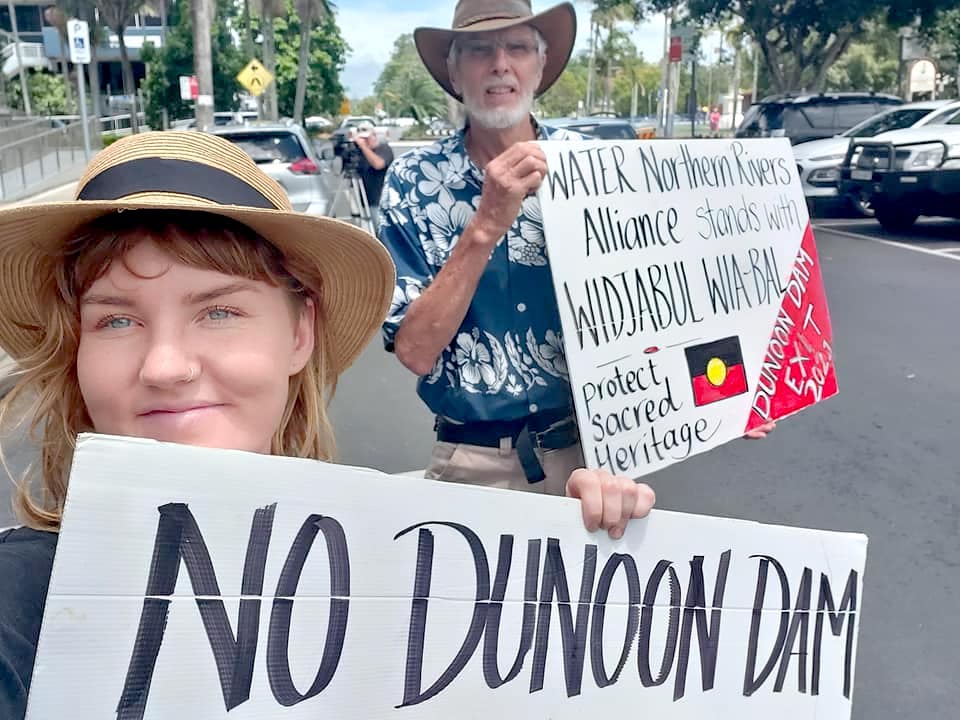
Yesterday’s meeting of Rous County Council saw the rescission motion go down 5:3 after another passionate debate, but Cr Sharon Cadwallader said she remained determined to keep the Dunoon Dam as an option for the future water supply of the Northern Rivers.
The previous meeting of Rous County Council determined by majority to stop investigating the Dunoon Dam for cultural heritage, environmental and legal reasons. The properties in the valley owned by Rous were to be sold.
Dissatisfied councillors from Richmond Valley and Ballina yesterday put up a rescission motion which appeared to be designed as a stalling tactic, while further support for the dam could be marshalled.
Cr Mustow’s view
Casino’s Cr Robert Mustow lodged the rescission motion, which he said was ‘not him’, but he needed to make an exception in this case.

He said the motion was not about putting the dam back on the table, ‘even though the media has received it that way’.
Moments later, he said the dam needed to remain as a ‘safety barrier’ in case other options did not work.
Cr Mustow said there would be a push back from irrigators if there was greater reliance on underground water at Alstonville Plateau.
He questioned the extra gains to be made from increased water efficiency, saying ‘you can only not use so much water,’ adding that Rous was ‘dreaming’ if it thought the community would accept recycled water as potable water.
‘I’m very concerned that if we dispose of the Dunoon site too soon we are going to have a major problem in our community,’ he said. ‘I don’t want to be part of a council where people look back in 10-15 years and ask what were they doing? We need to be strategic.’
Cr Mustow argued that selling the Dunoon Dam land equated to ‘burning our bridges behind us’, with no possible retreat.
‘If someone is dangling $100m for a dam but not going to fund anything else, we would be a stupid organisation to dismiss that,’ he said.
Cr Richardson’s view
Byron Bay’s Cr Simon Richardson said he wouldn’t be supporting the rescission motion, but he would be supporting an orderly exit from the Dunoon Dam.
‘While we say to state government that we are open to the dam, they will offer us a dam,’ he said. ‘The only way to get them to nudge along is to stop giving them the option of the status quo.
‘For me it’s imperative that we read the tea leaves and acknowledge there is change.’
Cr Richardson said that even the National Party representatives at Macquarie Street were increasingly open to purified recycled water, having heard from the experts and their constituents in areas where dams are not an option.
He said that meetings with key members of all parties needed to begin as soon as possible, as nothing could be done without state and federal support.
‘We will rely on them for money, approvals and acceptance,’ said Cr Richardson.
He suggested it was vital to communicate to state and federal representatives that the Northern Rivers had ‘no interest in having a dam’ and that it would then be possible to come up with real alternatives.
Cr Richardson said that while the dam remained as an option, ‘we won’t fight as hard on behalf of our commmunity to find a 21st century water solution. We need to fight like buggery to get to a future without a Dunoon Dam,’ he said.
Cr Cadwallader’s view
Cr Cadwallader said that while she acknowledged and respected the ‘epochal connection’ of Cindy Roberts and other Bundjalung people to the dam area, and the water within it, that water belonged to everyone.
She said that after speaking to members of the wider Northern Rivers community, she was dismayed to discover there was great ignorance about where their water came from, and a general lack of knowledge about who was making the decisions at Rous about the future of the water supply.
Cr Cadwallader discussed her concerns about lost employment opportunities for small businesses if water prices became exorbitant, saying, ‘We’re on that track now.’
Despite no apparent change in support from Rous councillors, she said she would be bringing the Dunoon Dam back as a notice of motion at the next council meeting. ‘It’s too much of an important issue not to,’ she said.
Cr Cadwallader went on to lament the abandonment of the Dunoon Dam option before all the relevant data had been gathered.
She said that while Rous had made great gains in water efficiency via rebate programs and education, the likely changes brought by climate and a growing population meant a secure water system was not guaranteed without an additional dam.
She then questioned the validity of Aboriginal burial sites in the area, and suggested the dam could be named ‘in honour of cultural heritage’.
Cr Cadwallader said concerns for koalas could be addressed with compensatory plantings, and used the phrases ‘toilet to tap’ and ‘recycled effluent’ in reference to recycled water.
She argued that abandoning the dam would be in direct contradiction with Rous Council’s charter to supply a safe, potable water supply.
Cr Cadwallader urges Rous to listen to Big Rob
Going into extra time, Cr Cadwallader asked General Manager Phillip Rudd what response there had been to her belated campaign to put the dam back on the table.
The GM said there had been 33 submissions against the rescission motion, and 114 submissions via email in support, as well as a petition of 348. He noted there had also been two formal letters in support of the dam from Ballina Shire Council and Richmond Valley Council.
Following questions from Crs Vanessa Ekins and Keith Williams, it emerged that 915 thank you postcards from WATER Northern Rivers supporters had also been received by councillors who voted to stop the dam.
Cr Cadwallader said these numbers suggested that people were starting to become aware of the importance of the decision, and how it would affect their lives.

She also drew attention to an online poll conducted by Lismore identity Big Rob of 500 people, which reportedly was 4:1 in favour of the dam.
‘I believe we need to listen to that as well,’ said Cr Cadwallader.
Cr Cook’s view
Lismore’s Cr Darlene Cook said she was ‘intrigued’ by the wording of the rescission motion, and questioned Big Rob’s assertion that people who supported the Dunoon Dam had assumed the dam was a foregone conclusion, so didn’t bother making their feelings known until it was too late.
She pointed out that the Rous Future Water Plan was widely publicised on media and social media, with lots of interviews. COVID-19 had preventing face to face community meetings. ‘This wasn’t a failing of Rous,’ she said.
Cr Cook noted that while the rescission motion sought to delay the disposal of dam land, the land would not be sold overnight in any case. ‘We are supposed to be getting a report on an orderly exit,’ she said. ‘I’m sure we all agree we don’t want a fire sale.’
She argued that delaying work on the dam exit strategy ‘delays everything and puts it into limbo’, with Widjabul Wia-bul people and farmers both negatively affected.
Discussing the Productivity Commission’s recent green paper, she said governments were becoming more cautious about dams, and gave the example of the massive cost blow-out of the Dungowan Dam near Tamworth (with an agreed budget of $150 million, costs have so far more than tripled on that project, to $484 million).
With Dunoon Dam already being estimated at $220m, a similar blowout could be a financial catastrophe if costs were passed on to the community, she said.

Cr Cook also noted the report showed different levels of government becoming much more serious about water recycling.
She described the dam as an ‘all eggs in one basket, high risk solution’, pointing out that in prolonged periods of drought, Rocky Creek wouldn’t overflow and fill the Dunoon Dam downstream.
Cr Cook argued that diversity was needed to spread the risk across multiple sources, including direct and indirect potable reuse, stormwater capture and roof water capture on all new developments.
She said better processes were needed to capture and retains water across all LGAs, and water tanks on all new developments should be mandatory.
Cr Cook concluded by saying, ‘I think we made the right call in December, squashing the dam and squashing it for good.’
Cr Humphrys’ view
Richmond Valley’s Cr Sandra Humphrys spoke in support of the rescission motion, saying the dam needed to be retained as an option.
She said, ‘I’m not the big bad boogie man but incredibly concerned about our constituent councils. We had two days to put this rescission motion together. For me this came out of nowhere,’ she said.

Cr Humphrys downplayed the 90% of submissions which opposed the Dunoon Dam, saying this represented less than 1% of Rous customers.
She spoke about the importance of consultation with traditional owners, and hoped ‘regardless of the dam those relationships would be supported in future’.
Cr Humphrys also spoke about the successful removal of Aboriginal artifacts when the Cotter Dam was raised in the ACT, and the protection of the endangered Macquarie Perch in that case.
She also raised the stygofauna issue as an example of why underground water should not be over-exploited (drawing on CSG research from the NT).
Cr Humphrys questioned desalination as an expensive backstop option, and said the research into the Dunoon Dam needed to be finished before it was dropped as an option.
Cr Cameron’s view
Cr Basil Cameron of Byron Bay said it was great to hear all the diverse points of view on the issue. He suggested that water security was the key question, and the common theme.
‘Genuine security cannot be divorced from sustainability and resilience’ he said. ‘That is why the easy way out here is a non-option. We must be prepared to make the hard decisions. Hard is what we need to do.’

Cr Cameron said the rescission motion was contradictory and already obsolete.
He argued that while Cr Mustow had argued the motion was not about keeping the Dunoon Dam on the table, ‘that is the substance of the argument when you put it all together.’
Cr Cameron said there were more secure and sustainable long term water sources than another dam, agreeing with Cr Cook that ‘a dam is a singular high risk option,’ and that other options needed to be properly developed.
He said, ‘We cannot afford to travel a few more decades without doing this work. The question will not be, what were they thinking? But likely to be, why weren’t they doing it?’
Cr Ekins’ view
Speaking with a Lismore perspective, Cr Vanessa Ekins said the call for more facts and evidence didn’t make sense, as ‘decades of work’ had gone into the decision to get beyond the dam.
Cr Ekins said that groundwater, increased demand management, tanks and recycling had been identified as the solutions years earlier, and nothing had changed.
‘Contrary to what has been said, there is viable groundwater and we are proceeding with that,’ she said. ‘We have a lot of facts and information.’
Taking aim at the ‘toilet to tap’ scare campaign she reminded her fellow councillors that 98% of high quality drinking water was actually used for non-drinking uses such as clothes washing, gardening and toilet flushing.
‘We have enough water for our population,’ she said. ‘This is about water for people who may move here in the future. Recycled water is the answer for that,’ she said.
Cr Ekins said many more homes could have rainwater tanks and ‘the more we can get connected, the more dam water remains for drinking and emergency supply.’
She argued that ‘we need to give our staff a really firm direction about where we’re heading, so we can move forward and look at a variety of options that make us resilient in the future.’
Rous Chair Williams’ view
Cr Keith Williams of Ballina said that while he understood the movers and seconders of the motion were acting in good faith, he was ‘less enamoured of the public debate since December and some very untrue statements that have been made by members of this council’.

Becoming heated, he said it was wrong to suggest that council didn’t have an alternative plan apart from the dam, but in fact there were three fully costed options.
‘We ruled out two of them and chose the third,’ he said. ‘The description of that as mad or crazy in the public sphere is offensive.’
Cr Williams said that those who misrepresented the facts in public needed to ‘reconsider their position.’
He said that groundwater had scored highly on social and environmental grounds, and only got more expensive if figures were extrapolated many decades into the future, when there would likely be better technology and different costs.
Addressing the cultural heritage issue, Cr Williams said the 2011 Ainsworth report on the Dunoon Dam site was quite clear, with a strong likelihood of development refusal on heritage grounds.
‘If we went ahead with that dam we would spend the next decade in court,’ he said. ‘We would not get anyone water security. We would be fighting this for a long time.’
Traditional owners taken seriously
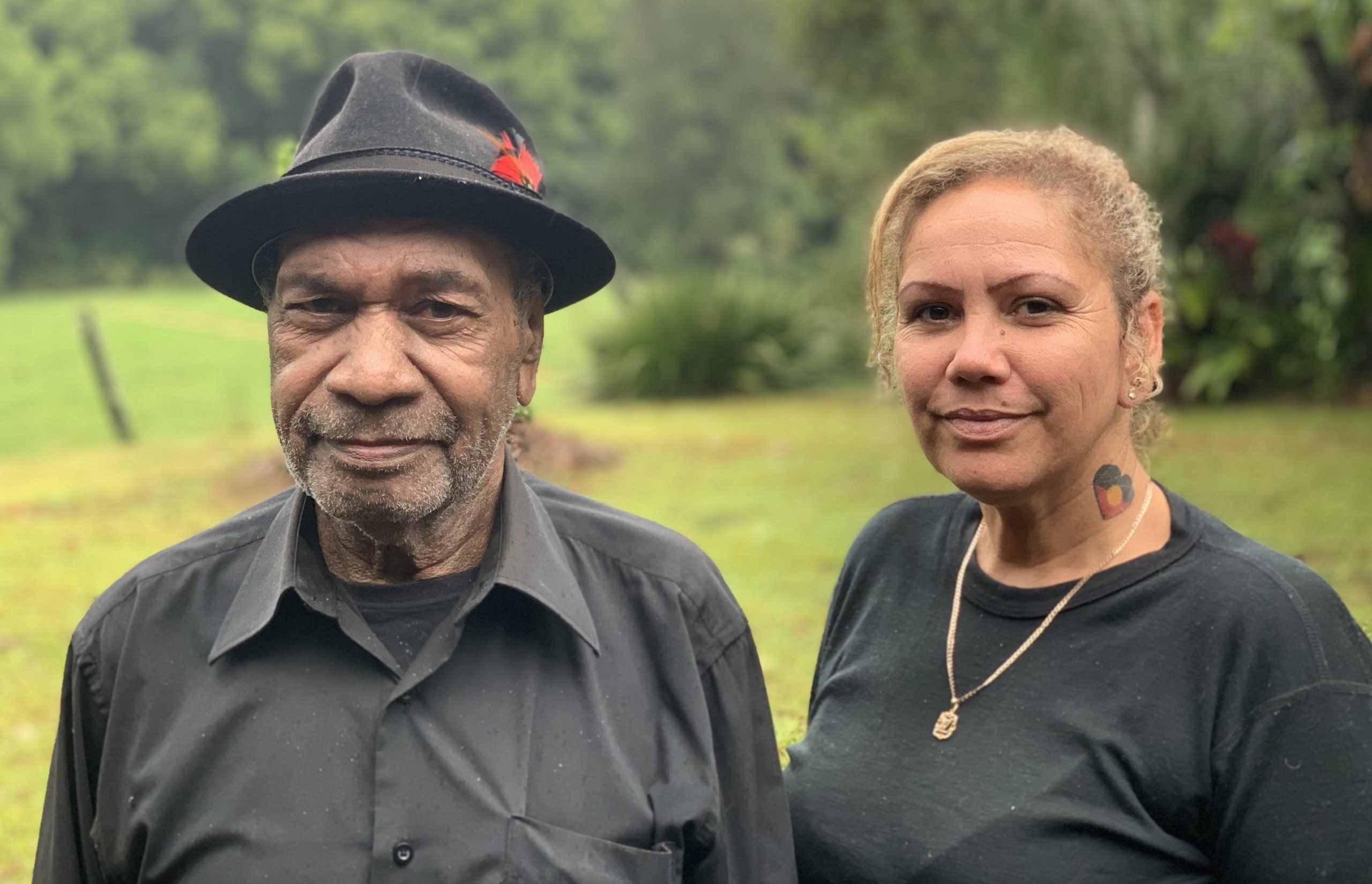
Cr Williams reiterated his point from the last meeting that Rous County Council needed to take the representations from traditional owners and indigenous representatives seriously, emphasising that they had heritage and potential crown land rights.
‘There are also endangered species; rainforest, koalas – anyone who thinks we can just go ahead without being taken to court is expecting too much,’ said Cr Williams. ‘The safest and most strategic option is not to invest all our eggs in one basket, which is what the dam proposal does.
‘Regardless of our view about what we think is the best option, we have to look at what is deliverable to our community.’
In a final blast, Cr Williams said the ‘disingenous fearmongering’ around the underground water at Alstonville needed to stop, as council had already resolved to proceed with that whether the dam was built or not.
After Cr Mustow reiterated that he couldn’t accept that the Dunoon Dam land could be disposed of before ‘we have everything finalised’, he said he accepted the Dunoon Dam was off the table.
As expected, the rescission motion was lost, 5:3.
Next month we will find out if Crs Cadwallader, Mustow and Humphrys wish to move on, or continue the dam debate.
More stories about Dunoon Dam:

Dunoon dam and future water strategies to remain contentious on Rous
The election of Byron Shire Councillors Mayor Sarah Ndiaye and Elia Hauge to the Rous County Council (RCC) will see them working with six other elected councillors from Ballina, Richmond Valley and Lismore Councils with a key issue of contention being the Dunoon dam over the next four years.
Ballina mayor vies for second term ‘leading the rebuild’
Ballina Shire’s mayoral race this September looks to be a competition between two women, one progressive, the other conservative, after both candidates announced campaigns last week.
How to supply water to the increasing population?
It is predicted that the next 40 years will see the demand for water increase by 50 per cent in the local government areas that Rous County Council supply with water.

Is our drinking water supply threatened by Dunoon Dam?
Most people don’t know that the proposal for Dunoon Dam has never been part of Rous County Council’s 40-year, adopted, strategic plan to increase water supply, resilience and security, known as Future Water Plan 2060.
Will the Dunoon Dam go ahead?
We have not heard much about the Dunoon Dam lately and many people are asking ‘What is happening with that dam?’
 For four decades The Echo has printed the stories some people loved, some people hated, and some pretended not to read. If you want us to keep telling the truth, the real truth, not the sugar-coated version. We’ll need your support to keep the presses rolling.


