


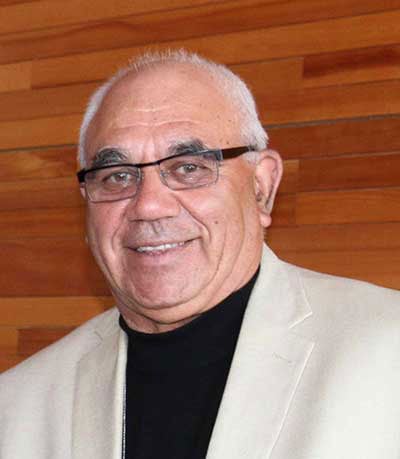
Professor Bob Morgan
I had a call from a friend the other day who was a little concerned about my wellbeing. I’ve been disconnected from social media in recent times and it wasn’t solely because of the need to deal with an ongoing and painful bout of shingles. Rather my decision to strategically disengage with social media was to protect my mental and spiritual wellness and in particular to ward off what I’ve coined ‘spiritual fatigue’.
Spiritual fatigue, in very broad terms, is a debilitating consequence of having to either constantly struggle for human rights and freedoms or being forced to constantly defend them. There is no room for celebration and purposeful meaning in this paradigm – it is simply a choice between struggle or defence.
Dealing with the destruction of Aboriginal languages, the contamination and/or erosion of cultural and traditional values, the forced removal of children, the wilful desecration of ancestral lands, disproportionate incarceration rates, the destruction of age-old lore are all determinants giving rise to spiritual fatigue.
Viktor Frankl’s seminal book Man’s Search for Meaning (1938) on the theory of Logotherapy, based on his observations from his time as a prisoner in German concentration camps, argued: ‘The human being is an entity that consists of a body (soma), mind (psyche), and spirit (noos).’ Frankl explained that we have a body and mind, but the spirit is what we are, our essence. Note that Frankl’s theory was not based on religion or theology, but often had parallels to them.
Undoubtedly a source of spiritual fatigue for many is the trauma associated with the ongoing death of Aboriginal people in custody.
2021 marks the 30th anniversary of the Royal Commission into Aboriginal Deaths in Custody, and the report and its recommendations were calculated to address a number of the underlying socio-political factors involved with Aboriginal incarceration – but failure is perhaps the most defining characteristic when the question of implementation of the Royal Commission’s recommendations are considered.
In fact, since the report of the Royal Commission was handed down 30 years ago, a reported 470 more Aboriginal people have lost their lives while in custodial care. Perhaps the alarming increase in Aboriginal deaths in custody can also be linked to government decisions to privatise the correctional system in Australia. The privatisation of the correctional system, ill-informed sentencing, and other associated factors are problematic for all who fall foul of the law, not just Aboriginal people.
Aboriginal people are often incarcerated for minor ‘crimes’ and in some cases for crimes that non-Aboriginal people receive lesser penalties for. Surely non-custodial rulings should be an option for minor infractions. This matter obviously points to the need for a lot more work so that magistrates, judges, and others involved in the judicial and custodial systems can better understand the factors undergirding Aboriginal incarceration rates. This and associated issues were highlighted during the Royal Commission.
I’ve been exploring with other Indigenous colleagues globally whether imprisonment or the loss of liberty were ever a part of traditional Indigenous justice systems and, anecdotally, it appears that it wasn’t. Offences were of course committed during traditional and pre-colonial times but these were dealt with through a means of justice that rarely involved the loss of liberty. People were banished for serious breaches of ‘customary law’ while others would suffer a spear to the leg or other similar punishment but prisons, as we know them today, were apparently not used to regulate and respond to breaches of Aboriginal law.
Research findings from the Harvard Project on American Indian Economic Development demonstrate that ‘When Aboriginal nations make their own decisions about what development approaches to take, they consistently out-perform external decision makers’. Another core finding of the Harvard Project is that institutions matter explaining that: ‘For development to take hold, capable institutions of governance must back the assertions of sovereignty. Nations do this as they develop and adopt stable decision-making rules, establish fair and independent mechanisms for dispute resolution, and separate politics from day-to-day business and program management.’
For me spiritual fatigue, including the form stemming from Aboriginal deaths in custody, is a crippling form of chronic disease. Indeed theory is evolving to suggest that spiritual fatigue is a major determinant, sitting behind almost every other chronic illness experienced by first nations people and other marginalised groups. Spiritual fatigue, of course, is not exclusive to Indigenous peoples and communities; however, as with most things, it manifests disproportionately and with varying degrees of force.
Aboriginal deaths in custody will undoubtedly continue to cause pain, protest, and spiritual fatigue as long as governments and the judicial system persist in their failure to acknowledge and understand the cultural and other factors that were so graphically identified in the various volumes of the 30-year-old report of the Royal Commission into Aboriginal Deaths in Custody.
‘I can sympathise with everything except suffering’ – Oscar Wilde.
Professor Morgan is a Gumilaroi man from Walgett western NSW.
He is a highly respected and acknowledged Aboriginal educator/researcher who has worked extensively throughout Australia and internationally in the field of Aboriginal knowledge and learning for over forty years.
Professor Morgan is currently Chair of the Board of Aboriginal and Torres Strait Islander Studies, Education and Research (BATSIER), and also serves as Conjoint Professor with the Wollotuka Institute with the University of Newcastle.
 For four decades The Echo has printed the stories some people loved, some people hated, and some pretended not to read. If you want us to keep telling the truth, the real truth, not the sugar-coated version. We’ll need your support to keep the presses rolling.


