


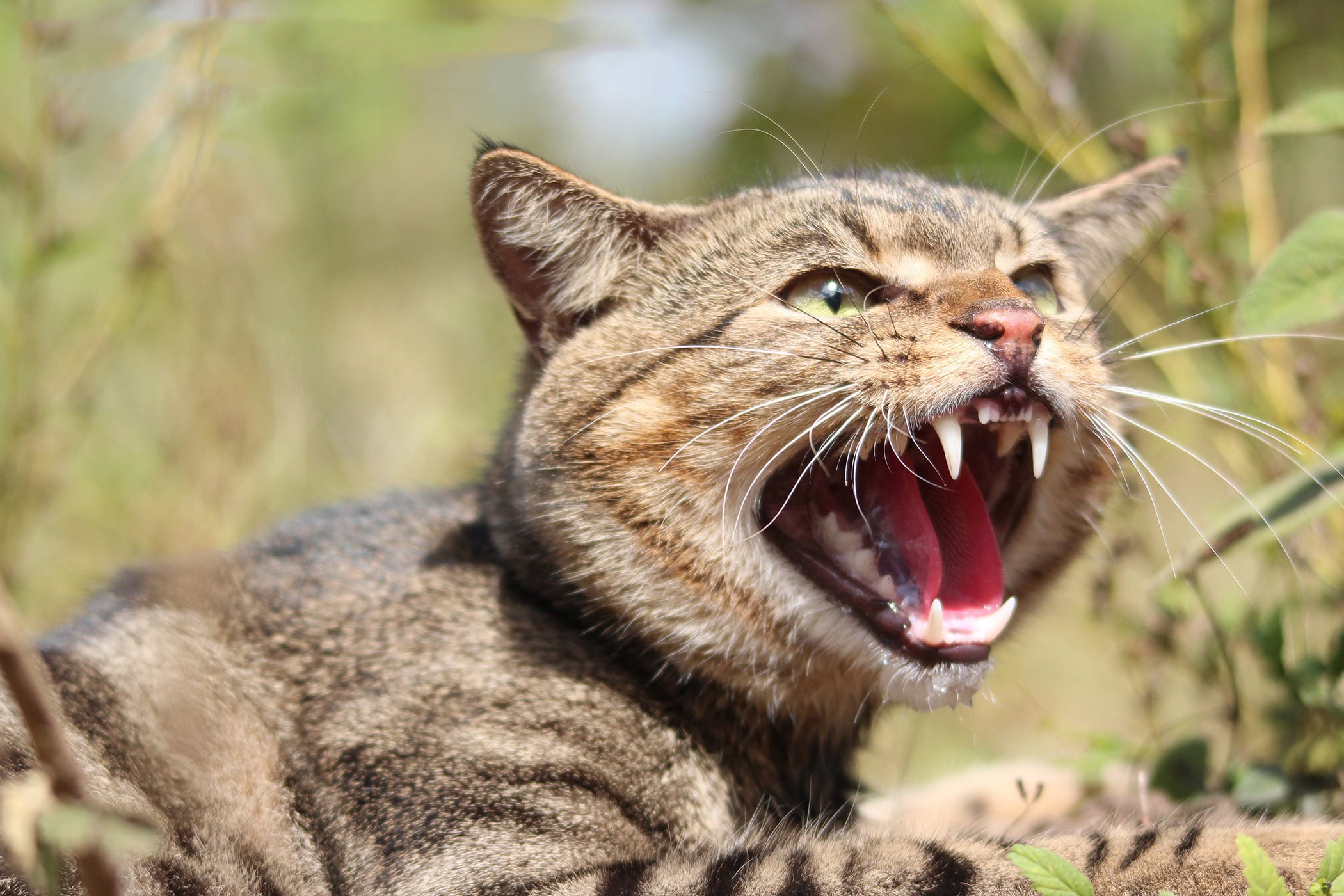
The Albanese government says it has reached a new frontier in its battle against feral cats.
With a new national action plan to combat feral cats about to be released, the federal government is investing more than $60 million in 55 projects nationwide to halt the invasive pest’s path of destruction.
Every year in Australia, feral cats kill over 1.5 billion native mammals, birds, reptiles and frogs, and 1.1 billion invertebrates. That’s around seven million each day. They also spread disease.
Feral cats have contributed to two thirds of Australia’s mammal extinctions and threaten over 200 threatened species, including the greater bilby, numbat, and Gilbert’s potoroo.
The new projects and technologies – including traps equipped with artificial intelligence (AI) – have been announced ahead of Threatened Species Day.
Bush Heritage Australia is currently testing innovative technologies across different Australian terrains – such as the Tiwi Islands, Yourka Reserve in Queensland, and Naree Station Reserve in NSW – as part of a $1.6 million project. These include using an AI-supported ‘cat audio deterrent’ that emits high-pitched sounds to create a virtual fence, and a ‘humane animal net’ which traps the pest and sends an alert.
Success on Christmas Island
On Christmas Island National Park in Western Australia, more than 1,100 cats have been removed since 2022. One cat control measure is the AI-based Felixer trap – a box which uses lasers, cameras and AI to distinguish feral cats from native animals before spraying them with a toxic gel.
Researchers are now exploring drone-based thermal cameras and eDNA technologies to track the predators.

Conservation group Thylation is trialling six high-tech conservation tools in various locations as part of a $2.1 million project.
These include technologies allowing Felixer traps to detect feral cats in extreme conditions and using AI operated gates so native animals can pass while keeping out feral cats.
They’re also targeting other pests, including by testing noxious sprays, noise and light alarms around rare bird nests.
On bushfire ravaged Kangaroo Island in South Australia, the Kangaroo Island Landscape Board is removing feral cats from the 38,000-hectare Dudley Peninsula. They’re using Felixer traps, mobile-linked traps with real-time alerts, feral cat detection dogs, and running a community ‘call in a cat’ program.
The government is currently considering extensive feedback on the draft Feral Cat Threat Abatement Plan, due out later this year. The plan sets new goals, including to make sure feral cats do not endanger native species that are not currently threatened.
The plan and projects are specifically about feral cats, who do so much damage to our native wildlife, and will not impact domestic cats.

Ruthless predators
The Minister for the Environment and Water, Tanya Plibersek, said the Albanese government is serious about protecting our precious native species – ‘and that’s why we’re tackling one of their biggest killers.
’Feral cats are dangerous and ruthless predators, pushing our threatened native species like the greater bilby, numbat, and Gilbert’s potoroo, to the brink of extinction,’ she said.
‘Since declaring war on feral cats, we are mobilising artificial intelligence, cat trap technology and strong community action to combat this invasive pest and safeguard Australia’s biodiversity.
’We’re investing $60 million in groundbreaking projects that safely, quickly and humanely catch and eradicate feral cats. The projects also help land managers and farmers to better protect land, livestock and native wildlife from feral cats.’
Extinction is forever
Invasive Species Council Advocacy Director, Jack Gough, says cats have driven over 25 of Australia’s native species to extinction.
‘Environment Minister Plibersek has shown important leadership by bringing states and territories together to focus on this critical issue and we look forward to an ambitious national cat plan being adopted soon,’ he said.

‘An additional future commitment of at least $60 million over the next 4 years will be needed if this plan is to be properly implemented.
‘It is great to see funding that has already been announced is now hitting the ground across the country for high quality projects like island eradications, research into new control techniques and protection of threatened native birds.
‘Given the seriousness of this threat to our wildlife, we will be looking for all parties to step up with additional funding for action on cats in the lead up to the federal election.
‘We also need all state and territory governments to declare feral cats to be pests, support all appropriate control tools and develop their own feral cat plans,’ said Mr Gough.
‘We have an archaic situation in NSW and Western Australia where local governments cannot implement basic cat curfew laws for pet cats due to outdated state laws. This is despite the onus for managing cats in urban areas falling on local governments.’
 For four decades The Echo has printed the stories some people loved, some people hated, and some pretended not to read. If you want us to keep telling the truth, the real truth, not the sugar-coated version. We’ll need your support to keep the presses rolling.


