



Australia’s chief science agency, the CSIRO, has released a long-awaited report with data and flood modelling for the Richmond River Catchment.
Lismore City Mayor Steve Krieg says it’s pivotal moment for Lismore and the Northern Rivers.
The council issued a media release in response to the new information calling on the federal government to fund any recommended associated works and for a national insurance funding pool.
‘We call on the Australian Government to fund the implementation of CSIRO’s forthcoming mitigation recommendations,’ the media release read.
‘The cost of the 2022 flooding disaster in this region alone has reached an estimate $16 billion and is expected to rise further, not to mention the human impact.
‘For a region that has experienced 129 floods in 150 years, investment in resilience is a no brainer.’
Northern Rivers Resilience Initiative informs infrastructure spending

The federal government commissioned the $11.4 million Northern Rivers Resilience Initiative (NRRI) in response to the 2022 flood and landslides disasters, with the program’s second phase aimed at finding community-supported solutions for flood mitigation and resilience investment.
The first phase happened from July to November 2022 and was a rapid review and assessment phase analysing the most effective intervention options for allocation of $150 million in federal funding.
The CSIRO says it consulted with residents and councils in each of the seven flood-affected Local Government Areas of Ballina, Byron, Clarence Valley, Kyogle, Lismore, Richmond Valley and Tweed before submitting two reports and a full list of project recommendations to the National Emergency Management Authority (NEMA) on 30 November 2022.
The first sixteen projects subsequently announced on 23 February 2023 were budgeted at a combined $50 million.
Funds were invested in upgrades to pumps and pump stations in Lismore, a new pump system in East Murwillumbah and new box culverts through a riverbank levee in Grafton.
Another twenty projects totalling $100 million were announced on 28 July 2023.
These included raising two low bridges at Tatham for improved access between Casino and Coraki during floods and widening the Browns Creek flood channel at Lismore.
‘Unfavourable weather’ delays flood mapping data collection
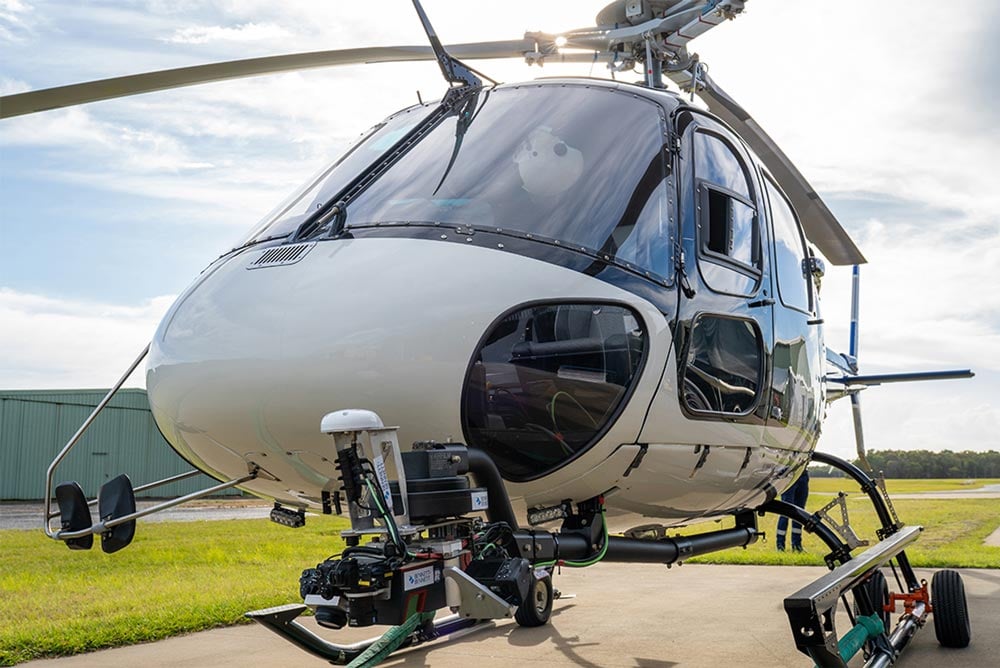
The second phase of the NRRI featured planes with Light Detection and Ranging (LiDAR) technology to inform spatial analysis for the Northern Rivers and boats collecting river bathymetry from the Richmond and Tweed rivers and parts of the Brunswick.
There were significant delays to the LiDAR collection, the CSIRO says, owing to ‘unfavourable weather conditions across the region over the last year’.
The CSIRO says the LiDAR and Bathymetry datasets became publicly available on 28 June 2024 through the Geoscience Australia Elvis website and have been essential inputs for a detailed hydrodynamic Richmond River catchment model.
Scientists reportedly spent hundreds of hours building the model, described as unique in its ability to reproduce extreme flood events such as in 2017 and 2022 and peer reviewed by three independent international experts.
‘The hydrodynamic model has been developed and implemented for five historical flood events in the Richmond River catchment,’ information from the CSIRO’s website states.
‘The model accurately represents water flow, depth, and velocity across the Richmond River catchment (more than 7000 km²).’
CSIRO community consultation: August 2025
The CSIRO says scientists will test and investigate more flood mitigation options for the Northern Rivers using the new hydrodynamic model in preparation for another report to be delivered to NEMA in June 2026.
Mitigation options are be chosen in conjunction with community and state, federal, and local government, with residents in the catchment able to provide input through consultation sessions.
The CSIRO says more information is to come about planned face to face events to be held in the region from August and online.
A technical report on the recent NRRI Richmond River catchment work phase two was made publicly available on 30 June 2025 via NEMA’s website.
 For four decades The Echo has printed the stories some people loved, some people hated, and some pretended not to read. If you want us to keep telling the truth, the real truth, not the sugar-coated version. We’ll need your support to keep the presses rolling.


