



Bob Brown Foundation has recorded critically endangered swift parrots across their Tasmanian breeding territory, in multiple forests on the logging schedule, including two nesting pairs of the critically endangered parrots in a forest behind Dover.
‘Murray Watt’s EPBC bills have no provision to end the destruction of native forests and woodlands, although loss of habitat poses the greatest direct threat of extinction to Australia’s flora and fauna,’ said Jenny Weber, Bob Brown Foundation’s Campaigns Director.
‘The blanket exemption for the logging of native forests will remain in an inexplicable move by the Minister for Environment to protect his logger mates, not critically endangered species.
‘If passed by the Senate, the EPBC “reforms” will delegate more approvals to state governments and will replicate the environmental catastrophe that has seen the flattening of native forests, pushing swift parrots to the brink of extinction under the Regional Forest Agreements.
‘Australia’s forests and their wildlife need an environment minister who will give them secure protection and prevent their destruction,’ she said.

Extinction threat
‘When successive governments hold the chainsaws and sentence wildlife to extinction, it is up to the citizens to take decisive action,’ said Jenny Weber.
‘Our Citizen Science program has been documenting and reporting swift parrots inside logging coupes for the last five years. Yet, logging continues in these forests where we found swift parrots.
‘We welcome The Wilderness Society’s Supreme Court case announced today to defend swift parrots in two logging coupes where our Foundation documented their presence and even nests in previous years. Again last week, our Swift Parrot Program detected them in these same forests, supporting the importance of this court case,’ she said.
‘The rare photographs show a breeding swift parrot pair at their nesting hollow in the last two weeks in a forest on the current logging schedule. During the swift parrot breeding season of 2023-24, parrots successfully bred in the same forest.
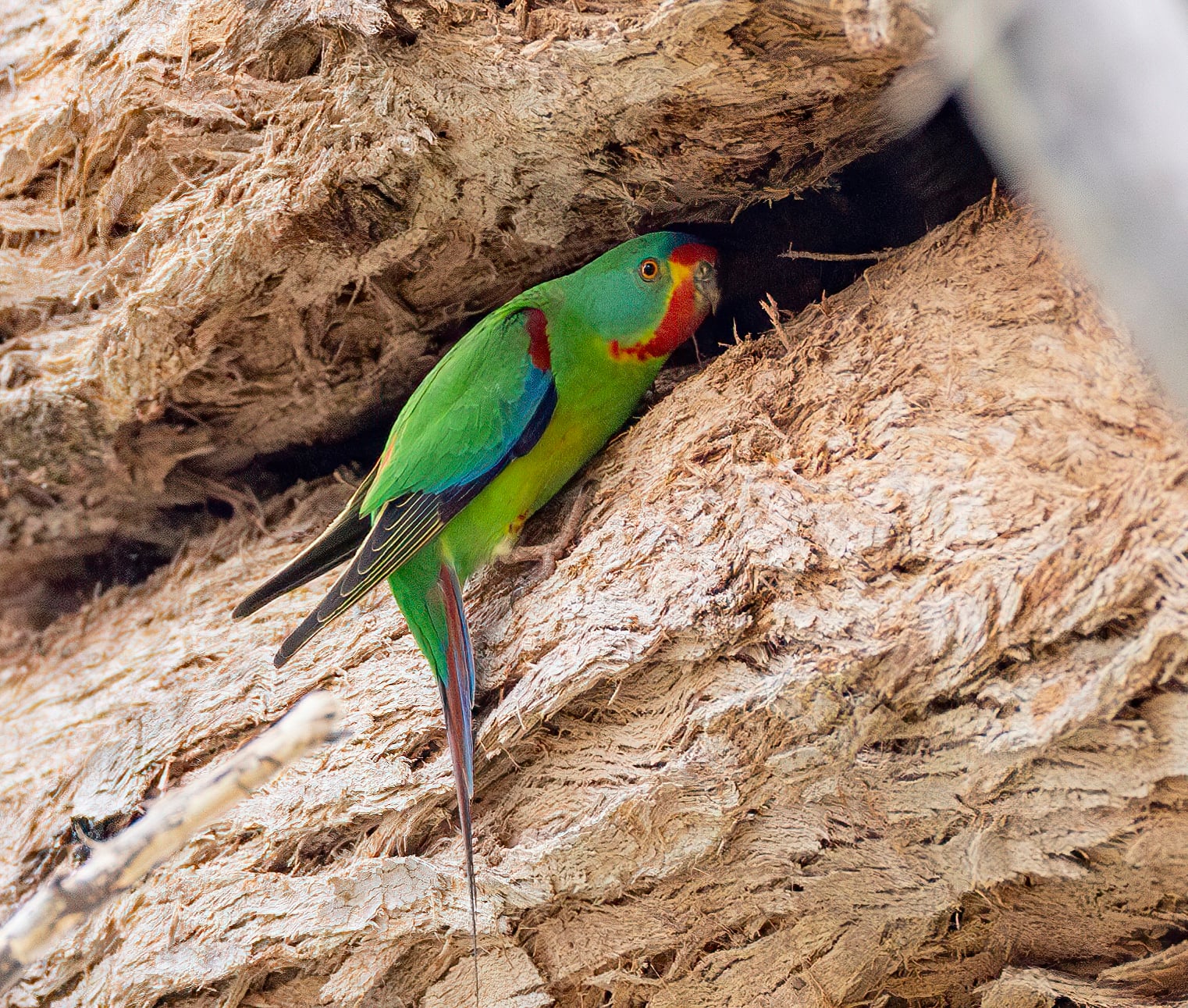
‘We observed, and reported to authorities, nests in two locations, a fledgling and a chick in a tree hollow in January 2024.
‘Yet it is still a logging coupe on the government’s logging list (coupe HP029E0), and again, parrots are nesting there. This forest is high-density foraging and nesting habitat for swift parrots, making it an excellent breeding habitat. The Forest Practices Authority recommends not to log such habitat,’ said Ms Weber.
‘It is not due to a lack of information about the impacts of logging that it continues under the watchful eye of the state and commonwealth governments. There are reams of scientific evidence that logging is driving the swift parrot to extinction.
‘Logging must end in Tasmania’s native forests – they are the only nurseries in the world for this species,’ said Jenny Weber.
 For four decades The Echo has printed the stories some people loved, some people hated, and some pretended not to read. If you want us to keep telling the truth, the real truth, not the sugar-coated version. We’ll need your support to keep the presses rolling.


