


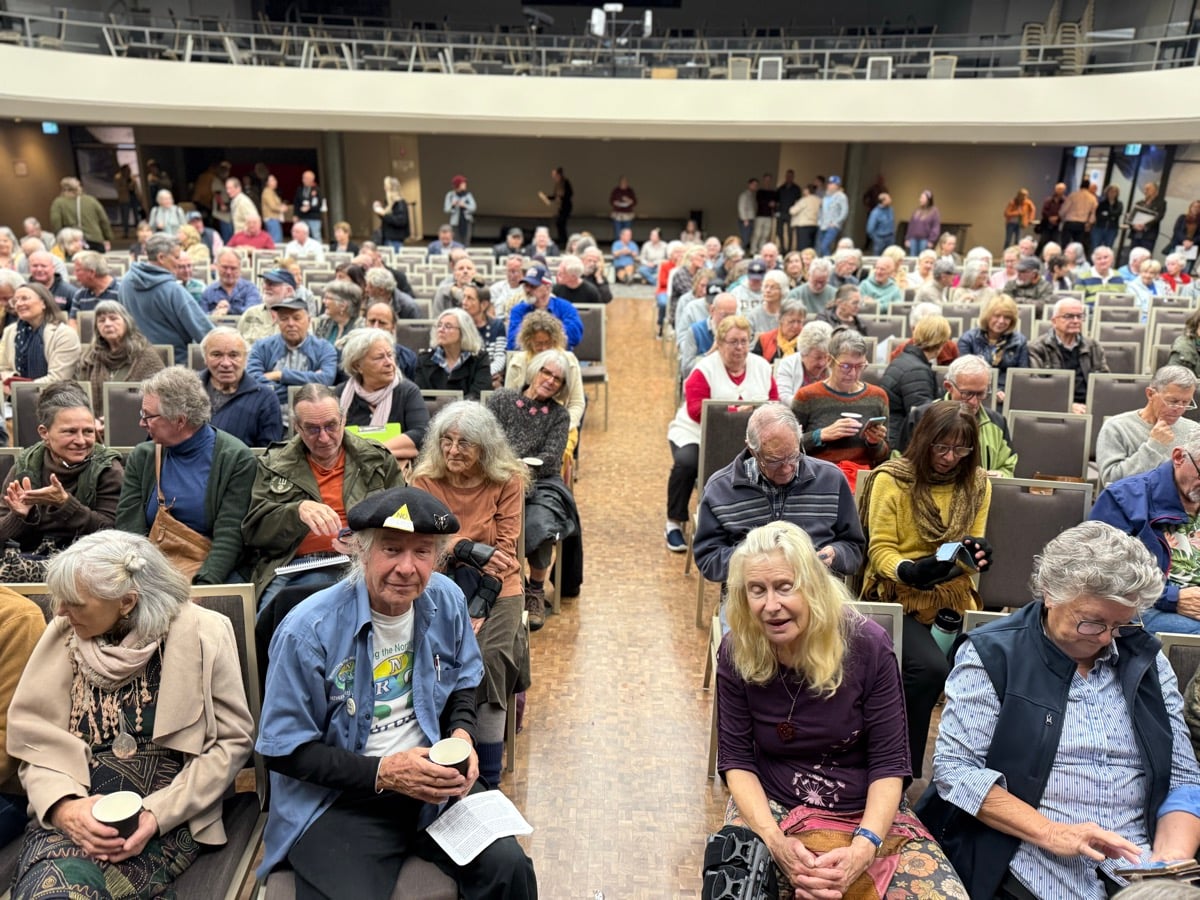
Public backlash is continuing to grow around a CSIRO report suggesting that flood mitigation upstream of Lismore could be addressed with up to ten mega detention dams. A packed Lismore meeting was held yesterday.
The report comes without plans for offsetting the enormous impacts it would have on farms, home owners and native vegetation, yet a further report to address these concerns is planned.
The last Woodburn meeting wrapped up this morning, with a meeting in Ballina held yesterday as well as Lismore.
It follows meetings in Kyogle where residents said there were many unanswered questions.
In favour
Those in favour of the plans are federal Page MP Kevin Hogan (Nationals) and Lismore City Council mayor Steve Kreig. Cr Kreig was successful in adopting the larger of the two tabled options (Bundle 2) for 10 mega-dams in Council’s Flood Risk Management Plan.
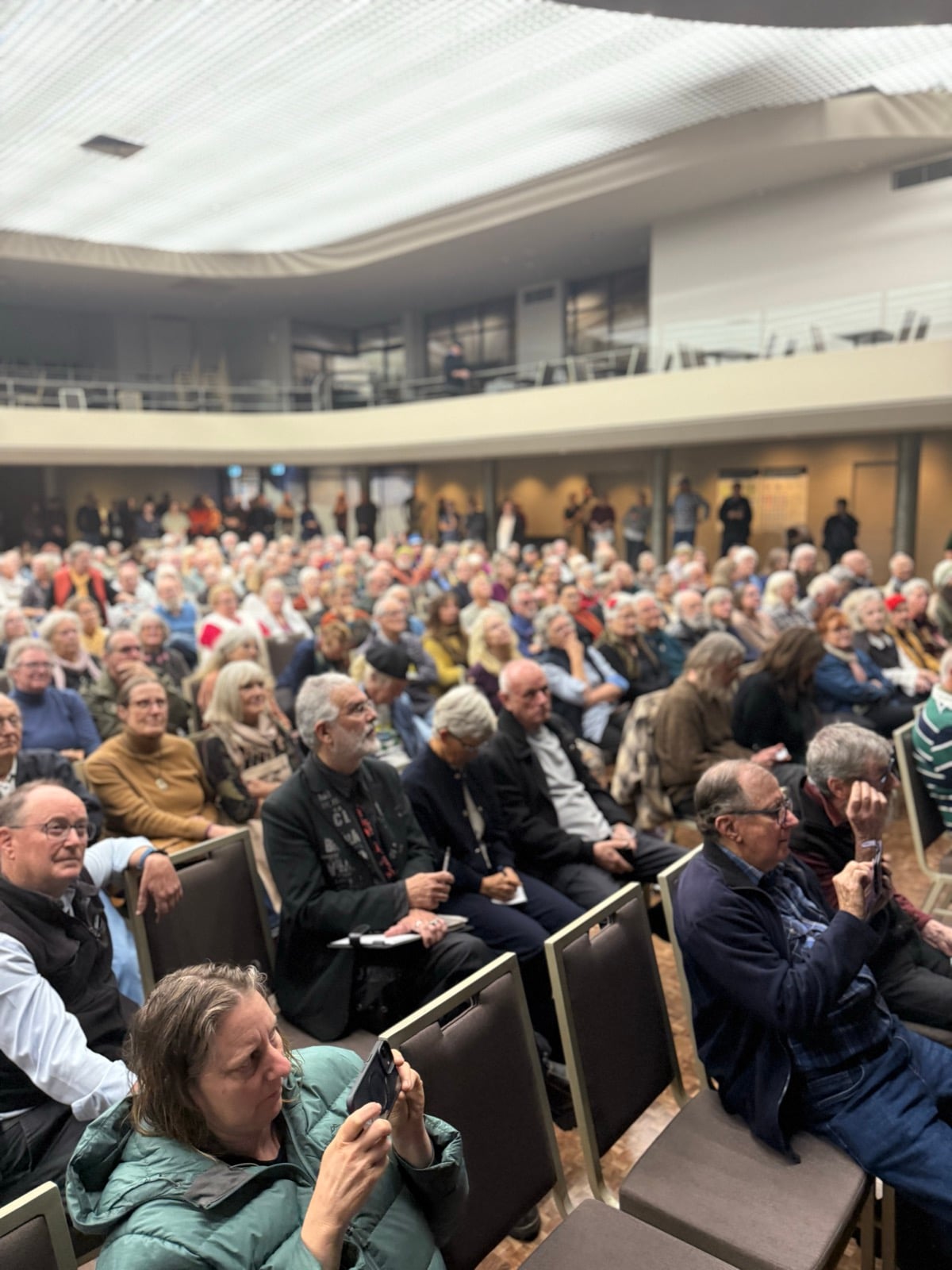
Lismore Big Rob has mocked the Greens and those who oppose the plans on his social media platform. He posted photos of smaller meetings held in Woodburn, Casino and Ballina.
Northern Rivers Flood Action Now
A Facebook group has also been created, called Northern Rivers Flood Action Now, which says ‘We are a community-led page supporting the implementation of CSIRO’s flood mitigation findings for the Richmond River catchment. We represent homeowners, business owners, families and community members who believe in science-based flood protection’.
They say, ‘The 2022 flood cost the Northern Rivers $16 billion. That is not an abstract number. That is homes destroyed. Businesses gone. Lives upended. A region that is still, four years later, counting the cost of a single flood event. And the question nobody pushing back against flood mitigation wants to answer is this – what happens when the next one hits? Because it will. It is not a matter of if. It is a matter of when’.
Northern Rivers NOT Northern Dams
Facebook group Northern Rivers NOT Northern Dams say they are a community group to coordinate ideas and action around opposition and alternatives to the ten retention dam proposal for the Richmond Catchment, which impacts the Lismore area down to Woodburn and Ballina.
James Barrie from the group said, ‘We’re at a staggering 400 members in under 24hrs – this issue is relevant to so many in our wider community’.
‘As we get more numbers we have more attention of the decision makers and can start to have proper input on this issue. Keep your posts coming – let’s hear what our rivers and recovery really means to you!’
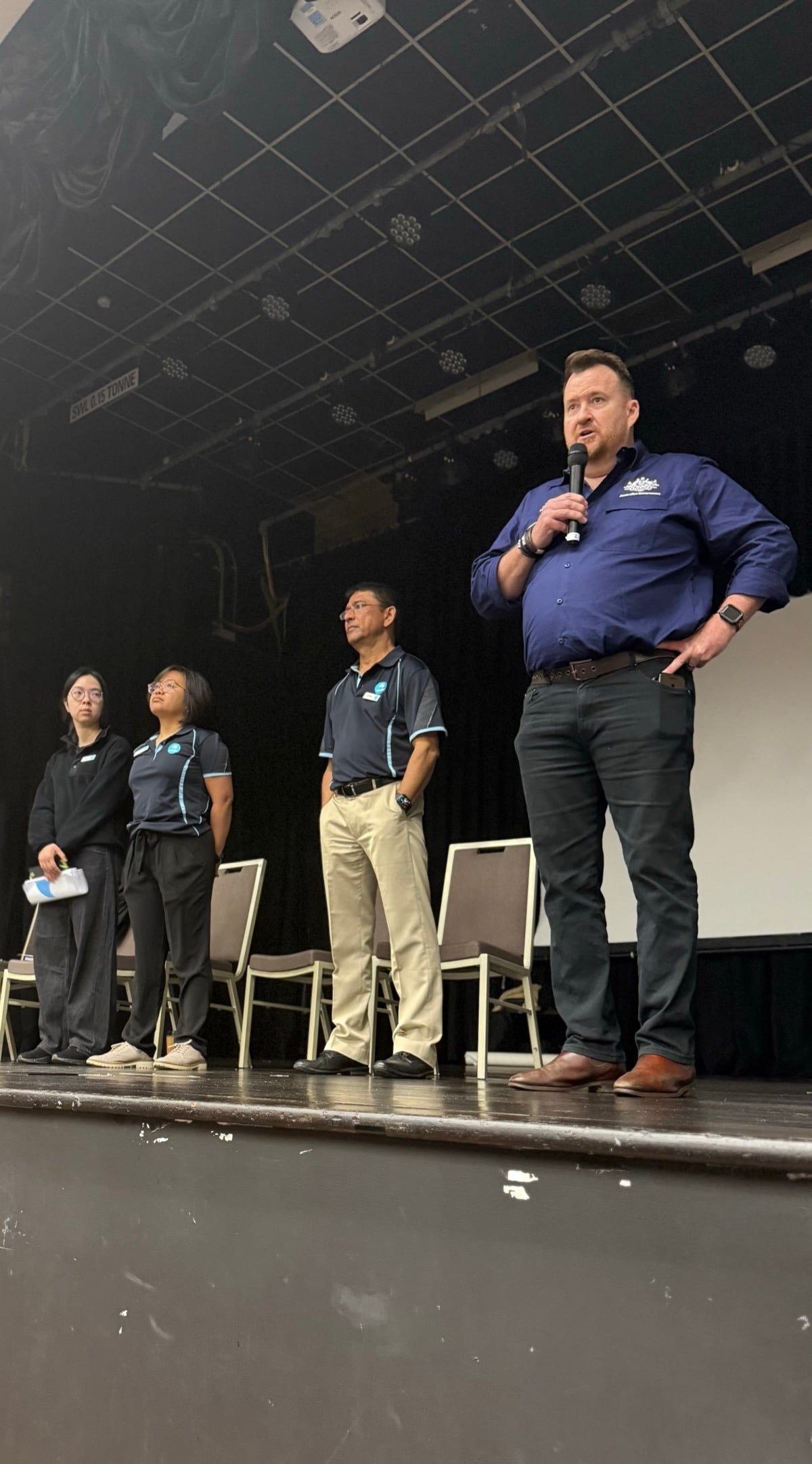
Regarding yesterday’s packed Lismore meeting, he said: “Mass turn out today – over 500 attendees (despite the meeting being at a suspiciously inconvenient time) with only four attendees in openly in favour of the proposal”.
Not a fair trade, says Kyogle Mayor
Kyogle Mayor Danielle Mulholland OAM said she read report again ‘and, I have to admit, I’m not a fan’.
‘But, at this stage, it’s just a report with a couple of options’.
‘The forthcoming feasibility study will determine if what’s being proposed is even possible. If it’s not then that’s the end of it. If it is possible, where are they going to find the billions of dollars required and how many decades would it take to complete? I don’t know but then again, neither does anyone else.
‘At this stage it feels less like a practical plan and more like an expensive doorstop commissioned by the Federal Government.

‘Once you dig into the detail, you begin to understand the sheer scale of what is being proposed. These are not “dams” as I was rather forcefully corrected on, but “detention basins”. The distinction is important. Dams permanently store water. Detention basins simply hold back floodwater temporarily, restricting the flow until downstream water levels fall, before releasing it anyway.
‘The proposed detention basins are enormous. Around 650 metres across.
‘That immediately raises one question: where exactly are they supposed to go?
‘Prime agricultural land at Gradys Creek, Collins Creek, Eden Creek and other rural valleys appears to be directly in the firing line. Looking around my own valley, I genuinely struggle to see how structures of this scale could be accommodated without fundamentally and significantly changing the landscape.
‘What happens to the roads? The bridges? The farms that have supported families for generations?
‘At the moment, there are far more questions than answers. There is no clear information about what land would need to be compulsorily acquired, how much productive farmland would disappear, or what historical, cultural and environmental assets would be lost in the process. There has been little discussion about the impact on native wildlife, habitat destruction or the long-term consequences for the communities expected to shoulder the burden.
‘From my perspective, it is a hard no.
‘Kyogle Council has always been willing to work constructively with our neighbours. We understand that flood mitigation is a regional challenge and we support genuine collaboration. But collaboration cannot mean one community bears such a cost while another receives almost all of the benefit.
‘The proposal, as it currently stands, asks rural communities to sacrifice productive farmland, infrastructure, environmental values and private property rights to reduce flooding further down the catchment.
‘That is not a fair trade.
‘Before anyone asks rural communities to make sacrifices on this scale, they need to demonstrate that every other feasible option has been properly examined, that the benefits genuinely outweigh the impacts, and that those expected to carry the burden have been meaningfully consulted and properly compensated.
‘Until then, I cannot support these recommendations.
‘Frankly, I find it extraordinary that proposals of this magnitude have progressed this far without first answering the most basic questions about who pays the price.
‘And yes, I’m angry about it’, she said.
Dean Draper commented, ‘Most focus on what the computer model says might happen during a major flood. But what about every other day? These are not harmless lines drawn on a map’.
‘The CSIRO report models ten permanent barriers across rivers and creeks throughout the Richmond catchment. The proposed walls range from 5 to 42 metres high and 150 to 658 metres wide, with mechanical gates stretching across entire waterways. Building them would mean enormous earthworks on and around people’s properties. Heavy machinery, clearing, excavation, truck movements, access roads, concrete, creek disturbance, fencing and permanent maintenance infrastructure. How many farms would be divided or partly acquired? The report does not answer these questions. It says environmental approvals, geotechnical studies, detailed structural design, cost-benefit analysis and on-ground implementation were outside its scope’.
 For four decades The Echo has printed the stories some people loved, some people hated, and some pretended not to read. If you want us to keep telling the truth, the real truth, not the sugar-coated version. We’ll need your support to keep the presses rolling.