



There are increasing examples of ways that natural flood management can help waterways recover, slow flooding waters, and improve the waterways and catchments.
This contrasts to the proposed ten mega dams that the CSIRO modelled to flood local valleys and take two metres off the flood depth for Lismore.
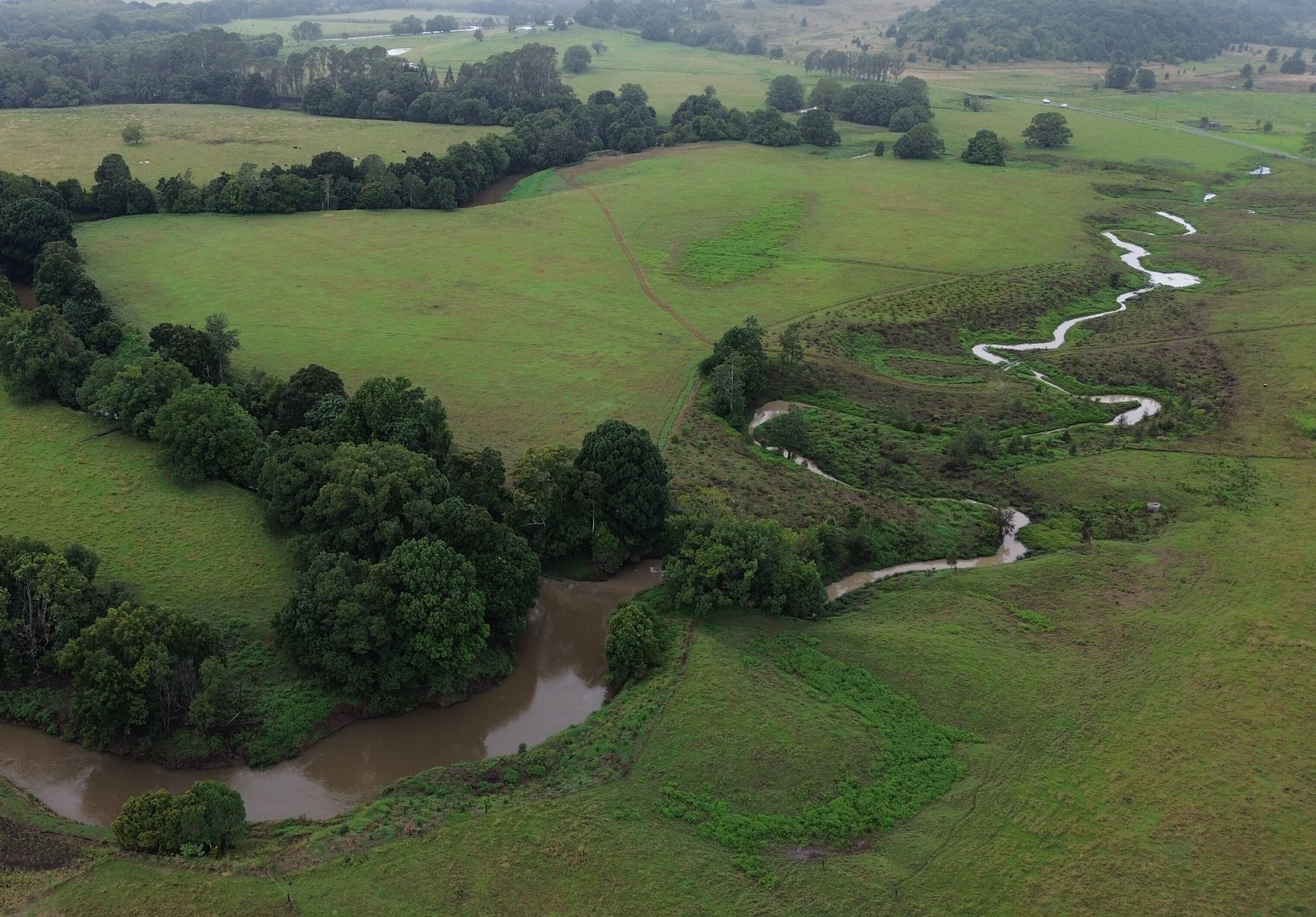
Rehabilitating the catchment
Instead, Rous County Council (RCC) has been partnering with local landholders to help slow the flow of water across the Richmond River catchment, supporting healthier, more resilient waterways with the $5 million grant for the Northern Rivers Watershed Initiative.
‘RCC and its project partners are delivering a series of natural flood management solutions across the region to improve how water moves through the catchment,’ said a RCC spokesperson.
The initiative is piloting four complementary workstreams focused on restoring the function and structure of local waterways: riparian restoration and catchment revegetation, soil health improvements, natural flood management, and redesigning historical floodplain drainage using locally led solutions.
‘This will strengthen the resilience of Northern Rivers catchments and help communities and landholders better prepare for future weather events,’ said Minister for Regional NSW Tara Moriarty.
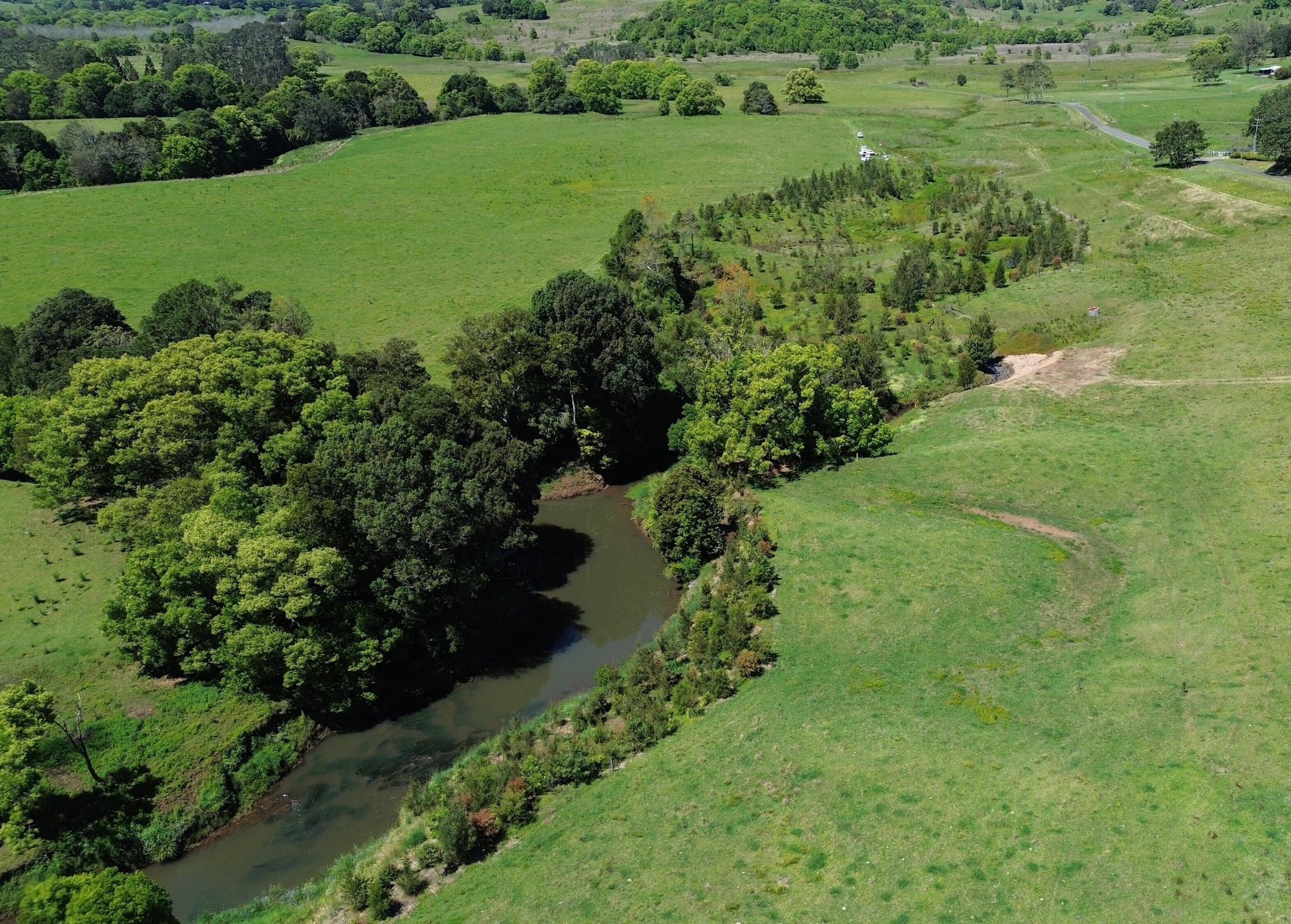
Slow water and reconnect floodplains
According to Anthony Acret, Catchment and Cultural Awareness Manager at RCC, these projects are designed to slow water movement, reconnect floodplains and improve catchment resilience.
‘The natural flood management pillar of works aims to show how small-scale interventions can slow down and spread water across the landscape through measures such as leaky weirs, rock chute intervention and the planting of native reeds and shrubs. If these kinds of works were to take place across the catchment at scale, we’d see multiple benefits over time,’ said Mr Acret.
RCC has launched a second web-based StoryMap to help tell the story of the natural flood management component of the Northern Rivers Watershed Initiative.
Find out more at Slow The Flow.
 For four decades The Echo has printed the stories some people loved, some people hated, and some pretended not to read. If you want us to keep telling the truth, the real truth, not the sugar-coated version. We’ll need your support to keep the presses rolling.



