



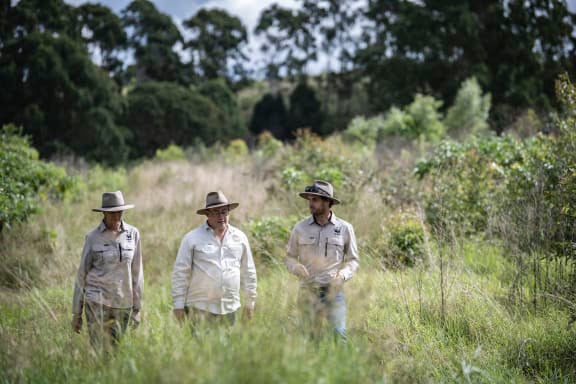
Banyula is a farm of around 850 acres that brings together regenerative farming and ecological restoration. Recent ecological surveys of formerly ‘lifeless paddocks’ record an astonishing 121 bird species and sightings of threatened species, including koalas, which now make the property home.
The farm has seen 300,000 trees and shrubs planted since 2022 including koala feed trees, rainforest species and extensive riparian vegetation along the Wilsons River, with support from Reforest Now.
Banyula’s large-scale planting project was delivered under the Koala Friendly Carbon Initiative, a partnership between Climate Friendly and WWF-Australia. Banyula is restoring endangered Big Scrub rainforest along the Wilsons River and growing critical koala habitat elsewhere on the property.
Around eight kilometres of restoration corridors reconnect previously fragmented habitats, allowing wildlife to move across the landscape. Banyula’s Natural Sequence farming practices continue to support overall landscape health.
Several previously quiet paddocks have become a thriving refuge for wildlife.
But far from removing productive farmland, productivity and nature are thriving together, with Banyula’s cattle benefiting from improved pasture, shade and shelter. Among the discoveries in recent surveys conducted by Wildbnb Wildlife Habitat and Byron Bird Buddies were the vulnerable rose-crowned fruit dove, vulnerable white-bellied sea eagle and endangered black-necked stork, alongside an extraordinary 15 species of raptors, several showing evidence of breeding.
Exciting outcomes for nature
The results have surprised even those closest to the project.
‘We are thrilled with the ecological survey results,’ said Banyula Director Matt Bleakley.
‘Just a short time ago, we had all these paddocks with not much sign of life. Now there are more than 150 varieties of trees, all thriving, and some more than six metres high. And in this forest life is flourishing, including koala life.’
WWF-Australia’s Tanya Pritchard, said the survey results highlight a much bigger story than koalas alone.
‘Koala habitat provides amazing advantages for a whole range of species. This is a biodiversity project, not just a koala project, and the results of the recent ecological surveys show the extraordinary number of species now making Banyula their home,’ Ms Pritchard said.

Slows floodwater
Another benefit is that during recent floods, Banyula observed floodwaters moving significantly more slowly through restored rainforest sections. While no single property can prevent major flood events, landscape-scale restoration such as this may help reduce the speed at which water moves downstream toward communities including Lismore.
The project has already generated 13,000 premium carbon credits, with both the expanding koala forest and Big Scrub rainforest sequestering carbon under the Australian Carbon Credit Unit (ACCU) scheme, administered by the Clean Energy Regulator.
Climate Friendly’s Simon Brown says Banyula demonstrates the multiple benefits that can be delivered through a single carbon project.
‘Banyula shows what’s possible when carbon farming is designed around whole-of-landscape outcomes. The same project is generating carbon credits while restoring Big Scrub rainforest, expanding koala habitat, supporting wildlife recovery, improving catchment function and strengthening a productive farming enterprise. It is a powerful example of the multiple benefits Australia’s carbon farming scheme can deliver for communities, agriculture and nature.’
 For four decades The Echo has printed the stories some people loved, some people hated, and some pretended not to read. If you want us to keep telling the truth, the real truth, not the sugar-coated version. We’ll need your support to keep the presses rolling.



