


The NSW government’s response to the NSW Drug Summit Report, tabled this week, has been roundly criticised by many frontline workers and experts, with pivotal reforms, including ending drug detection dogs and strip searches at festivals for personal possession, being ignored.
Additionally safe injecting rooms, which have shown to save lives in Sydney, will not be expanded.
But there is a commitment by NSW Labor to a 10-year alcohol and other drugs strategy, reforms to early drug diversion, and a significant increase in direct funding for harm reduction and support services.
The state government’s police sector reaffirmed their stance on criminal enforcement against illicit drugs, while health agencies push for diversion and support.
The Law Society of NSW noted that ‘major systemic challenges remain, including long waitlists for treatment and a need for better coordination and monitoring of new policy rollouts’.
The Royal Australian College of General Practitioners (RACGP) say supporting over 50 out of 56 expert recommendations, including the rollout of life-saving naloxone in venues and trialing festival-based drug checking, is progress towards harm reduction and patient support.
The Network of Alcohol and other Drugs Agencies (NADA) and the Penington Institute, a public health research and drug policy organisation, say the response fell short by not embracing pivotal reforms, ‘including ending drug detection dogs and strip searches at festivals for personal possession’.
Uniting has run the Medically Supervised Injecting Centre in Sydney’s Kings Cross for nearly 25 years and has spearheaded the Fair Treatment campaign for fairer drug laws for over seven years.
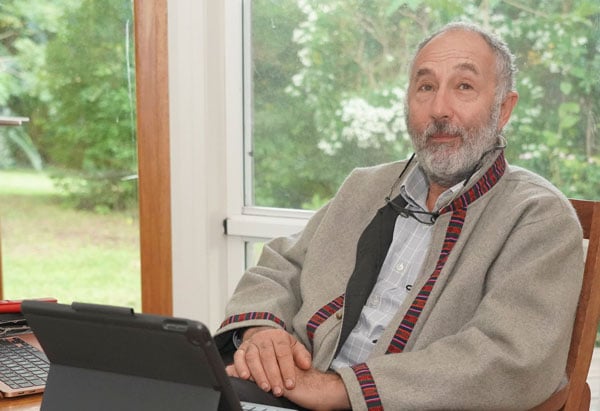
Professor David Heilpern
Former local magistrate and now dean of Law at SCU, Professor David Heilpern, said, ‘On safe injecting rooms, the recommendation was for an expansion’.
‘The Minns government has determined that there will be no more. Why are the lives of those who are injecting drug users in Cabramatta or Orange or Lismore of less value than those who live in Paddington?
‘On body searches and sniffer dogs at festivals for possession offences, the NSW Coroner, the ICE Inquiry and the drug summit all recommended that these stop as they actually cost lives.
‘Why are the lives of our young people less important than keeping the tabloid media and the police association satisfied?
‘Is perceived electoral success really more important than their lives of festival goers and the devastation of their loved ones. We will have more “front loading” leading to overdose, more irresponsible drug use, less access to pill testing and more trauma for those body searched.
‘On drug driving, the recommendation was for a Tasmanian style defence with even greater discretion. Roads will be more dangerous, as people revert to their prescription drugs and alcohol or driving in pain or when exhausted. We do not need more expert advice on this. The evidence is in from Tasmania and worldwide. There is a glimmer of hope in the referral to an expert body, but I fear it is just kicking the issue down the road.
‘All in all, a dark day for public safety, and a dismal day for faith in the system.
‘Naively, I actually believed that a bipartisan drug summit might achieve results. Instead, it has set back the process at least 20 years’.
Uniting profoundly disappointed
Uniting has run the Medically Supervised Injecting Centre in Sydney’s Kings Cross for nearly 25 years and has spearheaded the Fair Treatment campaign for fairer drug laws for over seven years.
Responding to the NSW Government’s response to the NSW Drug Summit Report, Emma Maiden, Uniting NSW.ACT’s Director of Advocacy and External Relations said, ‘The whole community will be shocked and disappointed at the lack of vision and boldness in the Government’s response to the Drug Summit’.
‘We saw the Bob Carr Labor Government meet the moment of the original Drug Summit in 1999. The lack of leadership to meet the moment of the latest Drug Summit by the current government is profoundly disappointing.
‘The NSW Government have let the community down today.
‘This response does not reflect what the community and the experts wanted.
‘They have squibbed it.
‘The mums and dads of NSW, the people who have lost someone they love, the people who can’t access treatment and the many, many organisations, officials and experts all came to the Drug Summit last year with goodwill, hope and high expectations for real, meaningful and positive change.
‘This response today is really out of touch with community attitudes on these issues and is a real let down.
‘While we welcome the reforms to the EDDI scheme – this was already going to happen as part of the two-year review into the scheme.
‘In terms of an “investigation into cannabis driving laws” – we don’t need another “investigation” – we need the action already identified by the Cannabis Inquiry.
‘First Nations people and regional communities are notably absent from this long-awaited response from government. Considering the failures of First Nations inclusion at the Drug Summit itself, this is a particularly hurtful exclusion of the people most disproportionately impacted by our unfair drug laws.
‘We, along with everyone who contributed to and participated in the NSW Drug Summit in good faith, are fundamentally let down,” Emma said.
‘The response today fails to adopt, resource and implement the 56 recommendations of the Drug Summit Report in full – to comprehensively deal with our unfair drug laws and the very real harm they cause.
“This response fails to measure up to the bravery and efforts of the Carr Government 25 years ago.
‘The reason we had a Drug Summit was that the status quo wasn’t enough, wasn’t working and was doing very real harm.
‘We will continue to, along with everyone in the community and sector, campaign for real, meaningful reform to our unfair drug laws in NSW,’ Emma said
NSW Police appeal their strip search class action court loss
The response comes as NSW Police appeal their court loss in a festival strip search class action.
Legal firm representing the class action Slater and Gordon said in a statement their ‘priority remains to secure a settlement between the State of NSW and the thousands of festival goers involved in the Strip Search class action as quickly as possible’.
Senior Associate in class actions, William Zerno, said, ‘After the Supreme Court of NSW last month found that lead plaintiff Raya Meredith’s search was unlawful, the State of NSW has now signalled an intention to appeal the judgment.
‘There were thousands of others who were searched in similar circumstances to Raya.
‘Hundreds of those searches occurred at the same festival Raya attended and were undertaken by the same police officers.
‘It is a matter for the State to explain why it is arguing that searches undertaken on the same basis as Raya’s were lawful when it admitted the unlawfulness of Raya’s search.
‘Furthermore, they did not put a single police officer on the witness stand during trial to defend the practice.
‘An appeal against this judgment will only delay justice being served for thousands of festival goers.
‘And it will ultimately cost the State more if it does not resolve its liability now.’
Slater and Gordon notes that in its response to the recommendations from the NSW Drug Summit, the NSW Government stated it is not ‘operationally feasible’ to adopt a model which requires police to suspect drug supply (but not possession) before carrying out a strip search.
But Zerno says, ‘However, the judgment made clear that in a festival setting, a drug dog indication, or mere suspicion of drug possession, was insufficient to provide a lawful basis for a strip search’.
‘If the NSW Police Force truly believes its current powers are not operationally feasible, then the appropriate path is to seek a legislative change through Parliament and not to act outside the scope of the law.
‘The fact the NSW Government is filing a notice of intention to appeal does not render the judgment any less effective.
‘The Supreme Court has made clear in this judgment the significant limitations on the exercise on the police powers to conduct strip searches’.
Lead plaintiff, Raya Meredith, said, ‘I find it very disappointing, that despite the years of due diligence, research, and fact-checking that went into my judgement – a judgment that ruled my strip search by NSW police officers as unlawful, that the NSW Government is arguing that searches undertaken in the same circumstances as mine are lawful’.
‘The others in this class action deserve to have their cases heard and settled without further delay. It’s a needless waste of resources, and with the music festival season underway in NSW, I’d hate to think that the abuse of these extreme powers by police that I experienced might continue under a scenario where NSW Police appealed this judgement.
‘It’s time that what is due is paid, apologies are made, and a clean slate imparted. A promise from the NSW Police to train themselves on what necessity and urgency means when it comes to a strip search, and a promise from the NSW Government to see that this is upheld forevermore, so that future music festival goers in NSW can attend safely without the concern of the high possibility a uniformed officer will make them remove their clothes and their rights,’ Ms Meredith said.
 For four decades The Echo has printed the stories some people loved, some people hated, and some pretended not to read. If you want us to keep telling the truth, the real truth, not the sugar-coated version. We’ll need your support to keep the presses rolling.