


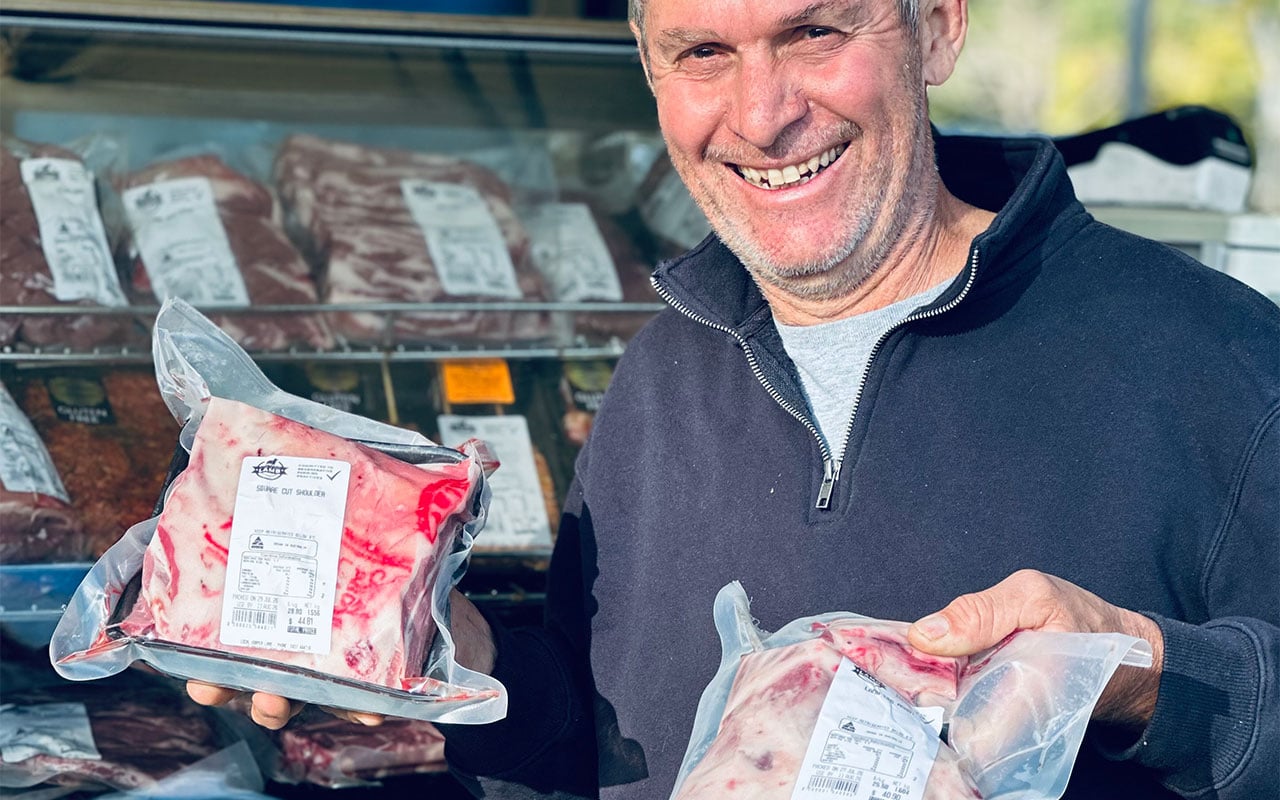
As we move from spring into summer, it’s time to fire up the barbecue, enjoy long lunches with family and friends, and make the most of fresh, local produce. I recently spoke with Warren from Boorabe Dorper Lamb about the different cuts of lamb and how to get the best out of them.
Boorabe’s Dorper lamb is grass-fed, and Dorper sheep are bred specifically for meat. They are also a self-shedding breed, meaning they don’t require traditional shearing. Their meat is known for its marbling, giving it a richness that Warren likens to the marbling prized in Wagyu beef.
For warmer days, lamb cutlets and loin chops are ideal for the barbecue, while sausages are an easy crowd-pleaser for relaxed outdoor meals. Pair them with colourful salads, grilled seasonal vegetables and fresh herbs for a simple meal that celebrates the best of the season.
Dorper lamb is also well suited to slow cooking. Warren recommends neck chops for stews and curries, where the marrow bones add depth and richness as the meat becomes beautifully tender.
Shoulder is another favourite for a relaxed family lunch or dinner. For a slow-roasted shoulder, place the meat in a roasting dish with your choice of vegetables, and cook at around 140-150°C for six to seven hours. There’s no need to sear it first. The natural fat renders as it cooks, keeping the meat moist and helping create a delicious finish. The result is tender lamb that pulls easily from the bone. A leg roast is another option, generally taking around three to three-and-a-half hours, depending on its size.
Whether you’re planning a spring barbecue, a summer gathering, or a Sunday roast, there are plenty of ways to enjoy grass-fed, locally produced Dorper lamb throughout the year.
Next time you’re at the farmers’ market, stop by and have a chat with Warren from Boorabe Dorper Lamb for advice on choosing the right cut for your next meal.
Find Boorabe Dorper Lamb every Tuesday at New Brighton Farmers Market from 7am to 11am and every Friday at Mullumbimby Farmers Market from 7am to 11am.
 For four decades The Echo has printed the stories some people loved, some people hated, and some pretended not to read. If you want us to keep telling the truth, the real truth, not the sugar-coated version. We’ll need your support to keep the presses rolling.