



Luis Feliu
Brunswick Heads residents are outraged at the latest plans by crown-park managers to chop down six historic cypress trees at The Terrace public reserve.
The move comes in the wake of an ugly incident two weeks ago when an old tuckeroo tree in another of the town’s parks was cut down with no notice given to locals.
That sparked an angry confrontation between some locals and the tree-removal contractors whereby police were called.
Residents now also hold grave fears that the grand old Norfolk Pine trees in Banner Park could meet the same fate under contentious plans to build a boardwalk near them.
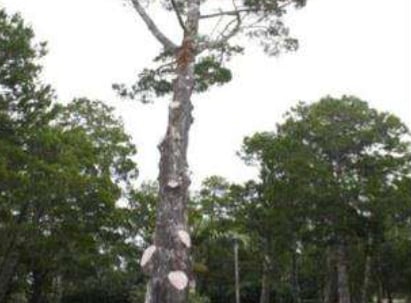
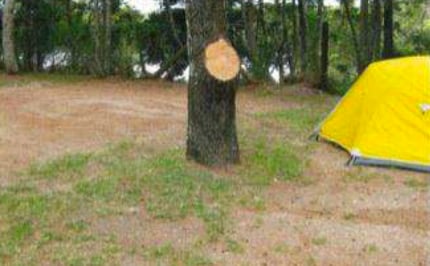
Locals say the historically-significant coastal cypress trees in The Terrace reserve, used by the trust as a camping overflow area, have been slowly and systematically damaged over time by deliberate heavy pruning of lower branches to accommodate large camper vans to the point they could no longer survive.
Byron Shire Council is also concerned about the cypress trees and is set to oppose the plans by the NSW Crown Holiday Parks Trust (NSWCHPT), which controls the town’s three caravan parks and a number of popular waterfront reserves.
The residents have long fought encroachments of public parks, reserves, roadways and waterfront access by the holiday parks since the holiday parks and crown reserves were controversially taken over by the state government eight years ago, and with it the revenue transferred to state coffers.
This week, locals sent an SOS to the Returned Services League (RSL) in a bid to enlist the organisation for the latest fight to protect the town’s historic cypress trees, planted after World War 1 in memory of the young service men and women killed in that conflict.
A NSWCHPT spokesperson told Echonetdaily that six coastal cypress in The Terrace reserve had been recommended for removal after their contracted arborist deemed them to have ‘a variety of defects ranging from cracking, wounds, decay, and defects that affect their structural integrity’.
The trust says it would offset impacts of removal or lopping of the six cypress or other vegetation ‘for safety reasons’ by ‘seed collection, compensatory planting and bush regeneration activities’, adding it had planted 150 trees in three reserves in December 2013 and ‘the Trust has 250 Coastal Cypress seedlings grown from locally collected seed available for additional compensatory planting’.
But local activists in the Foreshore Protection Group (FPG) say all the trees remaining in Terrace Reserve are now ‘seriously vulnerable as a direct response to poor park management’.
They say the trees are ailing because of the direct result of works undertaken by North Coast Holiday Parks (NCHP), which is run by the trust, ‘including the removal of all lower limbs to enable large caravans to access an area previously used only for occasional primitive camping’ and compaction of the root system around the trees by an increasing number of vehicles.

Council is understood to have recommended the area be fenced off from commercial activity.
Sean O’Meara, a longtime campaigner to protect The Terrace parks and foreshores from holiday-park expansion, said Byron Council had ‘every right to stop (the trust’s) destruction of trees in the Terrace Reserve’ and claims the trust had ‘purposefully tried to kill them for commercial gain’.
Mr O’Meara last week sent councillors an article on the history of the pine trees written by his 83-year-old father Darcy, who still lives near the park, which showed ‘why these trees are probably the most significant in the shire and must be preserved at all costs’.
He also appealed to councillors to stop the trees in the reserve from being cut down, providing an account with photos of how the health of the trees deteriorated since the parks were taken over by the trust.

He told councillors he believed the trust has ‘purposefully killed these trees in an attempt to clear space for their planned tourist developments on this environmentally protected Crown land that the residents of Brunswick Heads have used as beautiful riverside parkland for generations’.
Mr O’Meara said it was ‘only since the trust took control over the section of the Terrace Reserve five years ago that tourists have been packed so densely into this end of the reserve that safety has become an issue’.
He said it was also the ‘actions of the managers that had put many of these protected trees into such a poor state of health’.
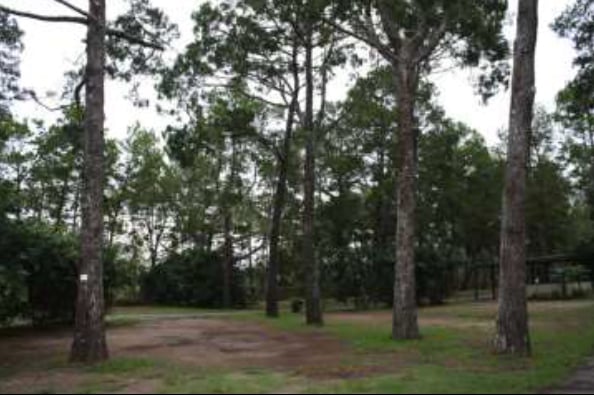
Mr O’Meara said ‘both the community and Byron Council have vehemently opposed the expansion of caravan park activities into this southern section of Terrace Reserve for over a decade’.
He said that despite the community’s long running campaign, ‘all encroached road reserve and adjoining crown and marine park lands were included within the caravan parks in the recently adopted plans of management for Terrace, Massey Greene and Ferry Reserve Holiday Parks’.
‘We have argued from the start that this historically significant and environmentally sensitive piece of land cannot stand the intensity of use NCHP is now forcing on it, over 500 people and crammed into about 100sqm and large caravans.
‘There is no drainage so all caravan waste is being pumped onto the trees and into the river. They claim trees are endangering campers but that is precisely why this area of the Terrace has never been used as a formal part of the caravan park and is totally unsuitable.’
Mr O’Meara said the lopping began five years ago when ‘they come in and cut back all trees to within an inch of their life, poured detergent and waste on them for five years and surround them with hundreds of people who use them as tent anchors and hammock holders (causing ringbarking) and then say these trees are in such bad shape they need to come down’.
‘They have purposefully done this to kill the trees for development reasons. Not one bit of preservation has been done on these trees over five years by NCHP,’ he said.
‘They can be saved and council must enforce this as otherwise they will use this sly game plan on other parts of our best crown land.’
Mr O’Meara said council should charge NCHP for immediate preservation work and fencing them off.
Trust consultation
In a bid to allay future community concerns, the NSWCHPT said in a statement that it was ‘considering a number of options for informing the community about the tree management program’.
‘Vegetation management plans for the reserves will be published on the Trust’s website. Vegetation management within the reserves and holiday parks will continue to be undertaken in accordance with the requirements of Council’s Tree Preservation Order and the Native Vegetation Act,’ the trust statement said.
As for the the avenue of 100-year-old Norfolk Island pines in Banner Park which have recently been tagged, the trust said its plans for a boardwalk there had been ‘designed specifically’ to protect their root zones.
‘The community pathway and deck will be raised to prevent any damage to the root systems and no trees will be removed or damaged during the construction work for the project,’ the trust statement said.
It also said they had not been tagged for removal but to ‘assess tree health and risk’ and an arborist had tagged each tree so they could be ‘easily identified’ in the Trust’s ongoing program of monitoring them for health and safety ‘evaluation’.
But the FPG’s Michele Grant says major work to stabilise the riverbank and address subsidence there would be required first and details of the proposed deck were lacking.
‘It is questionable whether it can actually fit between the narrow strip of land between the riverbank and the Norfolk pines, an area barely four metres and less than six metres wide,’ Ms Grant told Echonetdaily.
‘The branches of the Norfolk pines overhang the riverbank and the root system is clearly in danger from any construction works.
‘The Trust is either not aware or simply chooses to ignore the conflict generated by the proposed pathway with “existing use” of the foreshore as a shady, grassed picnic area.
‘Currently people sit, fish, sunbake and picnic along the riverbank. We do not want a “transport” corridor running along the riverbank and think it’s is irresponsible to designate a pathway beneath “dangerous” Norfolk pines of variable health.’
Ms Grant said the community has opposed the construction of a “formal” pathway along the riverbank on a least six separate occasions over the past decade (including the national bikeways plans).
‘Our recent petition this year demonstrates overwhelming support for retaining the grassed parklands as a cool, shady green oasis,’ she said.
‘Unfortunately under the management of NCHP, blue metal and woodchip have been liberally dumped around the children’s play area and around the trunks of Norfolk pines in Banner Park.
‘Woodchip has literally poisoned the grass as it has spread over the area generating a far more toxic impact than the claims of intensified use by people.’
Ms Grant said that despite heavy use of Banner Park for events, ‘no remediation has been undertaken to maintain the grass by NCHP since 2007 and the park is now in a seriously degraded state’.
‘The minister and the new Trustees have ignored their responsibility to maintain the environmental integrity of our park lands.
‘The fact NCHP is seeking the removal of a rare and protected species of trees to enable the expansion of commercial activity onto public parkland, and propose to construct a large deck and pathway in another vulnerable high risk area is certainly not deemed “good management of natural resources” by this community,’ Ms Grant said.
‘Our Public Trustees are actually killing off the assets tourists most enjoy. We’re losing our mature native trees, so the natural shady grassy environment can be “upgraded”.’
‘The Trustees have also failed to address the community’s number-one priority to reinstate the beautiful riverside walkway in Terrace Reserve, which remains obstructed only in the holiday park in direct defiance of Byron Shire Council resolutions, and restrict camping on Ferry foreshore which we believe should be retained as shared open recreational space for park users and the public.
‘Public access has also been restricted to public boat ramps at Massey Greene and Ferry Reserve.
‘How is this deemed good management practices when public assets are privatised or destroyed to solely benefit the commercial activities of NCHPs?’
‘We encourage Trustees to visit us, see the damage being done to our foreshore parklands by poor management practices. Come and discuss our plans for our community and help resolve the widespread resentment over the manner in which NCHP’s works program is being imposed on our public lands.’
 For four decades The Echo has printed the stories some people loved, some people hated, and some pretended not to read. If you want us to keep telling the truth, the real truth, not the sugar-coated version. We’ll need your support to keep the presses rolling.


