


Chris Dobney
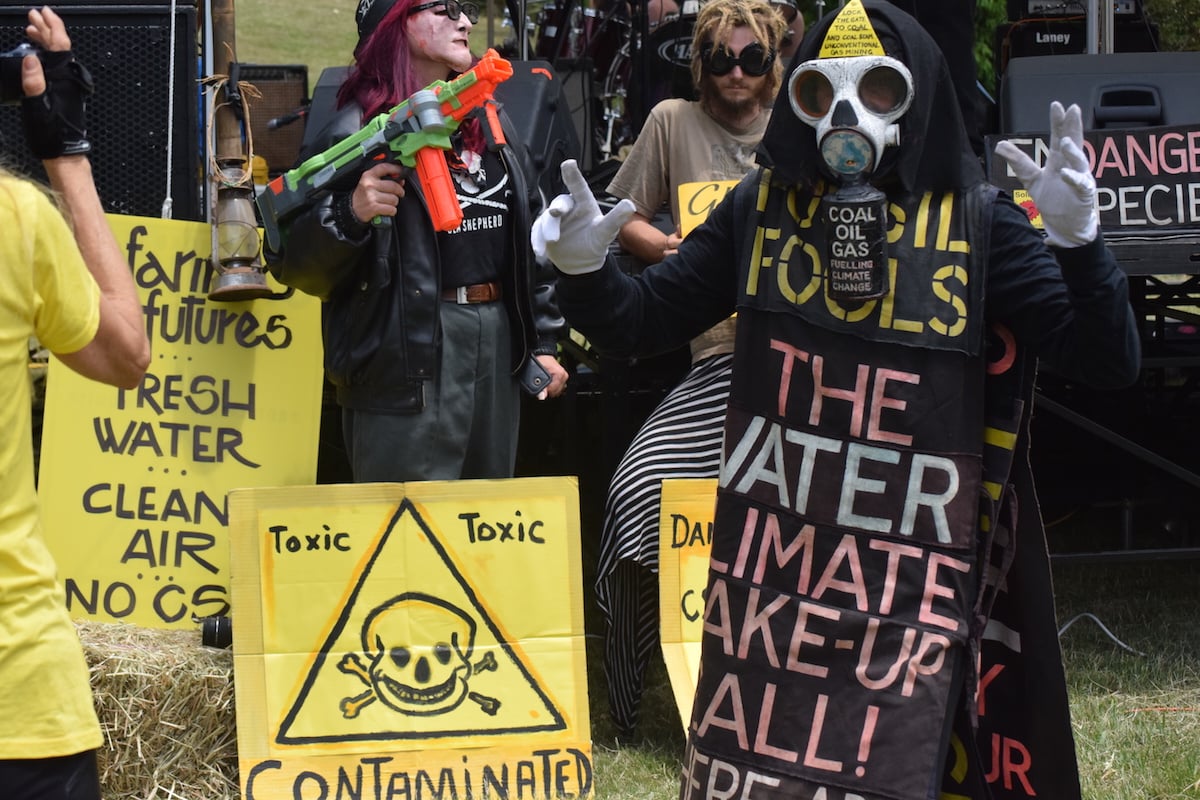
Gasfield Free Northern Rivers has criticised the NSW Government’s recently released gas plan, saying it reopens the region to CSG mining, including within 200 metres of rural homes.
And the EDO (formerly Environmental Defenders Office) says the plan falls far short of the government’s claims that it is ‘world’s best practice’.
As part of the plan the government has rescinded exploration licence applications, including one by the NSW Aboriginal Land Council over a large tranche of land in the Tweed.
But existing exploration licence-holders, such as Metgasco in the northern rivers and AGL in Gloucester, will be allowed to continue.
The plan doesn’t affect the currently suspended permit for Metgasco’s site at Bentley.
AGL’s Camden and Gloucester projects and Santos’s Pilliga Forest project have been granted special status under the plan by virtue of their promise to provide all gas under their licences to NSW customers.
Plan ‘doesn’t deliver’
But Gasfield Free Northern Rivers says the plan fails to consider that the people of the northern rivers ‘have been loud and clear in calling for all unconventional gas licences to be cancelled,’ adding it ‘does nothing to address that call for democracy’.
‘The plan doesn’t deliver on community demands. Gas mining is inappropriate for our region due to its geology, high population density and it’s incompatibility with our important agricultural and tourism industries’ said spokesperson Dean Draper.
‘It does nothing to protect important areas such as water catchments. There are no new protections for our water or food resources,’ he added
‘There are no improved safeguards for human health in this plan. Rural families are still going to be forced to live just 200m from CSG wells.
‘The plan does nothing to stop landholders and communities being forced into giving access against their will.
‘The plan is based on the false assumption that there is a gas supply shortage, when it is clear that eastern Australia has large reserves of gas slated for export.
‘There are plenty of options for NSW to access energy without risking our land, water and community health.
‘Australia as a whole has enough existing gas to supply the market. We can afford to think strategically and we can protect our food and water resources by not rushing to develop NSW reserves, it’s unnecessary,’ Mr Draper said.
Not ‘best practice’
The EDO meanwhile has pooh-poohed the government’s claims the plan is ‘world’s best practice’, with NSW policy director Rachel Walmsley saying there are examples of much more rigorous plans in Europe, the USA and Canada.
Germany has banned fracking in water protection areas and sites above 3000 metres; in Alberta, Canada, the public is allowed to determine fracking no-go zones; while the Californian government demands a $1 million per well bond against environmental damage, she said.
‘There needs to be comprehensive legal change. Our concern is [the state government is] doing it bit by bit and it is confusing for communities. It is so complex, it is not world class, Ms Walmsley told the SMH.
A spokesperson for mining minister Anthony Roberts told the paper the Gas Plan ‘is not a finished product’, and minimum conditions around safety were still being determined.
 For four decades The Echo has printed the stories some people loved, some people hated, and some pretended not to read. If you want us to keep telling the truth, the real truth, not the sugar-coated version. We’ll need your support to keep the presses rolling.


