


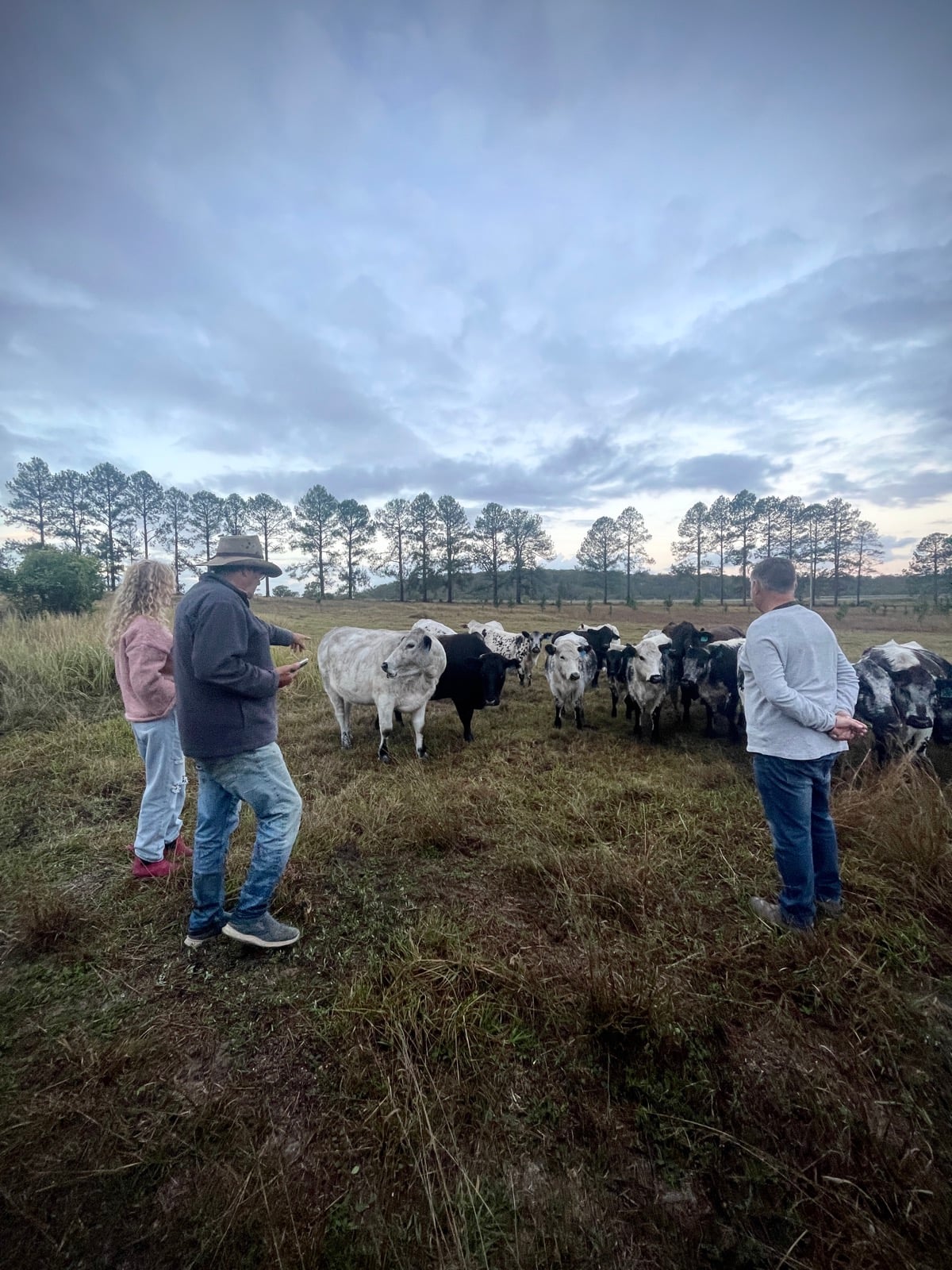
Local farmers and food producers are calling on NSW Agriculture Minister Tara Moriarty and Minister for Small Business and the North Coast, Janelle Saffin, to work with farmers, industry and local communities to develop practical, evidence-based reforms that support a diverse, decentralised and resilient food production sector.
Clarence Valley Food say, ‘Small-scale livestock farmers from across the Northern Rivers will gather next Saturday to discuss a growing threat to local food production: the loss of access to livestock processing facilities and the regulatory barriers preventing practical local solutions’.
Hosted by Clarence Valley Food Inc and the NSW Farmers Association Grafton Branch, the workshop will bring together farmers, food producers, industry representatives, policymakers and community members to explore how the Northern Rivers can support resilient local food systems through reforms that enable micro-abattoirs and small-scale meat processing.
They say the keynote speaker is Glen Chapman, National Committee Member and NSW Farmer Liaison for the Agroecology & Food Sovereignty Alliance.
Mr Chapman said recent industry data paints a concerning picture.
‘According to Australian Food Sovereignty Alliance surveys, 80 percent of small-scale livestock producers have lost, or are at risk of losing, access to abattoir services. As processing infrastructure continues to consolidate, many farmers face rising costs, long travel distances, extended wait times and uncertainty about the future viability of their businesses.’
Organisers say the workshop comes amid growing concern that the continued closure of regional processing facilities is undermining local food security, reducing consumer choice and accelerating the concentration of Australia’s food system into fewer hands.
‘Small-scale farmers are the backbone of local food systems here in the Northern Rivers, with the Clarence Valley alone home to 365 cattle producers,’ said Debrah Novak, Chair of Clarence Valley Food.
‘They provide locally produced food, strengthen regional economies, support agritourism and education, and help build resilience against global supply chain disruptions. Without practical action, our region risks losing an entire sector that communities increasingly value and depend upon.’
Organisers say participants will examine how local processing infrastructure can deliver benefits across the food chain, including reduced food miles, improved regional food security, stronger local economies and greater consumer access to locally produced meat.
‘Advocates argue that the loss of local abattoirs has contributed to increasingly long and centralised supply chains, where livestock are transported hundreds of kilometres for processing before meat is returned to regional communities for sale’.
‘Maintaining local processing capacity would allow more livestock to be raised, processed and consumed within the same region, reducing transport distances, supporting local businesses and keeping more food dollars circulating in rural communities.
‘The workshop will also highlight growing consumer demand for locally produced grass-finished beef. Pasture-based production systems are increasingly recognised for producing beef with higher levels of beneficial omega-3 fatty acids and conjugated linoleic acid compared with grain-finished beef, while providing consumers with greater transparency about how their food is produced.
‘Animal welfare will be another key focus.
‘Local processing options and field-harvest models can significantly reduce transport times and handling stress for livestock by eliminating the need for long-distance trucking to large processing facilities. Advocates argue these approaches can achieve high animal welfare standards while maintaining rigorous food safety requirements.
‘Participants will examine policy options that could help preserve and grow small-scale livestock farming, including:
• Streamlining planning approvals for micro-abattoirs in rural zones, following successful reforms in Victoria.
• Expanding the use of field-harvest models that allow on-farm slaughter, inspection and transfer to licensed facilities while maintaining food safety standards and improving animal welfare outcomes.
• Improving access to meat inspector training for independent producers seeking to operate small-scale processing facilities.
• Updating land tax definitions to better recognise value-adding activities, agritourism and diversified farm income.
‘Advocates argue that many current regulations were developed around the needs of industrial-scale processing facilities and do not adequately reflect the lower throughput and different operating models of micro-scale enterprises’.
‘Applying industrial compliance requirements to small family farms creates unnecessary barriers without delivering better outcomes,’ Ms Novak said.
‘We need a regulatory system that protects food safety while supporting local food production, regional jobs, animal welfare and consumer choice.’
The workshop will also examine the broader impacts of processing industry consolidation on independent butchers, regional communities and the long-term resilience of Australia’s food system.
Date: Saturday 20 June
Time: 9am to 1pm,
Cost $10.00 (lunch and morning tea provided)
Venue: South Grafton Bowls Club
Registration: clarencevalleyfo
 For four decades The Echo has printed the stories some people loved, some people hated, and some pretended not to read. If you want us to keep telling the truth, the real truth, not the sugar-coated version. We’ll need your support to keep the presses rolling.


