


Anna James
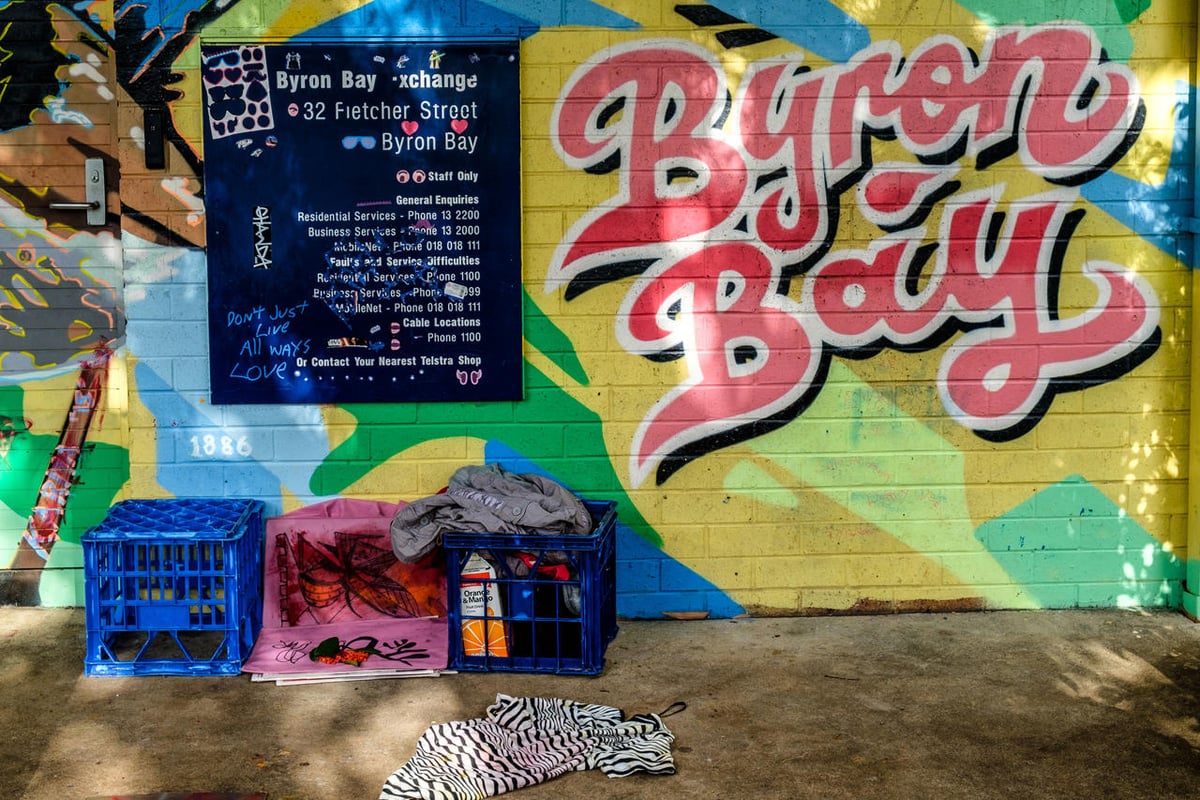
The gypsy kids’ campground would be beautiful, if not for the debris.
A baked-bean can, water bottle, and a dog bowl are scattered on the dirt among three deflated tents and piles of soiled blankets. There’s a pink massage claw, a tabloid magazine and liquor bottles.
The squatter camps like this one in the hinterland surrounding Byron Bay are illegal, but easy to find; behind the main strip, Jonson Street, walk a few metres inland, and tents appear. Neon-green, foliage-topped rosewood trees join baby blue sky; the salty summer air steadies and waves tumble nearby.
‘Sometimes the police ask you to move on, only if you’re being disrespectful to nature and trashing the place,’ says 20-year-old Kai, who’s been living out here for three years.
Kai, like the other people interviewed for this article, didn’t offer his last name, as illegal camping is punishable by fine, or worse — disdain from his peers for opening their secret world to the media.
‘At least someone is interested in us,’ says Kai, when approached for an interview.
Kai is a typical Byron Bay gypsy kid; under 25, impassively homeless, and living in a tented community with his peers on the fringes of one of Australia’s richest towns.
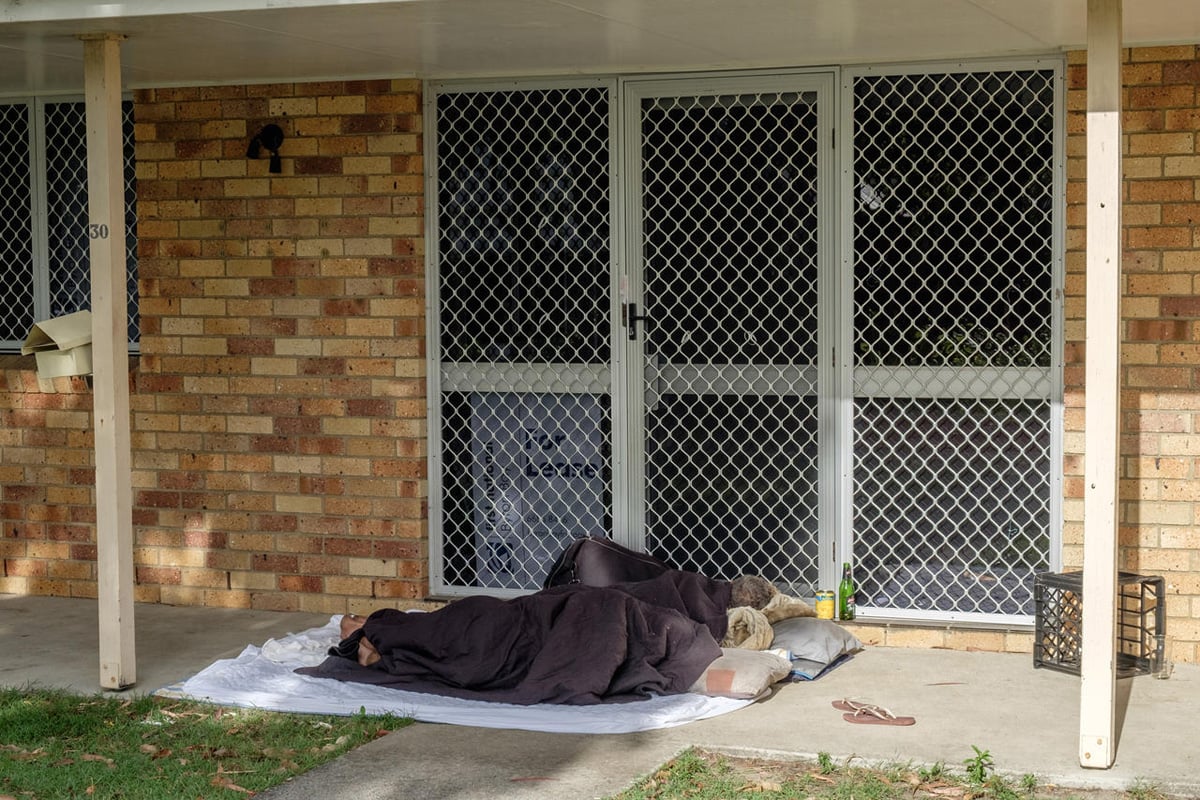
The name ‘gypsy kid’ is typically used by those who’ve never met them, professionals looking on from the other side of town. The kids refer to themselves as a ‘pack,’ ‘mob’ or ‘family.’
Kai’s dark skin makes him stand out, a rarity in a predominately white town; his father is Maori, and his mother English.
He sports a tuft of peroxide in his fringed hair, and a ripped sleeveless Hawaiian shirt. He’s shoeless, always. He could be an extra from the movie Point Break.
Fearing police, the kids abandon camp at daybreak.
‘No-one’s at camp during the day, [police] can’t do nothing if they don’t see us with our tents,’ says Kai.
‘We’re like a little family. We share what we’ve got, and if someone shares with you, you share with them,’ he says.
Travellers sometimes share their supply of weed and wine, a non-verbal exchange for companionship and accommodation in the dunes. ‘We get a lot of travellers,’ Kai says.
The gypsy kids divide public opinion. The weekend before Christmas, a community enforcement officer was attacked in the dunes during a blitz on illegal camping. He sustained a black eye, facial cuts, and a broken dislocated thumb. Incidents like this fuel perception of the gypsy kids as a public safety issue.
Divided opinion
Many resent the strain they put on local resources like the Larder, which provides free food.
‘Modern-day gypsies just want a free ride,’ wrote Terry Gray on the Voice of Byron Facebook page. ‘Go book into a caravan park like everyone else and put money back into local businesses (not just the pubs and bottle shops). Stop being a burden on the welfare agencies (’cause it’s all about a free feed) and take the bloody rubbish with you.’
Over the phone, Gray’s voice softens when he reveals that, at 50 years old, he was homeless. Until recently, Gray illegally squatted around Byron in a tent with his dog. He divides Byron’s homeless in two: ‘ones who choose that lifestyle, and ones who can’t genuinely find a place,’ reserving resentment toward ‘takers’ who live off the land, just as he did recently.
‘I’ve been struggling and homeless before and I’ve had to use some of the services around town, like the Neighbourhood Centre [Larder].’
But others believe they’re just kids, pursuing a higher spiritual journey, for which Byron was built.
Charlie is a 34-year-old former dental technician and empathises with the gypsy kids because he’s on an odyssey himself. Mid-2015, he left the corporate world in WA, his job, house and professional community, to join the protest against ‘insidious’ invasions of the rights of Indigenous Australians.
‘Some kids are on the streets because of drugs and alcohol, but a lot of them aren’t,’ Charlie says. ‘Some are using them recreationally and for spiritual reasons, like taking magic mushrooms. They’re not just getting out of their heads. They’re making a connection with the infinite.’
Journalist Anna James produces and co-hosts the Community Newsroom on BayFM on Friday’s from 11am. For more visit www.annajamestown.com.
 For four decades The Echo has printed the stories some people loved, some people hated, and some pretended not to read. If you want us to keep telling the truth, the real truth, not the sugar-coated version. We’ll need your support to keep the presses rolling.


