


Talk of levies ‘unrealistic’
Hans Lovejoy
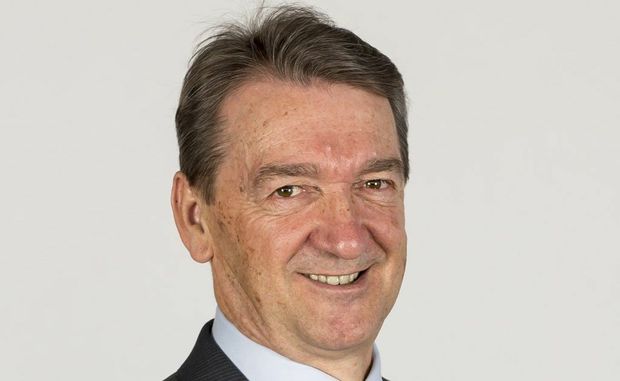
Byron Shire Council general manager Ken Gainger has played down the possibility of introducing specific levies to help pay for an infrastructure backlog, telling The Echo such proposals ‘currently have no basis in statutory authority.’
Staff have claimed the Shire’s infrastructure such as roads will continue to deteriorate unless a special rate variation (SRV) is implemented; they have suggested a cumulative increase over four years of 33.5 per cent (deteriorate), 46.4 per cent (maintain) or 60.2 per cent (improve).
While public comment for the SRV is now closed, Cr Paul Spooner has suggested a tourism infrastructure levy ‘that is applied to any business deriving income from tourists.’
Cr Spooner argues ‘It will then be up to each individual business to determine whether they pass on this cost to their tourism customers. For example, by applying an accommodation surcharge.’
But Mr Gainger says that such levies, whether a bed tax, tourism levy or a levy on festival patrons have no prospect – at this time – of becoming ‘recurrent and reliable revenue sources for Council.’
He said, ‘The government has previously categorically ruled out a bed tax option. Council, in its submission to be declared as Fit for the Future and thus avoid potential amalgamation, has promised the state government that it will pursue rate increases.
‘Only rate increases can produce the sustainable and reliable recurrent revenue desperately needed to repair our failing road system.’
Property portfolio?
But why isn’t Council managing a profitable property portfolio?
Under legislation, councils can create a separate corporate entity as an investment arm of council.
While Mr Gainger confirmed that local councils can create and manage a business unit or corporate entity as a vehicle to invest in and redevelop its property portfolio, he says there is limited property available. Such an approach is not justified, he said.
‘Nonetheless, our financial sustainability plan includes a rationalisation of Council’s property holdings to determine which properties have investment potential and those that are surplus to our needs. This has resulted in some properties being sold and the proceeds of sale invested in infrastructure projects while properties with investment potential such as the former Byron Library site in Byron Bay, the former South Byron Sewerage Treatment Plan site in Suffolk Park and a former materials dump site in Bayshore Drive are earmarked for redevelopment.
‘Our aim is to look at redevelopment options that have the potential to return a recurrent revenue source to the council and create a situation where Council is less reliant on rate revenue,’ Mr Gainger said.
Mr Gainger also pointed to a draft review of Council rating systems by the Independent Pricing and Regulatory Tribunal (IPART). The tribunal provides oversight to government decisions.
‘[IPART] suggests, among other things, that NSW moves from a site (land only) valuation system to a Capital Improved Value (CIV) system, such as what has been in place in Victoria for many years.’
‘This change would not lead to additional rate revenue being generated, but would significantly influence the apportionment of the overall rate burden and million-dollar mansions would pay a lot more rates than a modest dwelling.
‘This change is widely supported within the NSW local government sector.’
 For four decades The Echo has printed the stories some people loved, some people hated, and some pretended not to read. If you want us to keep telling the truth, the real truth, not the sugar-coated version. We’ll need your support to keep the presses rolling.


