



Is it honey that makes a bee a bee?
Surprisingly it is not the honey that maketh the bee. Of the incredible 1,660 bees that are native to this country (and that is an extraordinary number) there are only 11 species of bees, and they are stingless, that are honey makers. The other 1,649 are called solitary bees. They don’t live in a hive but dig themselves burrows in the ground, or make homes for themselves under leaves, in old trees and all those untidy places in your garden. In fact having a neat and tidy garden is definitely a downer for these bees as you remove the places where they rear their young.
‘Many Australians don’t even know that Australia has native bees, let alone more than 1,600 species,’ said bee specialist Dr Megan Halcroft. ‘To put this in perspective, we have less than 850 species of native birds.’
So what makes a bee a bee?
Firstly they feed their offspring pollen and secondly they have branched hairs on their bodies – so no honey required. ‘Bees are wasps that decided to stop hunting and started to co-evolve with plants 120 million years ago,’ said Dr Halcroft. Native Australian solitary bees are often more effective at pollination than their European counterparts because they carry dry pollen to feed one individual at a time and therefore more effectively distribute pollen. ‘They are great at pollinating herbs such as lavender, rosemary, thyme and basil.’
Like bees world wide, the native bees are under threat from habitat destruction, pesticide use and land clearing.
‘Currently one in every three mouthfuls of food we eat in Australia is produced with the aid of insect pollinators, predominately the European honey bee,’ said Dr Halcroft. ‘We can’t continue to rely on the European honey bee as our primary pollinator. If we don’t take action in supporting our native bees by providing food sources, habitat and investing in research, we risk declines in food quality and increases in food prices.’
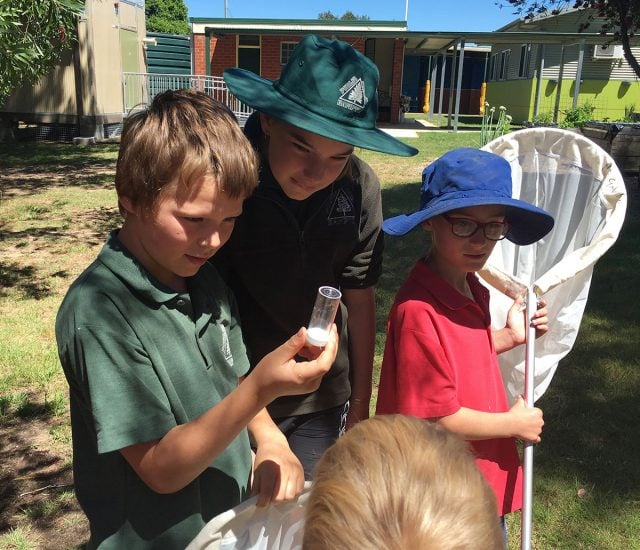
Encouraging schools to get involved in saving native Australian bees by building bee B&Bs is a project that has been launched by Weleda. Schools can order a free bee B&B via their website including materials for the inside of the hotels. It will also help pollinate the school garden and the local area. The bee hotels also come with materials for teachers to use with students about the importance of the Australian bees.
‘If you are supporting the native bees don’t put in a honey hive nearby as this will set the bees up in competition with native bees for food and resources,’ reminded Dr Halcroft.
Weleda will be donating $1 from every product bought at participating stores towards the project until May 2017.
 For four decades The Echo has printed the stories some people loved, some people hated, and some pretended not to read. If you want us to keep telling the truth, the real truth, not the sugar-coated version. We’ll need your support to keep the presses rolling.