


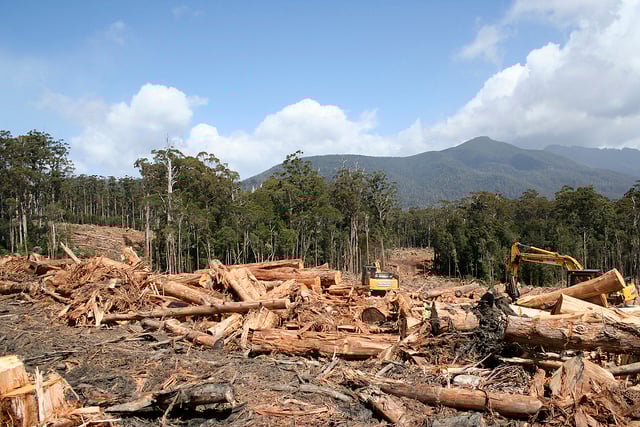
Polls commissioned by north coast environment groups have shown strong community support in Ballina and Lismore for protecting native forests.
ReachTEL polled 700 residents in Lismore and 729 in Ballina in December 2017, asking them a series of questions on protecting koalas and forests.
The polling found widespread awareness (80 per cent very or somewhat aware) of dwindling koala populations, and strong (70 per cent) support for new national parks to protect koalas.
The polling was commissioned by the National Parks Association of NSW, WIRES, Bellingen Environment Centre, North Coast Environment Council and the Total Environment Centre.
When given choices as to the best use of public native forests, just under 50 per cent in both electorates identified the protection of forest wildlife, nature and trees as the top priority.
A further 23 per cent identified protection of water supplies, followed by carbon storage and recreation. In total, these four uses were chosen by 89 per cent of respondents in Ballina and 91% in Lismore.
In contrast, only 9 per cent of respondents in Ballina and 7 per cent in Lismore supported logging for timber and woodchips. Logging forests to burn for biomass power, an idea recently suggested by the NSW Government as an ‘untapped opportunity’ for the north coast, was supported by only 2 per cent of people.
National Parks Association of NSW chief executive Alix Goodwin said the results were striking in light of the Coalistion’s commitment to renew Regional Forest Agreements (RFAs), the 20-year deals that allow logging of public native forests.
‘The Government either isn’t listening or is choosing to ignore the wishes of the electorate,’ she said.
‘Instead of asking whether we should be logging at all, they’re determined to ignore the evidence of environmental decline, rubber stamp the RFAs and lock in logging for another generation—against community sentiment.
WIRES chief executive Leanne Taylor stressed the need to consider the welfare of native animals.
‘We must remember that forest animals have nowhere else to live. When animals lose habitat, via logging or land clearing, they don’t just move, they die,’ Ms Taylor said.
‘We’re heartened to see such a big part of the community get behind protecting forests for nature, and urge the Government to heed the message.’
North Coast Environment Council spokesperson Susie Russell said the north coast had seen a 50 per cent decline in koala numbers in the past 20 years.
‘Yet despite this, and in the absence of the long-awaited koala strategy, the NSW Government is proposing to intensify logging in order to fuel wood-fired power stations which will increase greenhouse gas emissions,’ Ms Russell said.
‘It’s crazy stuff. Public forests must be managed for the public good.’
Total Environment Centre chief executive Jeff Angel said the polling showed that the community was way ahead of the Government when it came to identifying what’s really important, saying ‘we should choose koalas over logs and woodchips’.
Meanwhile, as reported last week, the NSW Department of Primary Industries has announced that the NSW and Australian governments were currently seeking community input through drop-in sessions, and a consultation and submission process.
Long-time forest campaigner Dailan Pugh of the North East Foresty Alliance said, however, that the reviews were a ‘smokescreen’ for the government’s intention to renew RFAs for a further 20 years without the rigorous studies required to underpin such an extension.
‘The fact that the 10 and 15 year reviews are only now being undertaken 9 and 5 years after they were legally due is just one example of the numerous unmet commitments,’ Mr Pugh said.
‘The DPI consultation process is just window dressing.
Anyone wanting to comment on the review should check out drop-in sessions in their area by visiting www.dpi.nsw.gov.au/forestry/regional-framework
Submissions can be made online at www.dpi.nsw.gov.au, via email and via mail until 5pm on Monday 12 March 2018. For more information on Regional Forest Agreements and the renewal consultation, visit the DPI website.
 For four decades The Echo has printed the stories some people loved, some people hated, and some pretended not to read. If you want us to keep telling the truth, the real truth, not the sugar-coated version. We’ll need your support to keep the presses rolling.


