


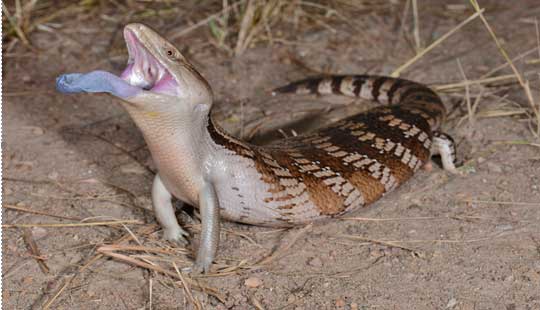
Blue-tongue lizards use their tongues as a last-ditch effort to avoid being eaten, according to the latest research from the Lizard Lab at Macquarie University in Sydney.
The base of their tongue is particularly bright under UV light – which birds can see clearly. The lizard relies on camouflage to avoid hawks and other predators. When that fails, the lizards poke out their tongues as far as possible distracting the birds with a flash of bright blue and ultraviolet tongues. And yes, you would it under disco lights.
‘Blue-tongue lizards have a highly conspicuous tongue, but, unlike many other kinds of lizards, it’s a big tongue – the surface area is large. When blue-tongues do a “full tongue” display, the mouth is opened widely, and the tongue is flattened and expanded. At the same time, they may hiss and puff-up their body for maximum effect. This behaviour, in combination with a highly conspicuous tongue, can be quite intimidating for anyone that has got too close to a wild bluey,’ said Associate Professor Whiting.
 For four decades The Echo has printed the stories some people loved, some people hated, and some pretended not to read. If you want us to keep telling the truth, the real truth, not the sugar-coated version. We’ll need your support to keep the presses rolling.


