


Hans Lovejoy & Paul Bibby
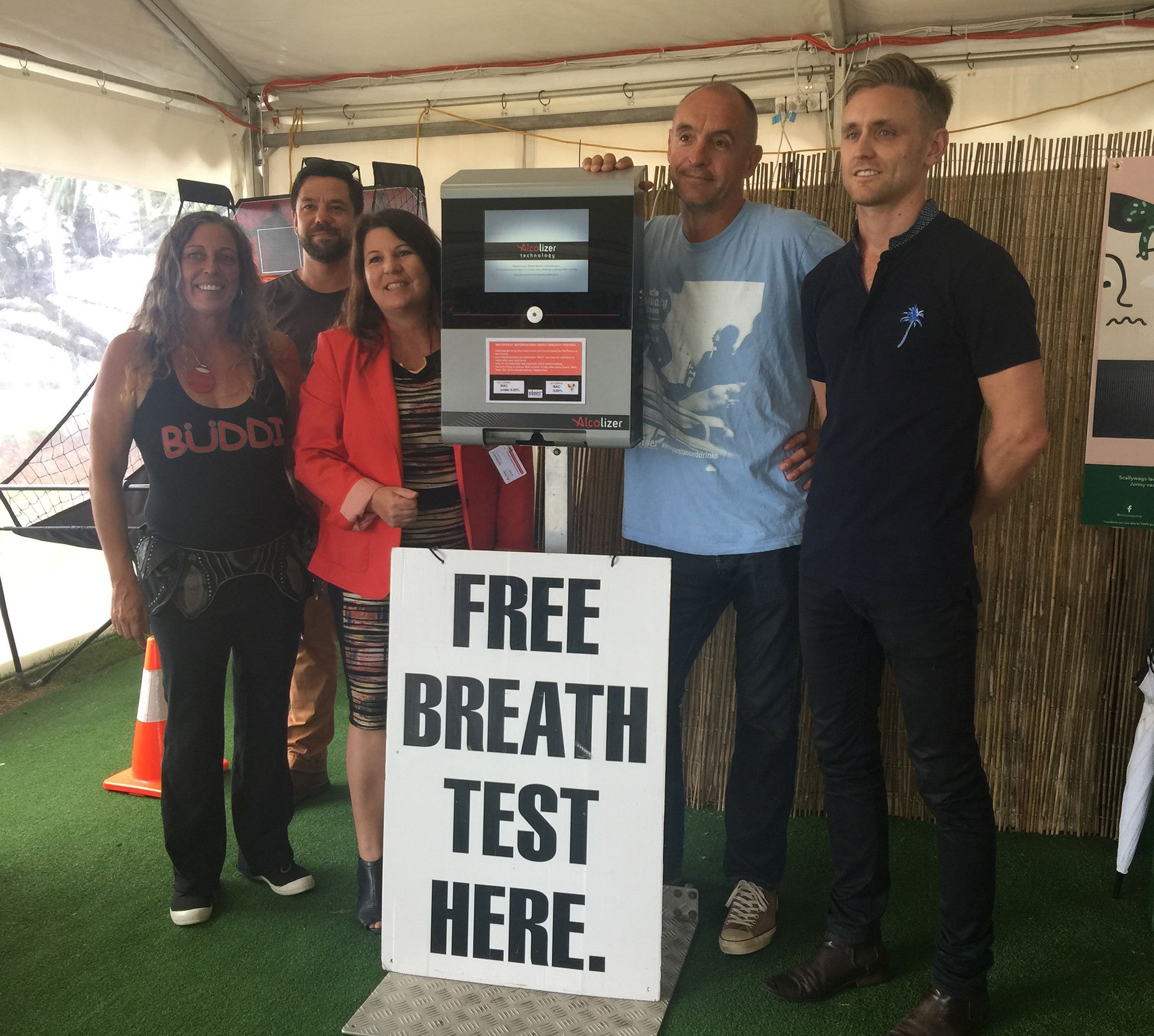
An organisation that provides voluntary breath testing and drug and alcohol information for music festival patrons says that without political and financial support, it will ‘cease operation in the next month.’
Despite STEER Project being supported by local Nationals MLC and 2019 Ballina candidate, Ben Franklin, he is yet to confirm if his government will step up to assist with the vital program. Franklin told The Echo he was ‘very impressed’ with the program and will be raising the organisers’ concerns ‘with relevant ministers and offices within the government.’
Meanwhile local Greens MP Tamara Smith told The Echo she has been ‘making representations to the minister on behalf of STEER Project since 2015.’ She says it’s time for a sensible critique of the Liberal-National’s failed war on drugs, ‘and that practical initiatives like this were embraced.’
STEER Project is led by local firefighter Phil Preston and since 2010 the program has gained groundswell support from festivals, Byron Council, local police and youth organisations.
Draconian response
The threat of closure for the program comes as the government released a draconian response to illicit drug use at festivals last week, which was roundly criticised for ignoring health- and education- focused solutions.
NSW premier Gladys Berejiklian announced on October 23 that she would adopt the recommendations of an expert panel, set up in response to the suspected drug-related deaths of two people at Sydney’s Defcon Festival last month.
New penalties include a maximum 25-year penalty for drug dealers who sold substances that resulted in a death, and on-the-spot fines of up to $500 for drug possession.
Yet the state’s peak body for contemporary music, Music NSW, say the proposed changes added complexity and had significant flaws, both in terms of the impact on festival organisers and their effectiveness in keeping people safe.
Music NSW managing director Emily Collins told The Echo, ‘Given that most evidence suggests that heavy-handed policing doesn’t deter dealers or drug users, it’s unlikely it’ll have the impact they’re hoping.’
Illicit drug focus
In a letter to local state politicians and councillors on October 24, STEER Project’s Phil Preston said the Keeping People Safe at Music Festivals Report, which underpinned the government response and was authored by an ‘expert panel’, focused ‘largely on illicit drugs’.
Preston wrote, ‘It’s not just illicit drugs killing people. In NSW during 2015, alcohol was found to be a contributing factor in 47 per cent of fatal crashes on Thursday, Friday and Saturday nights.’
‘I suggest there is a model we can use to complement the ‘war-on-drugs’. It is a model STEER Project have successfully implemented since 2013 to reduce alcohol-related harm at music festivals and community events.
‘The model could be adapted to similarly reduce drug-related harm. The STEER voluntary breathtesting model is founded on establishing trusted person-to-person connections with patrons. Within that trusted connection we offer information and resources associated with alcohol consumption and safe driving, eg knowledge of standard drinks, monitoring/counting number of standard drinks, awareness of different rates of alcohol absorption for each individual, providing an accurate measure of BAC and discussion of transport options. The voluntary breath-testing model has been found particularly relevant for P-plate patrons who have a BAC of 0. STEER Project actively promote the Plan B message: “If you are drinking, don’t drive,” and also promote the message, “If you are driving, drink alcohol-free alternatives”.’
Yet NSW police have not offered support in terms of providing voluntary breath testing. NSW Police Assistant Commissioner J Corbey wrote to STEER’s Phil Preston last August, and said the NSW Police Force cannot provide support for informal, or voluntary, breath-testing measures.
Corbey said it ‘May serve to provide a false impression that a person may be able to drive after consuming alcohol.’ The road safety initiatives supported by the NSW Police, he says, include, ‘the fundamental principal [sic] of if you are drinking, don’t drive.’
Failed drug war
The Echo asked Local MP Tamara Smith why she believes the police are unsupportive of voluntary testing. She replied, ‘I think that the government resists alcohol self-testing at festivals because it is so against self-testing of other substances.’
‘The war on drugs rhetoric precludes the idea that drug users (alcohol is a drug) can take responsibility for their drug use. If they support alcohol self-testing then what is to stop pill testing – and we know that the nanny state and the LNP fear pill-testing philosophically more than they fear the deaths every year from pills at festivals.’
 For four decades The Echo has printed the stories some people loved, some people hated, and some pretended not to read. If you want us to keep telling the truth, the real truth, not the sugar-coated version. We’ll need your support to keep the presses rolling.


