


Arakwal Corp deal left out of proposal but is still promised by developer; five per cent affordable housing pegged at around 27 dwellings
Hans Lovejoy
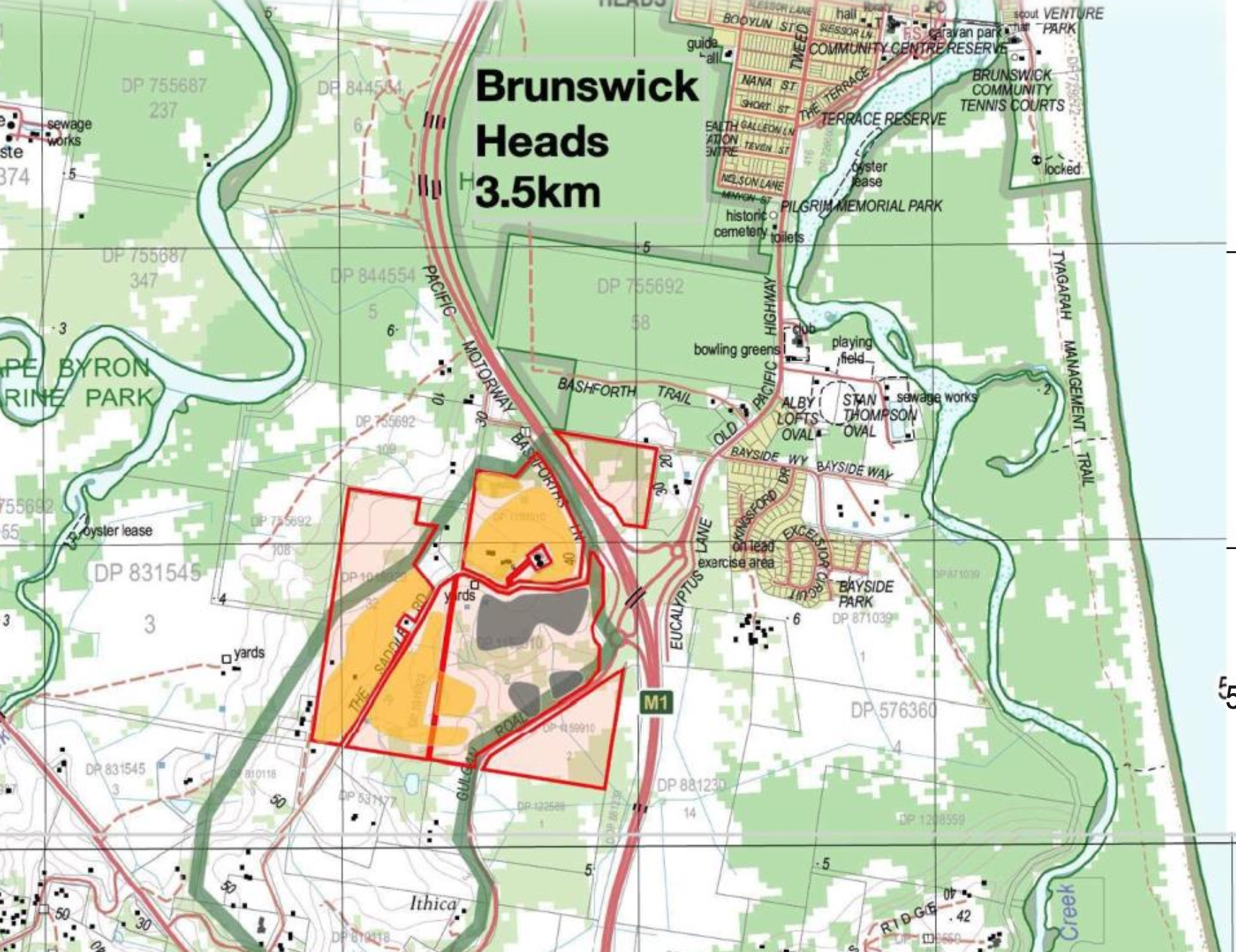
If approved, Gulgan Village, proposed on the highway end of The Saddle Road across 37.9 hectares, could eventually (after a development application process) house up to 1,000 people in around 550 homes, ‘depending on the housing mix’ (source: Gulgan Village Civil Engineering Report).
Now on exhibition, there are 26 documents associated with the planning proposal at www.planningportal.nsw.gov.au/ppr/under-exhibition/gulgan-village.
To put the increase in population into perspective, the 2021 Census recorded the Brunswick Heads population at 1,905 residents.
And that’s not all that is planned for The Saddle Road – the Engineering Report says, ‘This excludes the BILS 5 land that is subject to a separate Planning Proposal’.
So aside from assessing how this proposal will impact the Shire’s sewage and water capacity, the local road network (which Mullumbimby depends upon) and whether this proposal meets community expectations around open spaces and density, let’s focus on the affordable housing aspect.
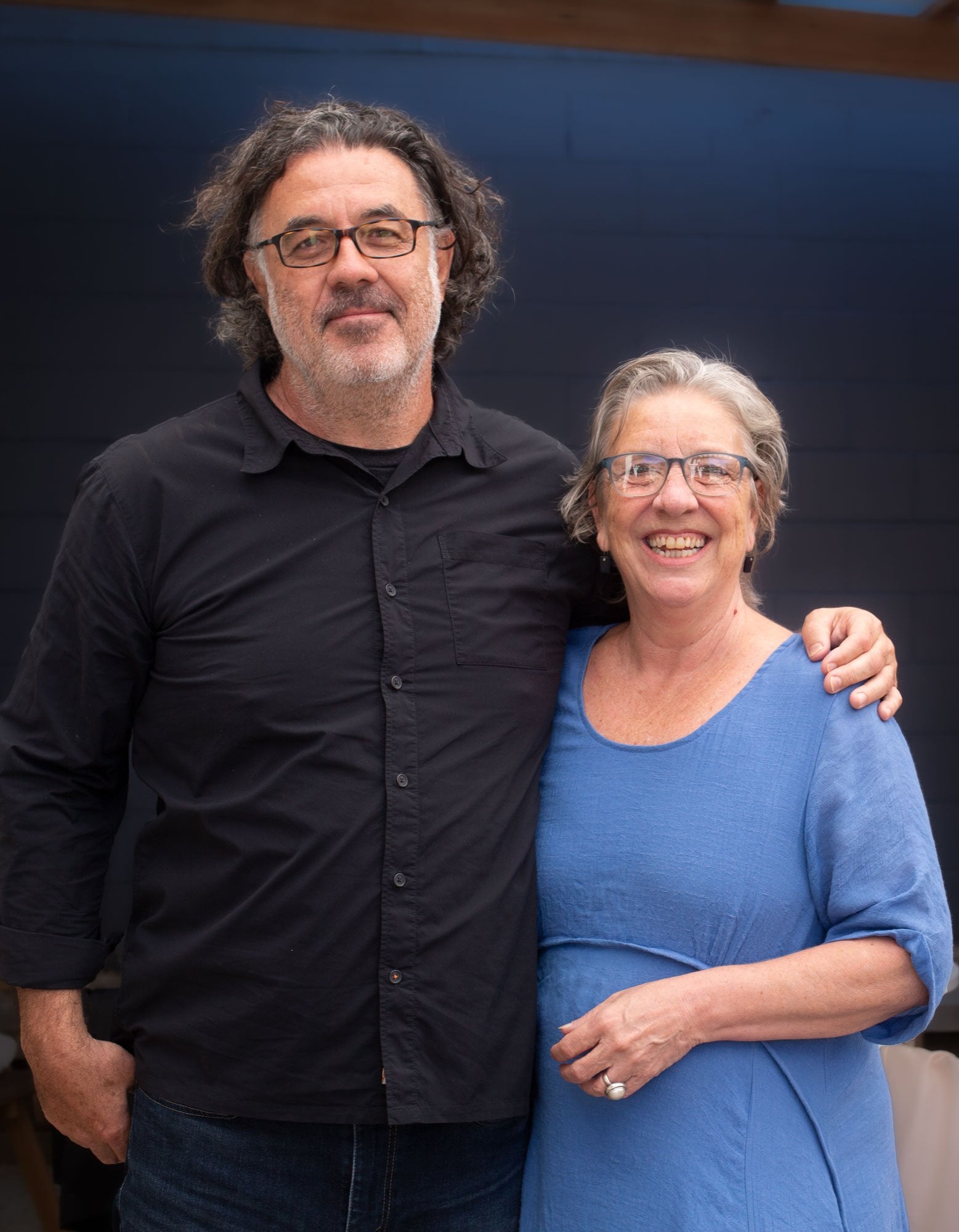
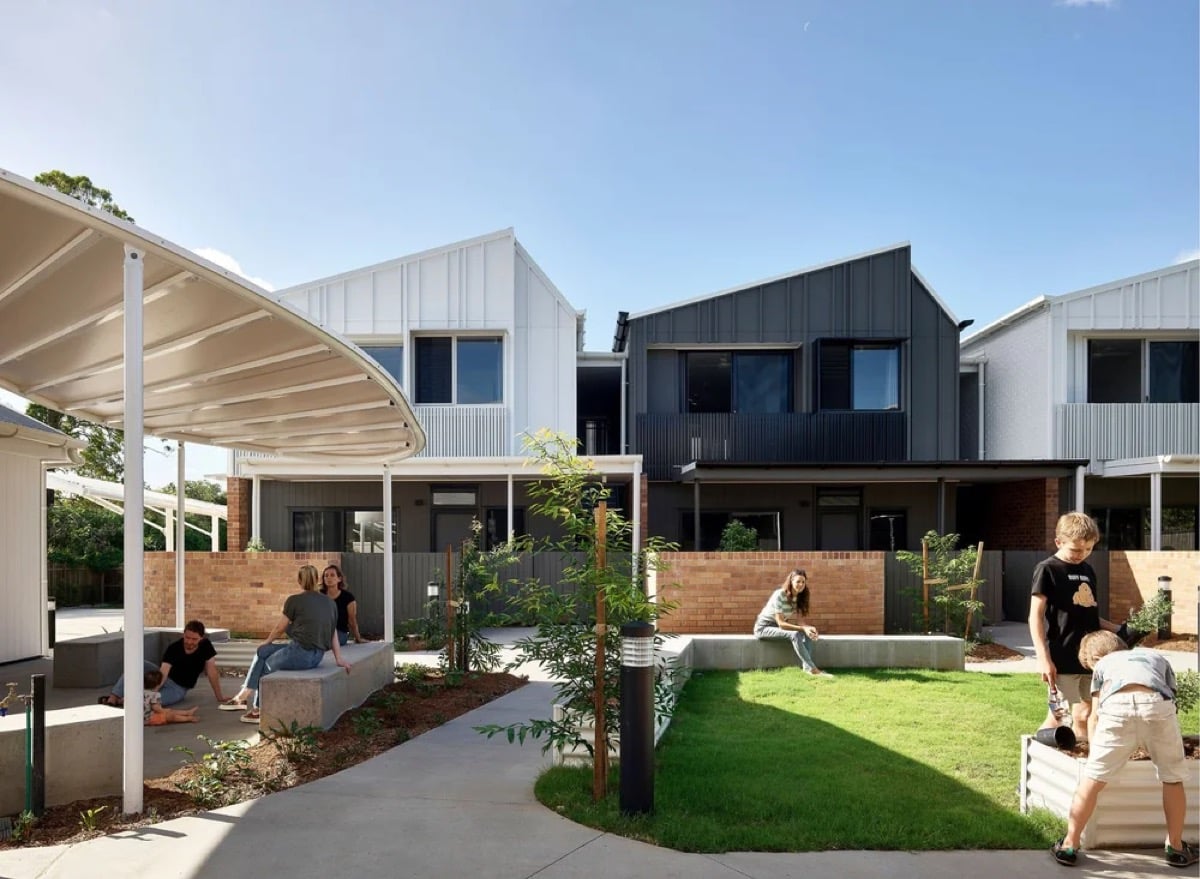
The director of the proponent, Gulgan Road Property Pty Ltd, is Brandon Saul, the developer behind the Habitat precinct in the Byron Arts & Industry estate, and the revamped Fletcher Street Cottage homeless drop-in centre. He was also instrumental in plans to build a cluster of group homes for at-risk single-parent families, which is also located within the Gulgan Village site.
He told The Echo that following on former Cr Paul Spooner’s housing trust model, he became involved with Byron Shire Community Housing (www.bsclt.org).
According to www.bsclt.org, ‘Property owned by Byron Shire Community Housing [will] never to be sold onto the speculative market.’
‘This is a community-led, as opposed to government-led, solution’, he said.
He says the reason he got involved was that he was ‘frustrated at seeing hundreds of women and children living in cars in Byron – almost all of whom have work’.
‘We are donating that land to the trust as a seed project and will be in perpetuity, managed by a community housing provider.
‘We hope it can be replicated throughout Byron Shire. The land donated to the community land trust is actually above and beyond the five per cent going to Council for affordable housing and the five per cent going to the Arakwal’ Mr Saul said.
He says the model is based on one set up by [US Senator] Bernie Sanders in Vermont.
‘The ambition of the trust is that it can be expanded, and not reliant on government funding. The trust is one component of the proposal.
‘The pilot is for three houses with five independent living quarters in each house. The best practice is to mix single elder women with younger women and their children’.
Asked why there was no mention of the trust within the planning proposal, he replied, ‘I think they weren’t in the documentation because they weren’t actually part of “what was required”. It’s just something we decided to do off our own bat above and beyond what was required’, he said.
Voluntary planning agreement (VPA)
According to the unsigned draft VPA between Council and the developer (contained in the planning proposal), the affordable housing contribution (page 42) is now listed as just five per cent, from the original ten. This is a variation approved by Council which falls under the Affordable Housing Contribution Scheme 02 (AHCS 02). The land had been pegged as 10 per cent in total for affordable housing.
As reported by Paul Bibby in March 2025, Mr Saul had committed five per cent to the Arakwal Aboriginal Corporation, with the remaining five percent being for affordable housing.
The Echo asked Mr Saul why there was no mention of any land dedicated to the Arakwal Aboriginal Corporation in the Planning Proposal.
Mr Saul replied that ‘Arwakal didn’t want to be in the scheme and wanted self-determination – so they were taken out of the VPA and the scheme’. He added councillors unanimously agreed to the Arakwal proposal, and there is a ‘100 per cent legal commitment – it will be documented and a condition of consent’.
Council planning staff previously warned at the February 2025 meeting that the lack of official inclusion in the proposal created a risk for Council. Yet Council’s website confirms the developer’s ‘separate agreement with the Bundjalung of Byron Bay (Arakwal) Aboriginal Corporation (Bobbac)…’
The Echo sought clarity from Arakwal Corp, but they declined to comment. Deputy Chair Cassandra Kelly told The Echo, ‘At this stage Bobbac has no comments. If Bobbac in the near future wishes to make comments the appropriate people will be contacted’.
Council staff have also flagged key issues with the plans as being traffic and access, infrastructure servicing, biodiversity and cultural heritage.
27 affordable housing dwellings
As for the five per cent left that is pegged for affordable housing, it equates to around 27 dwellings and the rest, presumably 500, would be at market rate.
Mr Saul explained how it would work: ‘The formal affordable housing scheme will be controlled by Council, who will in turn work with community housing providers, who provide housing at a range of “less than market prices” (sometimes for free).
‘The organisation that we started to house women and children will effectively do the same. Some will be at a market discount, some will be at a peppercorn rent (for women escaping domestic violence, for example)’.
Along with neighbourhood centres, local services and community facilities, there are precincts proposed for housing throughout the estate.
80m2 micro lots
They include much smaller dwelling footprints (micro lots) and higher density and 11.5m height limits than what has previously been allowed in Byron Shire.
According to the Draft Byron Development Control Plan (DCP), there would be a manufactured home precinct, while regular lots sit around 350m² and up, with the upper limit being 600m2.
Mr Saul downplayed the changes in planning rules, saying he was not sure the smaller blocks were viable. But he did defend the height rule, saying it gives more flexibility. ‘While it is three storeys, it will be more like two and a two-and-a-half. The tiny home movement is moving ahead, and the government are yet to keep up,’ he said.
‘We really need social housing and housing diversity. This will not be traditional suburbia; it will be a village with a mix of housing solutions currently not available’, he added.
For more information visit www.gulganvillage.com and www.newoldways.com.au
Housing SEPP
Under the NSW government’s State Environmental Planning Policies (SEPPs) for housing, there are generous concessions for developers who are approved for affordable housing projects.
Local Government NSW (LGNSW) are among the critics of the Housing SEPP, and in 2023 they described it as further eroding council involvement in planning and giving ‘developers increasingly free rein in both city and country’ along with it removing ‘community checks and balances’.
Unlike the SEPP model, Mr Saul’s Trust model promises that the 27 dwellings or so would remain as affordable in perpetuity.
The Gulgan Village VPA appears to describe AHCS 02 as the governing framework, not the Housing SEPP.
But there is a catch: according to Clause 5.3 (page 10 of the VPA), if a Ministerial planning order requires an affordable housing contribution, the developer’s obligation under the VPA is reduced to match the Ministerial order amount. This protects the developer, not Council.
Q&A with lead proponent Brandon Saul
Was the ambition to not adopt a higher percentage of affordable housing because of the high cost of building, and lack of assurance that you will get a financial return?
To be fair to Byron Council (and I know that’s not something any of us are in the habit of doing) they’re one of the first regional Councils to have pushed forward with an affordable housing contribution scheme. Though it’s worth noting we made our commitment before the scheme was introduced (which is why ours is part of a voluntary planning scheme).
My understanding is that the proportion included in their scheme is higher for “in-fill” sites (where cost structures permit) and lower on green field sites where infrastructure/establishment costs are prohibitive. The figures in Council’s scheme were established via an independent land economics specialist, taking into account the overall viability of the site etc. It’s also worth noting that we are doing more than we would have been required to do under the scheme. We’ve established a community-based organisation inspired by the Land Trust movement – refer bsclt.org (for all the reasons we discussed this afternoon). Our take is that developers should do more, government should do more and increasingly, it’s community led initiatives like the one we’ve started that are delivering the truly ‘scalable’ solutions. There’s a lot to be garnered from what’s happening in other parts of the world. Community Land Trusts in particular, that don’t rely on government support.
Selling 500 lots at market rate would surely be a huge return – for example, if each lot was on (low) average $400,000, that is $200m.
That’s super simplistic. Respectfully Hans, that crazily simplistic. And while it may once have been true that property developers were just money printing machines, that’s just not as true as it once was. I’m afraid the reality of subdivision economics is such that a lot of developments no longer ‘stack up’, owing to skyrocketing construction costs. As we speak, there are a plethora of projects across the state that have been put on hold indefinitely as they are unfinanceable.
And just to recap, how did it come about that Council adopted your model of half Arwakal and half affordable housing, instead of adopting Council’s Affordable Housing Contribution Scheme 02 (AHCS 02). I think you requested that?
Ours was initially a voluntary contribution (as the Council didn’t actually have a mandated scheme in place, when we started). So, we basically just agreed to donate the land in advance of the scheme being ready. Why did we want half of the contribution to go to the Arakwal? Because it was the right thing to do. We need more Arakwal living on country and Council we’re in support of the idea.
Also given that affordable housing has been known to not deliver real affordability, how will the Trust ensure that the rent will be truly affordable?
I think you might be mixing two concepts here. The formal affordable housing scheme will be controlled by Council who will in turn work with Community Housing providers who provide housing at a range of ‘less than market prices’ (sometimes for free). The organisation that we started to house women and children will effectively do the same. Some will be at a market discount, some will be at a peppercorn rent (for women escaping domestic violence, for example).
Will the Trust be directing the community housing provider to provide cheaper rents for example, and if so, what would that be? Ultimately that will be left to the Community Housing provider (refer above) managing the properties who are also better placed to provide what are referred to as ‘wrap around services’ where required/appropriate.
I note that the Trust won’t be selling the property so there is some assurance. The website was a bit sparse on info other than ‘All revenue created by the trust will be used to fund the creation of more rental accommodation’ etc.
Yep – that’s it. The property is held once removed from the speculative market forever – it’s directly modelled off what Bernie Sanders did in Vermont.
Additional questions put to Council staff
I was hoping to confirm that the Gulgan Village affordable housing dwellings will fall under the Affordable Housing Contribution Scheme 02 and override the Housing SEPP? It appears there is a special exemption (Council resolution) with the developer for 5 per cent for AH and 5 per cent for the Arakwal Aboriginal Corporation.
Council began negotiations with the proponent prior to the adoption of Affordable Housing Contribution Scheme 02. As such, it was agreed that the mechanism for provision of affordable housing would be through a Voluntary Planning Agreement (VPA), rather than through the scheme. Neither the Scheme nor entering into a VPA with Council preclude the proponent from delivering additional affordable housing through provisions in the Housing SEPP.
Also – the maps seem conflict with what Council present on their website (https://yoursay.byron.nsw.
The mapping on Council’s website and Affordable Housing Contribution Scheme 2 encompass the entire Saddle Road Precinct. Gulgan Village is one part of this precinct. When planning proposals are lodged for the remaining land in the precinct, there will be a further affordable housing contribution required for that land.
 For four decades The Echo has printed the stories some people loved, some people hated, and some pretended not to read. If you want us to keep telling the truth, the real truth, not the sugar-coated version. We’ll need your support to keep the presses rolling.


