


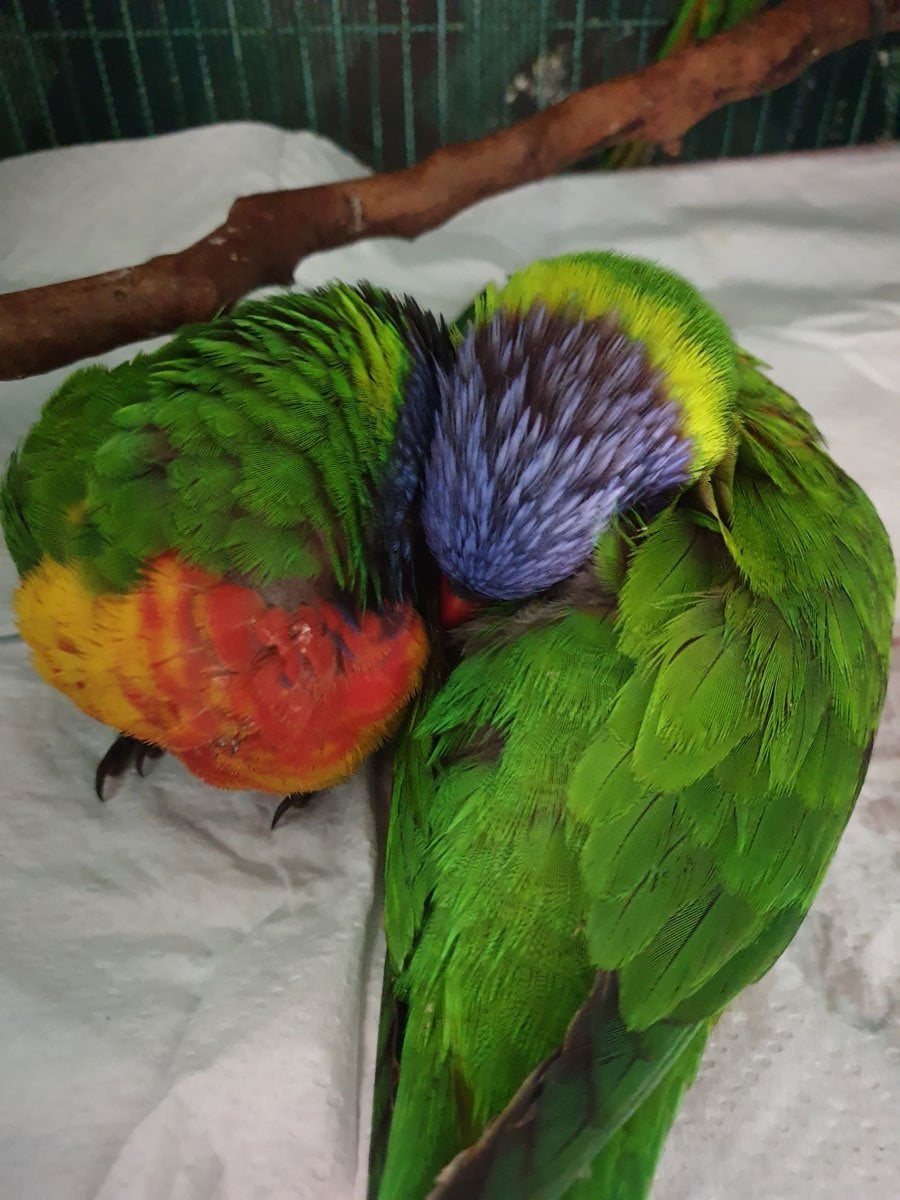
It wouldn’t be the north coast without the sound of lorikeets gathering in trees of an evening to meet, to feed, to argue and to sleep.
Normally lorikeets are loud, lively and gregarious, however, over the past few years, multiple lorikeets (predominately Rainbow but also some Scaly-breasted) are presenting with what is now called Lorikeet Syndrome.
These lorikeets display varying symptoms. Mild cases can appear similar to concussion, with birds exhibiting a lack of co-ordination and an inability to fly.
Severe cases will display staggering, paralysis, change to voice (croaky sounding), fully dilated pupils and an inability to blink. These symptoms occur in adults with good feather condition, but most are underweight.
It is still not confirmed what may be causing Lorikeet Syndrome and whether it is dietary or viral.
This illness is different from Clench Foot and Lorikeet Paralysis Syndrome. Notably the illness only seems to be affecting wild birds.
The Wildlife Information Rescue and Education Service (WIRES) has been receiving many calls about lorikeets over the past month, many of whom display symptoms of Lorikeet Syndrome.
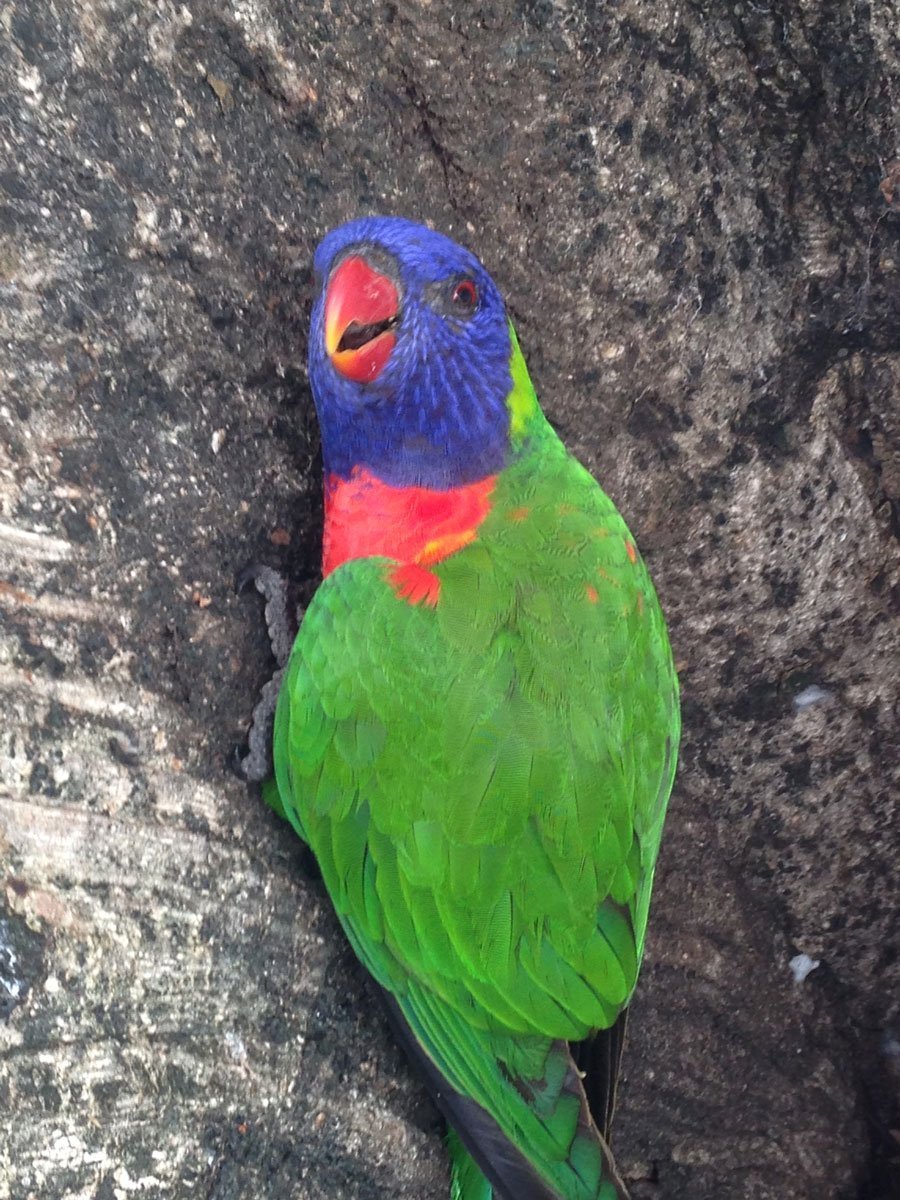
When these birds are brought into care volunteers closely monitor their symptoms while they are kept in intensive hospital care enclosures.
After fluid therapy some can self-feed, others need help feeding. Lorikeets unable to blink must have eye ointment applied two to four times a day until they start blinking again. Their stages of recovery are closely monitored and they are moved on to the next treatment stage when ready.
Unfortunately, some lorikeets are so severely affected that they die within the first 24 hours of treatment.
The time taken for each treatment stage relies on the individual bird’s recovery rate. They may need to be in intensive care for up to one week, then transferred to a hospital cage for another week before being transferred to a flight aviary where they may spend up to four weeks before being fully recovered.
Many recovered lorikeets have been released by WIRES over the past few weeks, including the three scaly-breasted lorikeets who had spent six weeks in care. However, more are coming in daily.
Should you find a lorikeet in trouble, please call WIRES straight away on 66281898.
WIRES is always in need of more volunteers. If you are keen to make a difference for the wildlife in our area, consider joining WIRES. Now is a great time to join since their next workshop will be held in Lismore on June 2 and there is time beforehand to complete the online part of the course.
For more information about how you can join and contribute call 66281898.

 For four decades The Echo has printed the stories some people loved, some people hated, and some pretended not to read. If you want us to keep telling the truth, the real truth, not the sugar-coated version. We’ll need your support to keep the presses rolling.


