


We don’t value creativity. Our school system has generally always favoured the STEM streams. It loves uniformity. It loves data that can be neatly measured. It loves absolutes. There are no absolutes in the creative process. True creativity is reckless and messy and impossible to measure in any quantitative way. The Australian Bureau of Statistics tells us that the creative sector in our country contributes $86.7 billion to our GDP each year. But that’s just measuring creativity with money so that we can validate it – say that it’s worthwhile, because we finally found a way to quantify it. For ‘creatives’, cash is a happy consequence, but never the end goal of one’s pursuits.
Being creative has always been seen as a special quality and certainly isn’t promoted as a universal characteristic. I believe creativity is the natural pathway to our innate mindfulness; for me it has always been the way I make sense of my world, from when I was a small child living with domestic violence and drawing monsters, to the comedian who jokes about her broken-ness. Creativity is like an operating system that helps you make sense of an illogical world. We are all creative. We just don’t believe it.
What if creativity was seen as a second language; something we can all speak, we can all hear, and something we can all do? Creative minds are dangerous. They ask questions. They emote. They push up against the establishment. They become furious about injustice. They join hands and unite. They navigate dark places. The best creativity says the unsaid. The unsaid is an uncomfortable place. People who say the unsaid aren’t easy to control. They think outside the box, they live outside the lines. Government is ostensibly all about social control. It ‘saves’ us from anarchy. Creativity is by its very nature anarchic.
Those in power have always feared the people they govern. Which is ironic, because the reason they hold power is that they’ve curated a system that instills fear in people. Most people are too anesthetised to realise what power they actually have. Creative minds are disruptive. They need to be trimmed. Massaged into shape. That’s why schools are so important. It’s important to start the shaping process with young minds. Teach them to memorise and retain knowledge that is delivered to them, but not to seek knowledge out. I remember the joy of my children at 4 years old. The boundlessness of their thinking filled me with awe. What happened to these magical brains that asked incredible questions? Children struggle to retain their enquiring minds once they hit educational institutionalisation.
Like my Ivy, who at two years old asked, ‘Is it tomorrow today?’ And at four asked ‘How do they get the milk in the cow?’ Or one day when she looked deep into my soul and declared ‘Every day is a different day.’ Another time she asked ‘Is it okay to not love someone?’ ‘Yes.’ I said ‘Why?’ She replied, ‘I don’t love my baby who wets herself anymore.’ Or on a beach walk; ‘I’ve been meaning to ask this for a long time. Who puts the sand on the beach? There is a lot of it. It must have been a lot of work.’ And sure, it’s cute, but it’s also deeply philosophical and creative thinking.
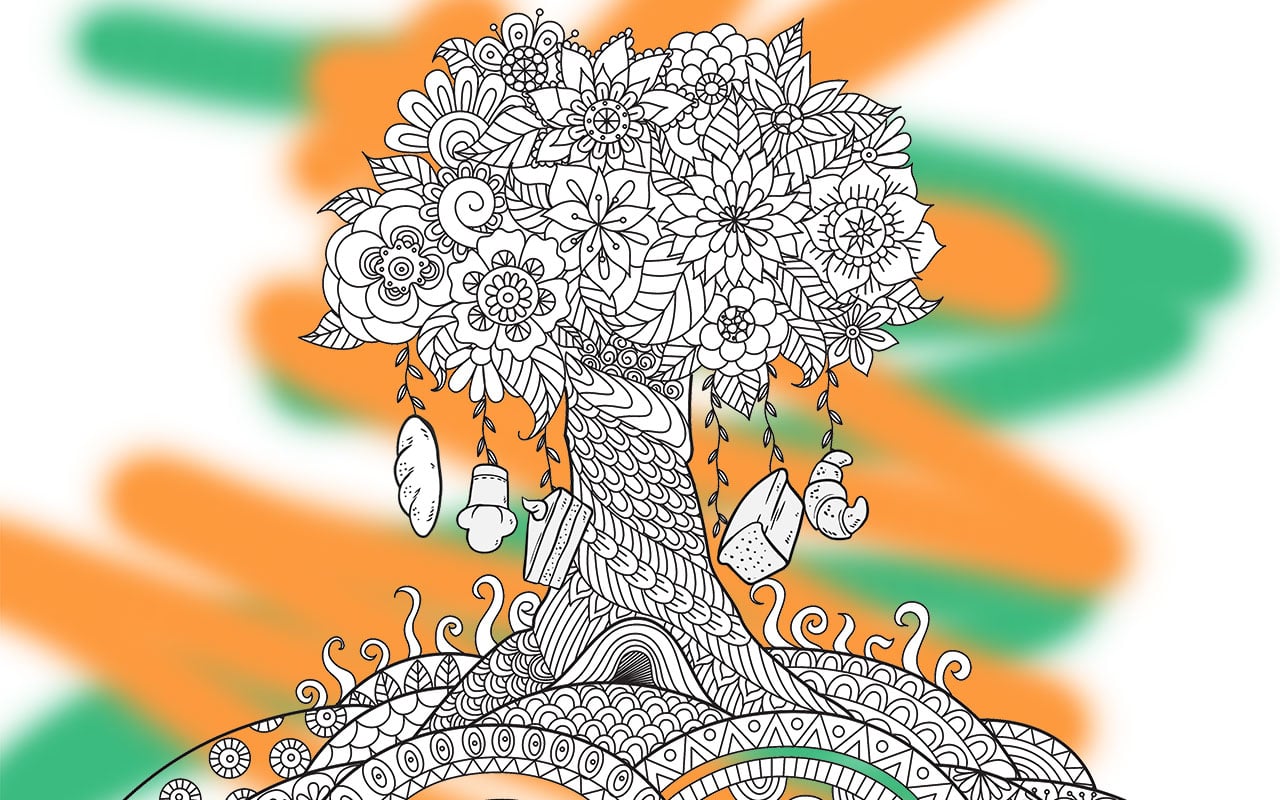
We take our freethinking free-drawing kids to school and teach them to colour inside the lines. I hated colouring mass produced education department sanctioned line drawings when I was a kid. I wanted to do my own drawings. Colouring-in is not creative. It’s uniform. It’s prescriptive. It can be measured. Colouring-in teaches us to stay in the lines, that we need to obey rules – we need to conform to the ideas created by other people, and we need to stay away from edges.
Personally I’ve always been attracted to people who can’t stay in the lines. People who not only push to their edges, they fall off them, into the abyss. For me, the creative process has always been about making sense of the abyss. Of finding a way to traverse the dark unspoken places of our subconscious mind. Of making magic happen, like Ivy who, when eating grainy bread, pulled a seed from her teeth and asked ‘If I plant this, will I grow a bread tree?’
We need to plant more seeds. You never know what will grow. Maybe even a bread tree.
 For four decades The Echo has printed the stories some people loved, some people hated, and some pretended not to read. If you want us to keep telling the truth, the real truth, not the sugar-coated version. We’ll need your support to keep the presses rolling.


