


Story & image Kath Vail
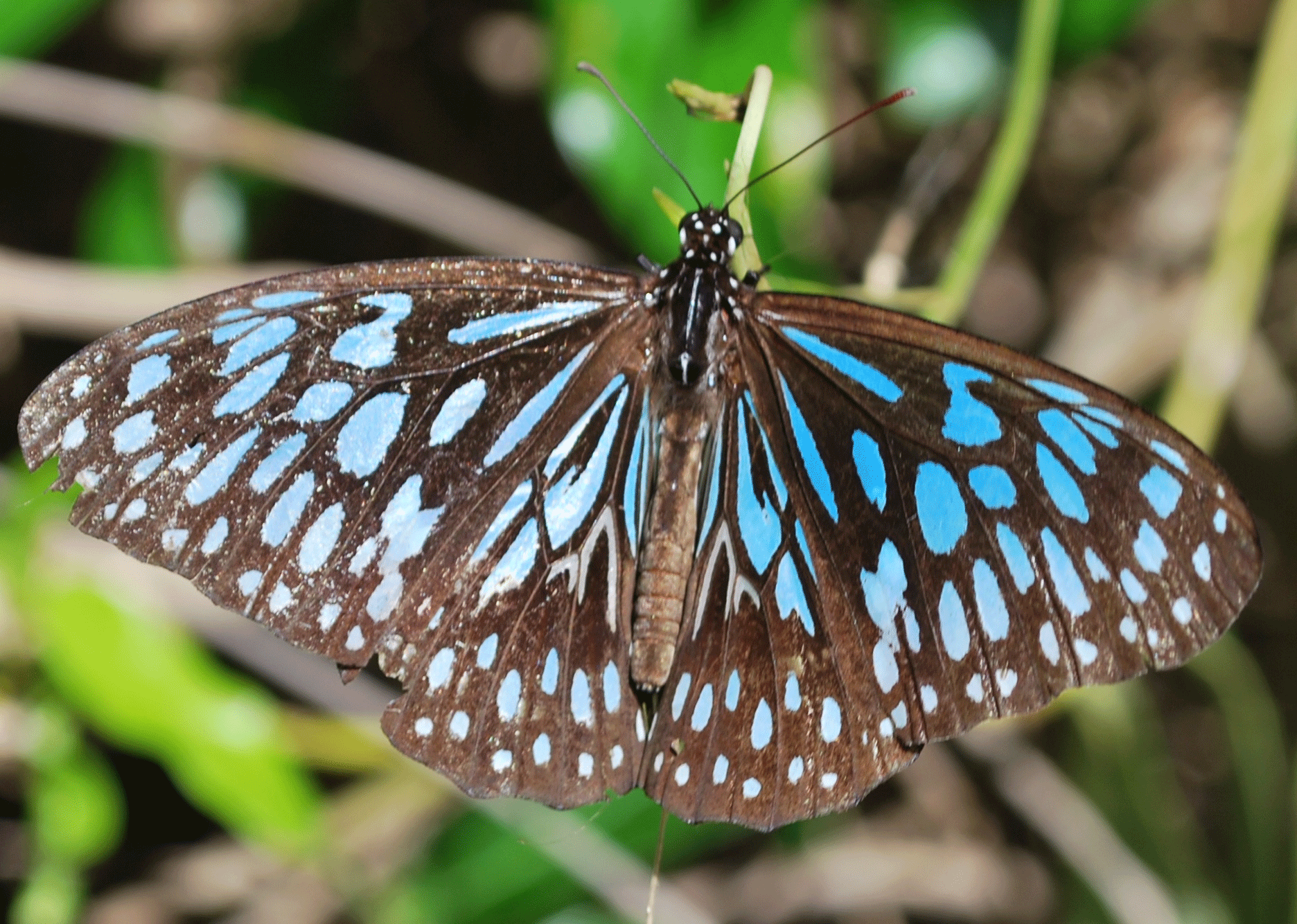
Recent rainfall was the trigger for the flight of the Blue Tiger Butterfly (Tirumala Hamata) that is currently migrating down the north-east coast of Australia from north Queensland.
The Blue Tiger Butterfly has numerous pale blue streaks and elongated spots on its wings. They fly with a gliding, sailing flight about one to two metres above the ground, especially on or near a beach.
During times like the recent drought, females stop breeding and adults congregate in large numbers along the north-east coast of Australia. They aggregate (group) together in large numbers in sandy gullies or creek banks where they rest on branches or dead twigs in shade close to the ground.
It is after rainfall events in spring and summer that the adults disperse and migrate and head down the coast. This allows them to take advantage of the new foliage of their larval food plant Secamone elliptica, commonly known as the corky milk vine that is found in monsoon forest and littoral rainforest. The larvae rely on the new shoots of the vine, because they are soft and easy to chew. The black and white banded larvae also absorb a number of poisonous chemicals called Pyrrolizidine Alkaloids (PAs) from the corky milk vine that get passed on through the pupae phase to the adult butterflies. This provides them with protection from birds and other vertebrate predators, as it has a very bitter taste and the predators learn to avoid the Blue Tiger Butterfly. As they become butterflies they can also imbibe PAs from a number of plants to top up their protection.
Flutterings of passion
The adult male butterflies are strongly attracted to the PAs that are also found in the Parsonsia vine, known as common silkpod or monkey rope. The male will scratch the leaves to release the sap which they imbibe, and then they convert this complex organic compound into sex pheromones.
Courtship for the Blue Tiger Butterflies includes extensive use of hair pencils that are located at the tip of the male’s abdomen. It is quite rare in nature to see the hair pencil display, however it involves the hair pencils being charged with perfume from scent pouches on the upside of the wing. The male then erects these hair pencils and dusts the female with the pheromones.
The Blue Tiger Butterfly will be migrating for approximately another week down the coast. As they have a long life-span for a butterfly, of up to six months, when the cooler months of April and May arrive, they can be seen migrating north again where they congregate in central and northern Queensland.
It is important to plant both the corky milk vine and the Parsonsia vine together if you want to provide the most benefit to the Blue Tiger Butterfly.
 For four decades The Echo has printed the stories some people loved, some people hated, and some pretended not to read. If you want us to keep telling the truth, the real truth, not the sugar-coated version. We’ll need your support to keep the presses rolling.


