


Jason van Tol
The concept of a limit can invoke the image of a brick wall; when driving at high speeds, sudden death can occur with one small error in steering. The brick wall metaphor of a limit has characteristics of immediacy and finality. Herman Daly has suggested that a more appropriate model for ecological limits is a rubber band. A stretched rubber band pushes back to a position of equilibrium, and the more it is stretched the harder it pushes back.
As the expansion of human numbers and economic activity proceeds, we shape the environment to suit our needs. Every species has its own characteristic niche in an ecosystem, but in the age of the Anthropocene, the scale of our influence on the environment has come to dominate. While the current pandemic may appear to be a random misfortune, it has been expected by epidemiologists for at least 15 years, following the first SARS outbreak in 2003.
What causes an outbreak?
Dr Peter Daszak is a disease ecologist and president of EcoHealth Alliance, which conducts research on global health and ecological conservation. In a recent interview on Democracy Now, Dr Daszak was asked to comment on the environmental origins of COVID-19.
Having worked for 20 years on identifying the causes of disease outbreaks, he named two principal causes:
1) dense and growing human populations, and
2) land-use changes as people move into new areas, by building roads for mines or logging, and encroaching on wildlife habitat.
While he stated that the origins of the current coronavirus is not exactly certain, his past research in China has demonstrated that bats are common carriers for many types of coronaviruses, and that increased human contact with wildlife like bats is usually the cause of disease outbreaks.
Economic growth and human population
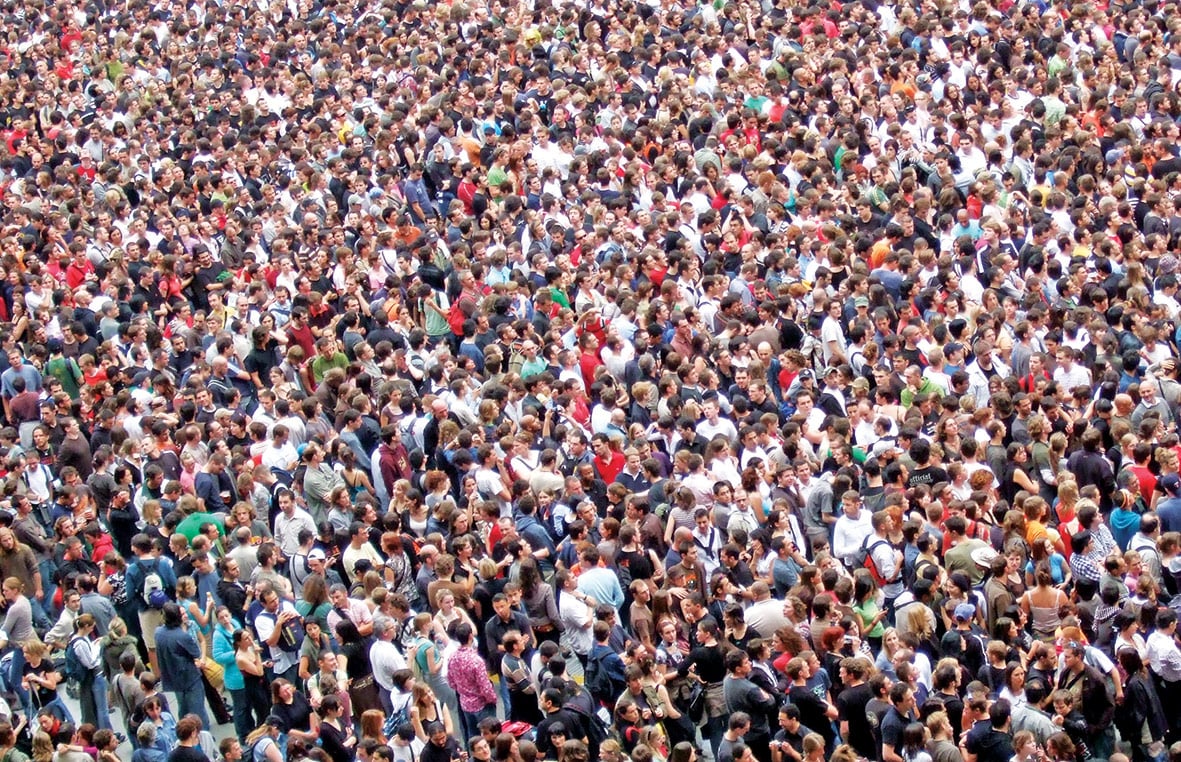
It is important to recognise that economic growth is at the core of government policy worldwide. At the same time, the human population, currently at about 7.8 billion, is expected to continue growing to between 9 and 10 billion by mid-century. With this is mind, Dr Daszak and other epidemiologists expect that continued growth will result in other and even more severe pandemics in future.
The counter model to the growth economy is the steady state economy, as promoted by Daly and other ecological economists. Two of its key characteristics are a steady or mildly fluctuating population of humans, and a steady or mildly fluctuating stock of human-made things. The steady state economy comes out of the field of ecological economics, which is organised around three hierarchical goals, the first of which is called ‘sustainable scale’, which attempts to answer the question ‘how big’ should the economy be? Notable is that this question is completely absent in standard economics, which advises unlimited growth instead.
What’s fair?
Taking this into account, the steady state economy has an important role to play in avoiding planetary sickness, but so too does the second goal of ecological economics. The second goal, constrained by the first, is called ‘fair distribution’, which attempts to answer the question, ‘How much should each person get?’
Since the publication of Adam Smith’s Wealth of Nations in 1776, the free market economy has been fiercely defended, where governments have no role in wealth redistribution, and where each individual attempts to aggrandise their own personal gain. This, we are told, will lead to an optimal social outcome. If there was ever any doubt about this doctrine, the current pandemic is showing that it is clearly false. It is to everyone’s advantage that everyone has health care coverage, regardless of their ability to pay. It is to everyone’s advantage that everyone has unemployment insurance and sick leave, so they are not forced to work while sick themselves. And it is to everyone’s advantage that everyone makes a decent wage so nobody is forced to work long hours, sometimes at multiple jobs, running themselves down, compromising their immune systems, and further facilitating the spread of disease. Yet global inequality is reaching dizzying heights, where according to Oxfam the eight richest people in the world have the same combined wealth as the bottom half of the global population.

The planet pushes back
COVID-19 is just one manifestation of an ecological limit that economic and population growth are pressing on. Climate change, biodiversity loss, colony collapse disorder, plastics in the ocean, are just a few others. Notice that none of these limits has resulted in immediately and finally ending growth – we are still fuelling climate change, producing plastics, and encroaching on wildlife areas. Rather, using the rubber band metaphor, we can say that these are ecological limits pushing back on the growth of the global economy and human population, and the more we continue to grow, the harder they will push back.
 For four decades The Echo has printed the stories some people loved, some people hated, and some pretended not to read. If you want us to keep telling the truth, the real truth, not the sugar-coated version. We’ll need your support to keep the presses rolling.


