



What if covid-19 is the solution we needed? What if the lessons we’ve learned from managing a global pandemic can save us from climate change? I hate to be that person who looks for the positive in a bleak situation, because I’m not meaning to minimalise or trivialise the 350 000 deaths worldwide as some sort of collateral damage in our rehearsal for change, but what if their deaths could mean something? What if we learnt. What if the radical changes we’ve made so quickly around the planet form the template for how to move to a new world order – a clean, green and economically-reformed approach that banishes the stain of our carbon footprint to the ether (speaking metaphorically)? What will this world even look like?
In just three months global emissions have decreased by over 26 per cent. If that trend continued for three more quarters, would we be close to being emission-neutral? There were one million planes in the sky around the world every day. That was the case pre-COVID. Right now, one million planes are not in the sky. Sure it’s inconvenient, and disappointing if you were looking forward to a fabulous holiday. No skiing trips to Japan, no summer holiday in the Greek islands, no bike riding in the lavender fields in the South of France. Just you, where you are, right now. We have all been forced to make the changes that none of us wanted to. We have always wanted behaviour change to be someone else’s currency.
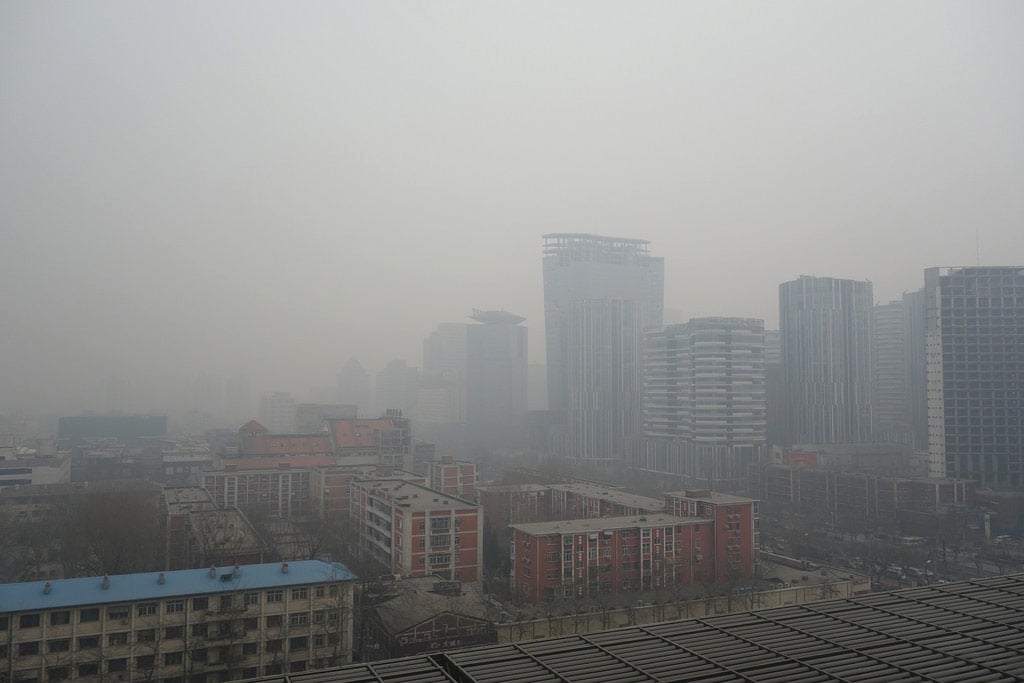
Maybe it’s time to stop and smell the serenity! Let’s look at air travel as just one major change in human behaviour globally. In 2018, CO2 emissions from aviation passenger travel totalled 747 million tonnes. Considering that total carbon emissions from all human activity around the world, including agriculture and land use, is 43 billion tons annually, that’s a significant reduction. Couple this with a generalised reduction in car travel and industry, and cities like New Delhi and Seoul are experiencing more than a 60 per cent drop in PM 2.5 – the world’s deadliest air pollutant. Wuhan, where the virus originated, experienced its cleanest air quality on record through February and March, and LA had its longest ever stretch of clean air, finally meeting the UN’s air quality guidelines.
You see, before the virus came along, corporations had been routinely killing people and our planet with the poisons of industry. Sanctioned by the need for endless economic growth, there has been little, if any, accountability. Forget worrying about the alleged impacts of 5G. Climate change continues to be the greatest threat to human and planetary health.
The same emissions that are killing our planet are also killing us. Ambient air pollution (outdoor) kills over 4.2 million people each year. The World Health Organisation has data that shows nine out of ten people breathe air containing high levels of pollutants that lead to premature death.
While I applaud the global response to the pandemic, I wonder, when it comes to climate change, why hasn’t this change come sooner? Every day that the pandemic restricts industries like travel we move close to economic crisis. The system is not robust. In fact, if the coronavirus has shown us one thing it’s that we live in an uncertain world, underwritten by an economy that at its foundations, and by its very nature, is characterised by fragility, not strength.
This is something many have known for some time – that the current global economic system is unstable, unsustainable, and at odds with human and planetary health. It’s long been clear that the kind of change required to bring a halt to climate impacts can’t be achieved without a total implosion of our current economic system. It has to break. And this coronavirus might just be the thing to do it.
It’s not just the virus that makes us sick. A thriving economy makes us sick. The economy has been seen as a given. There is a sense that the way it is the way it has to be.
We’ve seen that governments can change. That industry can change. That people can change. In this bleak time of little or no certainty, when I think about the opportunities created by this pandemic moving forward, it gives me hope. Governments have been forced to take advice from scientists, not corporations, or vested interests. Perhaps, if this trend continues after the pandemic is over, then true systemic change is on the horizon. And the good news is, the world is already half-way there. Perhaps in some strange way, that is the gift of COVID-19?
Recent stories, information and updates regarding COVID-19
COVID-19 reduces Australian life expectancy
New data from the Australian Bureau of Statistics Life shows life expectancy in Australia has decreased slightly for the second year in a row.
Wuhan market increasingly likely origin point for COVID-19
An international team of researchers has found more evidence that COVID-19 came from animals in a Wuhan food market.

Editorial – There’s a bat in my lab!
The lab-leak theory that Covid-19 came from the Wuhan Institute of Virology – instead of a nearby wet market – was thrashed about in public recently, with the US Senate Homeland Security Committee holding a hearing into Covid-19.
Fresh air federal funds for Northern Rivers schools in need
Eighteen schools in the Northern Rivers division of Richmond have received $25,000 each as part of the federal government’s School Upgrade Fund, Labor Member for Richmond Justine Elliot said last week.

COVID-19 pandemic has cut life expectancy globally
COVID-19 reversed earlier trends toward longer life expectancies. During the pandemic, life expectancies globally dropped by 1.6 years according to a new study published in the Lancet medical journal.
COVID-19 update for New South Wales
Let’s not forget that Covid-19 is still a big issue in our community with 31,935 cases reported across Australia in the last week – an average of 4,562 cases per day.
Five graphs you need to see before the Global Carbon Budget...
The Global Carbon Budget is about to be refreshed, giving the world a critical insight into how efforts to reduce greenhouse gas emissions are (or are not) progressing.
Public transport mask mandate to end
Masks will no longer be mandatory on public transport from tomorrow, Wednesday 21 September.
 For four decades The Echo has printed the stories some people loved, some people hated, and some pretended not to read. If you want us to keep telling the truth, the real truth, not the sugar-coated version. We’ll need your support to keep the presses rolling.


