



Among the many myths about the COVID-19 vaccines is a belief they contain live virus that a vaccinated person will shed in social and intimate circumstances. Along with many other vaccine myths, this belief is contributing to a significant divide in the Northern Rivers community.
By good fortune, sensible management and an open-air lifestyle, the Northern Rivers has been largely free of COVID-19 infections, even the Delta variant.
As many epidemiologists have noted, however, this situation will change quite dramatically as borders are opened and the region becomes flooded with COVID carriers. Our only hope, the government and health experts claim, is to vaccinate or to be excluded from social mingling. The torpid uptake of vaccination in the Northern Rivers can be partly explained by a lack of urgency and issues of vaccine availability – including the availability of vaccines other than AstraZeneca.

Nevertheless, areas like Byron and Mullumbimby have comparatively low vaccination rates and a number of highly vocal ‘anti-vaxxer’ communities. These anti-vaxxer groups can be identified through their particular cultural practices, beliefs and knowledge systems. They can divided into three broad categories:
- The Extreme Right. This is a global movement which is characterised by various forms of anti-democratic and anti-diversity political sentiment. While often claiming to be ‘anti-government’ and anti-authority, the extreme right is actually highly structured and organised, tending toward a highly centralised and violent form of authoritarianism. Some affiliates in this group claim to be extremely nationalistic; others are religious extremists who condemn abortion, same-sex relationships, naturism and other libertine practices. As seen in places like Melbourne, this group’s anti-vaccine stance is founded on a disdain for ‘weakness’ (which the vaccine represents); scientific knowledge (or anything that smells like education); and the social welfare model that is inscribed in democracy and human rights. Freedom for this group usually means the right to dominate and abjure their enemies, however defined.
- The Unknowing and Suspicious. This group access much of their news and social knowledge from like-minded friends, hearsay and social media. They are suspicious of government and the ‘expert’ knowledge that government authorizes. Many in this group feel betrayed by governments and political-speak, which is riddled with half-truths, self-interest and outright lies. They are also suspicious of mass media and scientific knowledge systems that tend to talk above their own educational levels. Freedom, for this group, is nested in pleasure and a general retreat from authority and rationalism.
- The Self-Informed Resistant. While this group is also anti-government and pro-freedom, affiliates would distinguish themselves as ‘informed’ and logical in their resistance. Many in this group express their abhorrence for mask-wearing, vaccination and passports through a devotion to the liberal ideal. That is, they believe their rights and capacity for free will are seriously impinged by government compulsion. This ‘progressivism’ often connected to some deeper suspicions of orthodox medicines and medical systems. Some in the group will cite ‘peer-reviewed’ research papers and minority medical ‘experts’ who challenge the orthodoxy. Others will cite alternative spiritual healers and ‘new age’ philosophy which deplore the ingestion of extraneous chemicals. And others will invoke nineteenth century liberalism to bring gravitas to their arguments on free thought and speech.
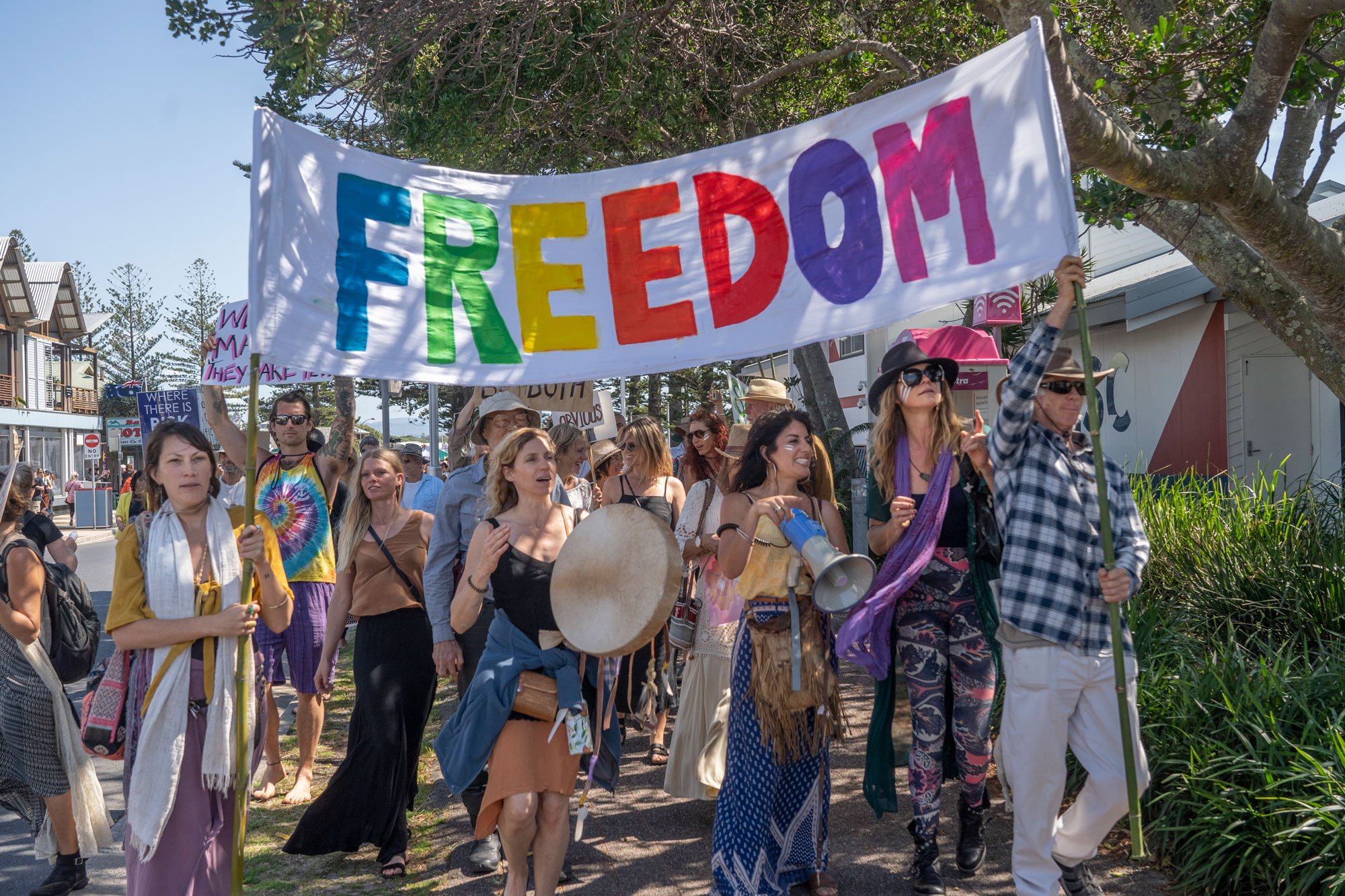
Photo Jeff ‘Relatively Free Since 1986’ Dawson
This focus on rights and freedom is actually the common thread between all these anti-vaxxer groups. While the rhetoric might vary according to the specific political and cognate disposition of the group, there is a general agreement that vaccination and vaccine passports are part of the government’s project of repression. Beginning with suspicions about the virus itself, all three groups seem convinced that any form of state power is fundamentally pernicious – representing a conspiracy against individuals and personal autonomy.
Paradoxically, ‘freedom’ is also the central mantra for counter arguments, which insist that vaccination will protect us and restore our social and economic pleasures.

What’s a little freedom cost?
This paradox is not surprising, given the high value that our modern world places on the concept of freedom and personal choice. Much of the division around COVID-19 vaccines can be directly connected to similar debates around the concept of freedom itself. These debates have a deep and prolonged history emerging in ancient Chinese, Vedic, Abrahamite and Western religion and philosophy.
By and large, our intrigue with the idea of freedom (or free will) is an effect of radical social changes associated with the rise and spread of agriculture and human settlement. Beginning around 12,000 years ago, these changes altered the ways in which humans interacted and conceived of themselves and their relationship with the universe.
Most significantly, these changes encouraged human groups to store economic value, encouraging military systems and the uneven distribution of wealth and power. An individual’s desires, pleasures and needs, therefore, became a contingency of power and new forms of social stratification. Religion and philosophy attempted to explain and sometimes resolve this disjunction between each individual and the social whole. Most often, the disjunction was resolved through the explicit exercise of power and violence.
Capitalist economics is really an incarnation of this system whereby individuals battle to impose their personal needs and desires over others. The difference between modern democratic states and totalitarian political systems (past and present) is largely a matter of how the rhetoric (or discourse) of ‘freedom’ is deployed. Democracy and liberalism have evolved as another strategy for resolving the problem of individual and collective needs. Capitalist and consumer economics require an imaginary of choice in order to function. But these choices have to be constrained within a system of uneven distribution of wealth and social stratification.
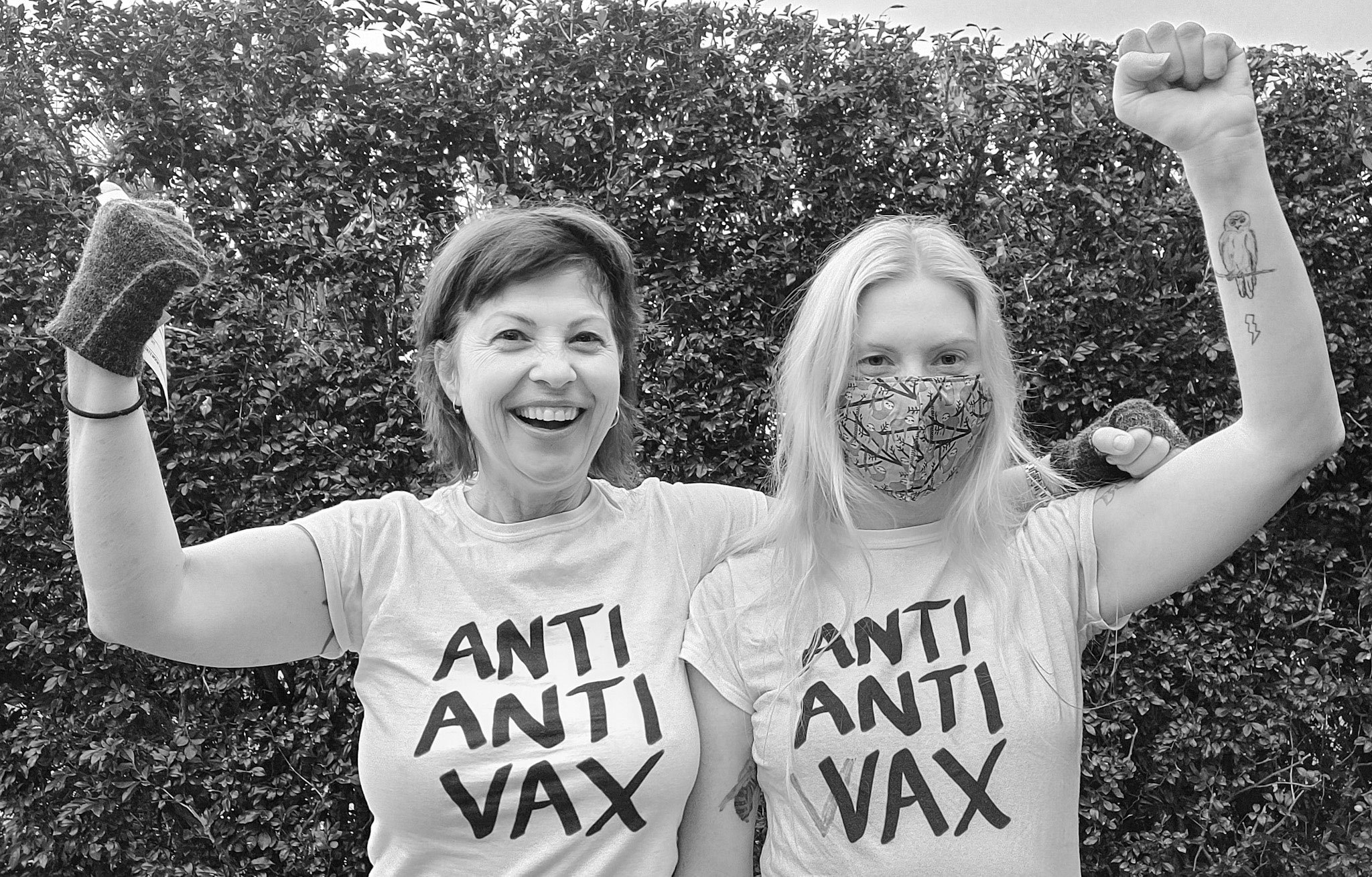
Power & persuasion
So, there must always be a gap between what different people on the scale can afford in order to ensure the uneven distribution of pleasures and power.
So why don’t the masses just take what they want? Democracy was invented in order to give a sense in which the system is fair and logical. It was designed by a particular political class in the nineteenth century in order to resolve the disjunction between individuals and the social whole. Democracy and related discourses of freedom give us the sense that we actually do have choices and that all of us are equal in our ability to access power.
The difficulty has proved, of course, that social stratification and the power of the state to exercise violence remain entirely unresolved.
Whatever the rhetoric of freedom might ensure, democracy was never designed to endow universal freedom through the deconstruction of social stratification and power. Democracy was an invention of a particular social class seeking to defend itself against aristocratic power on the one hand and the ‘unwashed’ masses on the other. Democracy was a protective system which fortified the power and privilege of the owners of capital.
Innumerable social philosophers have explained this divide between the rhetoric of democratic freedom and the reality of social stratification. They ask the question – are we actually able to think freely at all, or is our thinking simply conditioned by prevailing ideologies? Antonio Gramsci called this ‘hegemony’: major social institutions give us a semblance of choice, but really we are just negotiating with our own delusions.
Poor suffer
If nothing else, the global COVID-19 pandemic has demonstrated that social stratification remains a powerful force, even in the spread of disease and the means by which vaccines are being distributed.
In considering the vaccination issue, therefore, we can see that the ‘choice’ is really a modest one. Neither the vaccine nor its resistance is a matter of freedom at all. ‘Freedom’ in the context of our modern world remains a relative term, a fantasy that is bound to our systems of stratification, power and violence.
As we see with other great global crises – climate change, species extinction, warfare, endemic poverty – we ordinary citizens have extremely limited capacity for actual choice because our knowledge systems are so constrained by the cultural trajectory that begun 12,000 years ago. We can only choose from the range of options that the historical volition permits. Our capacity for thinking, that is, struggles to break through the prevailing knowledge systems.
The vaccination question isn’t a matter of freedom. It’s a matter of how this global pandemic was shaped by zoonosis, population pressure and the ceaseless expansion of human economy. COVID-19 is not simply a phenomenon of the past two years, Chinese militarism, or European colonialism. It’s an effect of this deep history and humans’ unthinking expansionism and the correlative destruction of our life systems.
COVID-19, therefore, needs to be understood as a symptom, more than a cause.

Time to vax?
So, should we all get vaccinated and be compelled to bear our vaccine passports in order to mingle and move?
I can only say ‘yes’, but not because it will endow – or restrict – my capacity for freedom. Rather, I think it’s worth extending human survival a little longer in the hope that we might address the horrors we have inflicted on these life forms and systems.
Beyond that, I suspect that most anti-vaxxers in the Northern Rivers will surrender when a close friend becomes really sick or they realise that the COVID vaccine contains neither live virus nor compliance pills. Some resistance will remain. But don’t fool yourself that you are expressing freedom of choice or your personal rights. You will not affect social stratification or the power of the state. Sadly, you will just be putting yourself at risk for the sake of a fantasy.
♦ Jeff Lewis is an anthropology professor. He is a former Research Dean at RMIT and Professorial Fellow at the London School of Economics. His books include Language Wars and Media and Human Violence: From Savage Lovers to Violent Complexity. He recently completed a government-commissioned research report on Right Wing Extremism in Australia.
 For four decades The Echo has printed the stories some people loved, some people hated, and some pretended not to read. If you want us to keep telling the truth, the real truth, not the sugar-coated version. We’ll need your support to keep the presses rolling.


